
Who community project management training in Halifax is for
You don't need a long list of formal prerequisites to begin community project management training in Halifax. The programme is open to people aged 18 or over when it starts, with no specific entry prerequisites; it is typically intended for those with at least two years of community project management experience. That makes it relevant both to experienced practitioners and to adults looking to strengthen their approach to community work.
Co-ordinating a community project involves more than keeping tasks on schedule. It means listening to people affected by the work, organising resources and making decisions that reflect shared priorities. It’s natural to want to know whether training fits your experience and the responsibilities you hope to take on.
This article explains who the programme is designed for, what its entry requirements mean in practice and how learning can support planning, community engagement, project tools and decision-making. You’ll also see how these skills connect with collaborative work to build stronger community initiatives in Halifax and across the surrounding area.
Table of Contents
Project planning and resource management
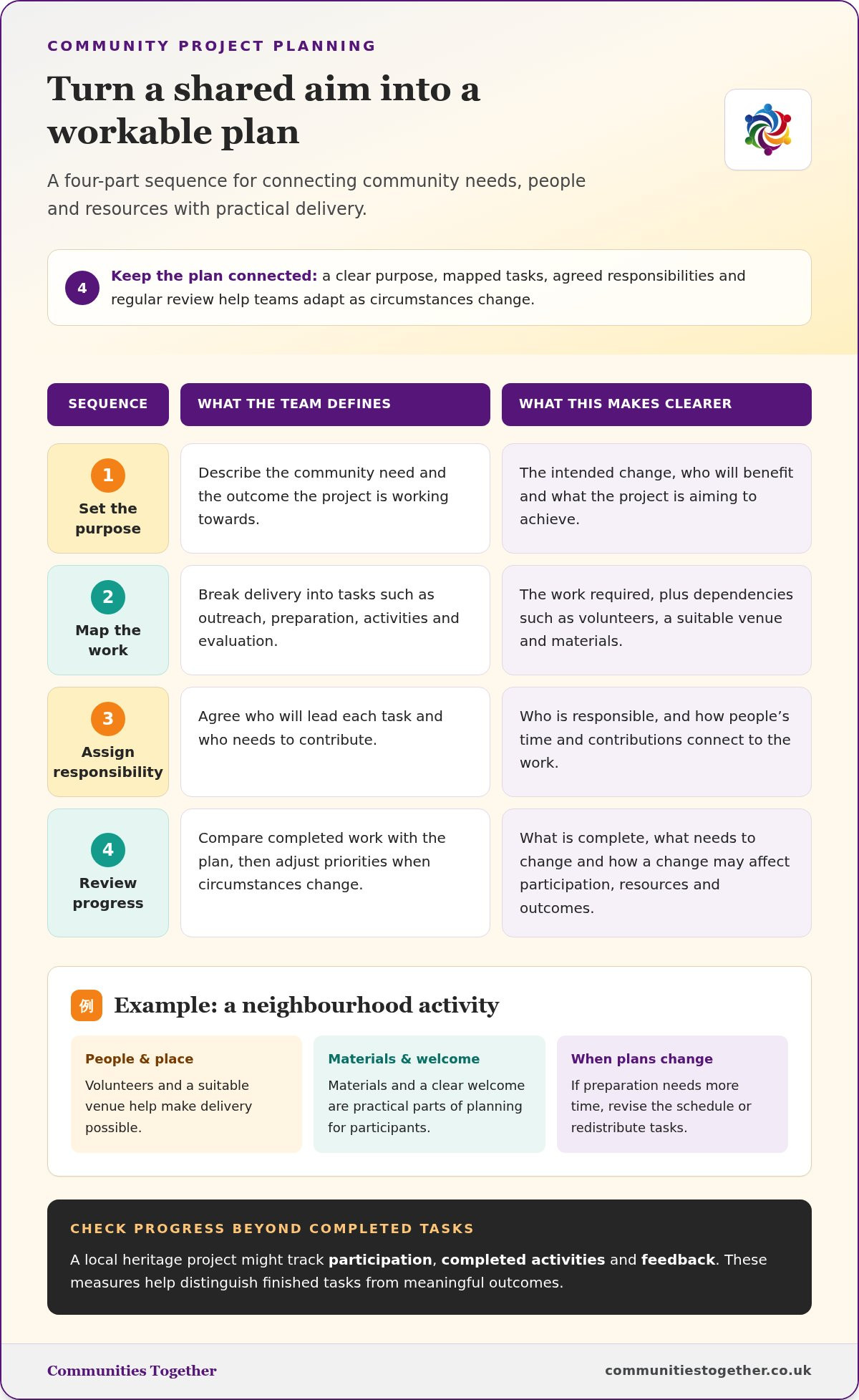
Community project management training in Halifax can help you turn a shared aim into manageable work. Planning connects a community need with intended outcomes, available people and practical resources. For example, a neighbourhood activity may need volunteers, a suitable venue, materials and a clear welcome for participants. A written plan makes these dependencies visible before delivery begins.
Start by defining the change the project intends to support. Then identify who will benefit, what activities are needed and what evidence will show progress. A local heritage project might track participation, completed activities and feedback. These measures help a team distinguish finished tasks from meaningful outcomes.
Resource management is more than budgeting. It means matching responsibilities and time to the work, while recognising that community projects also depend on relationships and shared contributions. A simple planning sequence can help:
Set the purpose: describe the community need and the outcome the project is working towards.
Map the work: divide delivery into tasks, such as outreach, preparation, activities and evaluation.
Assign responsibility: agree who will lead each task and who needs to contribute.
Review progress: compare completed work with the plan, then adjust priorities when circumstances change.
This sequence supports realistic decisions. If a volunteer-led activity needs more preparation time, the team can revise the schedule or redistribute tasks. Recording why a change was made helps partners understand its effects on participation, resources and outcomes.
Can I take community project management training online or in person? The Professional Certificate in Community Project Management is delivered online, so you can study without attending a classroom in Halifax. In-person learning is a separate format to consider when comparing local options.
How do local courses compare with national online courses? A local course may focus on in-person discussion and nearby project examples. The online certificate is accessible across locations and assessed through assignments, without written examinations or direct observations.
How much do community project management courses in Halifax cost? Fees vary by course, delivery format, study period and assessment. When comparing options, check what the fee covers, including learning materials, tutor support and assessment arrangements.
Who provides training in Halifax and nearby areas? The Professional Certificate in Community Project Management is an online option, and local organisations may run in-person programmes. Compare the subject focus and delivery method with the responsibilities you have in your community project.
What are the course dates, duration and locations in Halifax? The certificate is online and is described as typically taking 12 weeks to complete. Its online format is not tied to a Halifax venue; start dates depend on the course’s enrolment schedule.
Do providers offer certificates or recognised qualifications? The Professional Certificate awards a certificate, but it is not accredited by a recognised awarding body or regulatory authority. Consider whether that distinction meets your learning or employment purpose.
Stakeholder engagement and community participation
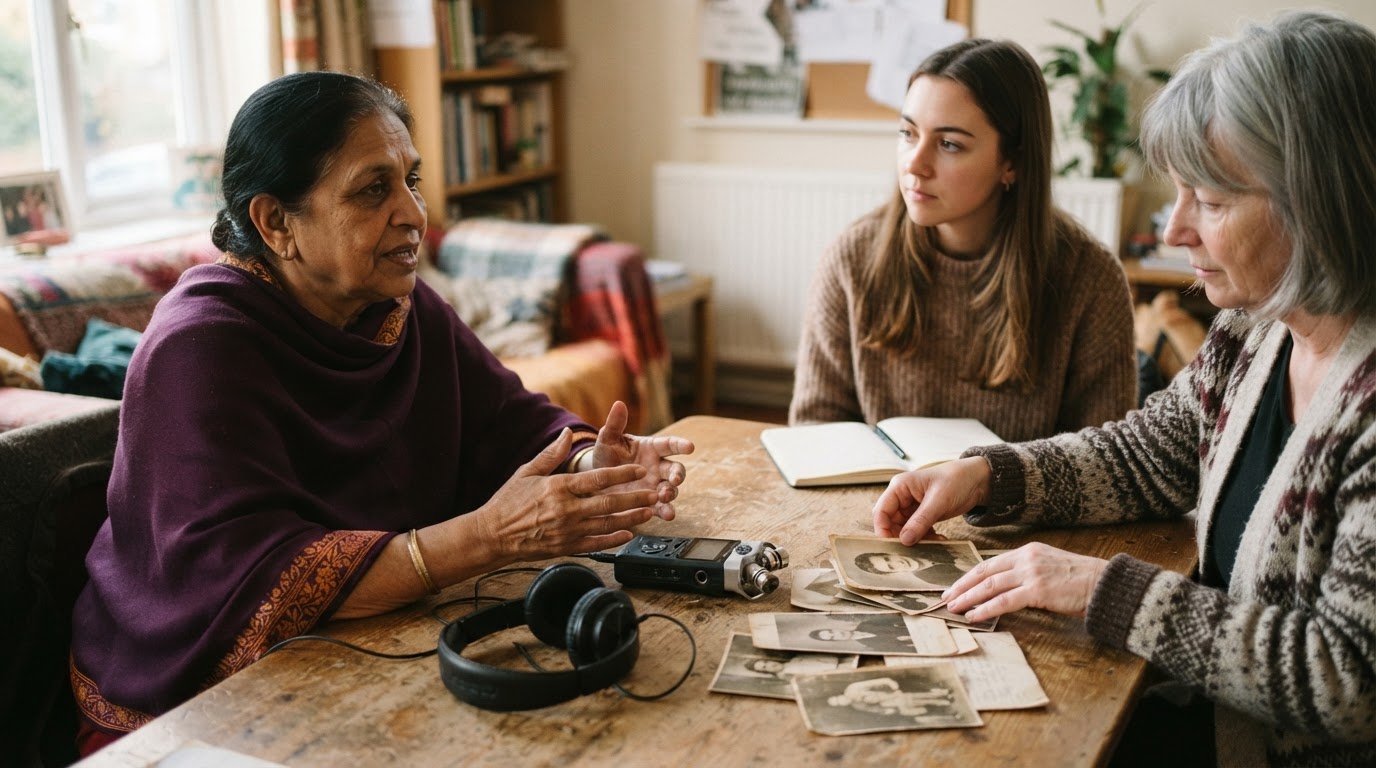
A community project affects people in different ways, so engagement should begin before activities are fixed. In a local heritage project, residents may value recording personal memories, while younger participants may prefer creative workshops. Early conversations help a team understand these interests and shape activities around what participants say matters.
Stakeholder mapping makes those conversations purposeful. List the groups affected by the project, the contribution each could make and how they prefer to participate. A neighbourhood wellbeing activity might involve residents, volunteers, local community groups and partner organisations. Note whose perspectives are missing, rather than assuming the first responses represent everyone.
Choose engagement methods to suit the people involved and the decision at hand. A small-group discussion can help participants explore priorities together; a short questionnaire can gather views from people who cannot attend. For a community event, the team could discuss timing in person and invite written feedback from others. Give each method a clear purpose and record the responses.
Participation is meaningful when people can see how their contributions shape decisions. Close the loop by summarising what you heard, explaining which suggestions influenced the plan and describing any ideas that could not be adopted. If residents ask for an accessible venue, record that priority and include it in the venue decision. This makes the link between feedback and action clear.
Engagement is an ongoing process, not a one-off consultation at launch. Agree when the team will gather feedback, who will review it and how changes will be communicated. After a session, organisers might ask which activities worked and what should change next time. Use the responses to guide later delivery and sustain involvement.
In the UK, 60% of construction projects involve community engagement. That figure concerns construction projects specifically, but it underlines the practical role of participation in shaping project work. For community initiatives, the relevant approach depends on the project’s purpose, the people affected and the decisions still open to influence.
Training can help practitioners distinguish between informing people and involving them in choices. For each engagement activity, define the question, the participants to reach, the method and how the team will use the responses. This gives project workers a practical structure for making participation purposeful, inclusive and connected to decisions.
For a practical starting point, explore these community participation approaches when shaping engagement around local priorities.
Applying tools to real work projects
A project tool is useful when it helps a team act on information, not just store it. For a community arts activity, a task tracker can show preparation, promotion, delivery and follow-up. Assign each task a lead, a deadline and a status so the team can see what needs attention without relying on separate messages or memory.
Choose a format everyone involved can use consistently. A shared spreadsheet may suit a small volunteer team, while a paper action log can work better during an in-person meeting. After discussing a venue booking, for example, record the task, owner, next action and latest update. Keep the entry concise so volunteers can find information quickly.
A timeline makes dependencies easier to see. If a community workshop needs promotional materials, participant invitations and prepared resources, put each activity in sequence. The coordinator can spot when a delay affects the next task. Review the timeline at team meetings, update it when plans change and record why.
Other practical tools support different kinds of project work:
Action log: record agreed tasks, the responsible person and progress after each meeting.
Risk register: describe possible obstacles, their likely effect and a response the team can take.
Decision log: note the choice made, its reason and who contributed to the discussion.
Feedback record: organise participant comments by theme, then identify changes for future activities.
Use these tools together rather than as disconnected forms. In a local heritage project, participant feedback might prompt the team to adjust an activity. A decision log can capture why the change was made, while the action log assigns the preparation. Together, they link what people shared, what the team decided and what happened next.
Review information at regular project check-ins. Compare planned tasks with completed work, discuss obstacles and agree on the next action. If fewer people register than expected, for example, the team can review its outreach and decide whether another invitation is appropriate. Record the change and assess its effect at the next check-in.
Good records also make handovers easier. If a volunteer becomes unavailable, a clear task log shows what is complete and what remains. A replacement can continue the work without reconstructing decisions from old emails. Keep project records in an agreed place, give relevant team members access and move outdated versions out of active use.
Training can connect each tool to a real responsibility: use a timeline to co-ordinate delivery, a decision log to maintain accountability and feedback records to support learning. Applying the tools to an existing community project helps show which practices work and where the team needs clearer processes.
Entry requirements
For the Professional Certificate in Community Project Management, the stated age requirement is 18 when the course begins. It uses open enrolment and has no specific entry prerequisites. This means applicants do not need a particular qualification before starting. The course is delivered online, so entry is not tied to attending a Halifax classroom.
The intended audience typically has at least two years of community project management experience. This describes who the course is designed for, rather than an additional formal entry requirement. Someone who has organised local activities, co-ordinated volunteers or supported a community initiative may already have relevant experience. The key question is whether the course content matches the responsibilities they want to develop.
Separate formal requirements from recommended experience before deciding. A brief personal review can help you identify your starting point:
Check the age criterion: you must be at least 18 when the certificate course begins.
Review your practical experience: consider whether you have managed or supported community project work, especially across planning and delivery.
Identify your learning goals: note which responsibilities you want to strengthen, such as coordinating tasks or engaging participants.
Consider the study format: online learning requires you to organise study alongside work and other commitments.
For example, a volunteer coordinator who has arranged community sessions brings useful project context, even without a project management qualification. A learner new to community projects may still meet the certificate’s stated entry conditions, although the course is intended for people with practical experience. Recognising this distinction helps you decide whether it fits your current needs.
Do not confuse this certificate’s entry conditions with those for a different professional qualification. PMP applicants in Halifax typically need 35 hours of formal project management training. That requirement belongs to the PMP route, not the Professional Certificate in Community Project Management. If you are comparing courses, check which qualification each requirement relates to before treating it as a general rule.
Prior learning can also help you engage with course material. Before starting, gather examples from a community project you have supported, such as a task you co-ordinated, a challenge you helped resolve or feedback that influenced delivery. These examples connect new ideas with your day-to-day responsibilities.
Match the course’s intended level with the work you hope to do. Someone with community project experience can use the learning to review established practices and develop a more structured approach. If you are at an earlier stage, consider whether the open-enrolment framework makes this a suitable next step, while bearing in mind the course’s intended audience.
That benchmark can help you assess fit without treating experience as a gatekeeping condition. If your background is close to the intended audience’s 2+ years of community project management experience, consider how directly your responsibilities involved this work; duration alone may not capture the nature of your experience. Use relevant examples to decide whether the course is timely for you, while keeping audience guidance distinct from the stated entry conditions.
Managing decisions and project challenges
Community projects rarely go exactly to plan. A venue may become unavailable, volunteer capacity may change or participants may request a different activity. A sound decision process helps the team respond without losing sight of the project’s purpose, community priorities and available resources.
Begin by describing the issue clearly. If a heritage session attracts fewer participants than planned, separate the observed fact from possible explanations. The team might review invitation methods, timing and activity format before deciding what to change. Avoid treating one person’s impression as evidence of a wider pattern.
Before agreeing on a response, consider its effects on people and delivery. Ask who benefits, who may be affected, what resources are needed and whether the change still supports the project’s aims. Changing a workshop time, for example, could help some participants while making attendance harder for others.
A simple decision sequence can support consistent discussions:
Define the choice: state the issue and the decision required.
Gather relevant views: include the people affected and those responsible for delivery.
Compare options: assess each option against project aims, resources and participation.
Agree and record: document the decision, its rationale, responsibilities and review point.
Disagreement can signal competing needs, not poor collaboration. If volunteers favour a familiar format while participants request a new approach, clarify the reasons behind both views. A facilitator can summarise the shared goal, identify differences and help the group compare practical options. Record the outcome so the decision can be explained later.
Risk management works best when it leads to proportionate action. Poor weather could affect attendance at an outdoor community activity or require a change of venue. Identify the possible disruption, decide who will monitor conditions and agree on an alternative action. Assigning responsibility avoids uncertainty when circumstances change.
Not every challenge needs an immediate change. If feedback conflicts, gather more relevant perspectives before revising the activity. If a task is delayed, identify the effect on dependent work and agree on a revised action. Distinguishing urgent issues from decisions that need more discussion helps teams use their time and attention well.
Review the consequences after making a decision. A team might compare attendance and participant feedback after changing a session format. Discuss what improved, what remained difficult and what should inform future delivery. This reflection turns challenges into useful learning and keeps accountability visible.
Communities Together: Community Engagement Programmes
Communities Together delivers Community Engagement Programmes for groups working to strengthen participation and collaboration in Halifax and across Huddersfield, Leeds, Bradford and Wakefield. If you’re moving from learning project methods to involving people in a real initiative, these programmes offer a practical next step. They support community groups to bring local perspectives into shared activities and build capacity for collaborative work.
Turn to Communities Together when a project needs a considered approach to engagement, or when local groups want to develop how they work together. The organisation also offers South Asian Arts and Heritage Activities, Wellbeing and Resilience Workshops, and Heritage and Cultural Preservation projects, connecting community participation with cultural and social priorities.
To discuss community engagement support, visit Communities Together online.
Put your next community project into action
Learning is most valuable when it informs the next choice you make with your community. As you consider community project management training in Halifax, identify a current or upcoming initiative where a more deliberate approach could help. Start by deciding whose perspectives should shape the work, or how your team will learn from participants as the project develops.
That first practical step can turn new knowledge into collaborative action while keeping local priorities at the centre. For support with community engagement in Halifax and the surrounding areas, contact Communities Together.
Your next project can build on the ideas and voices already present in your community.
Frequently Asked Questions
Who is the programme for?
The Professional Certificate in Community Project Management is intended for people with community project management experience, typically at least two years. It may suit a coordinator, volunteer or local group member who wants to take greater responsibility for a project. When considering community project management training in Halifax, think about whether your current role involves organising people, activities or shared priorities, and what you want to develop next.
What topics and skills are covered in community project management training?
Training covers practical project work, including planning, community participation, project tools and decision-making. You can apply these areas to situations such as co-ordinating a local activity, gathering views before changing its format or recording agreed actions. The aim is to build skills that connect daily tasks with a project’s purpose, involve relevant people and support thoughtful responses as circumstances change.
Who is eligible for community project management training and are there entry requirements?
Participants must be at least 18 when the Professional Certificate in Community Project Management begins. The course uses open enrolment and has no specific entry prerequisites, so prior qualifications aren’t required. Its intended audience typically has at least two years of relevant experience, but that describes the course’s usual learners rather than a formal entry condition. Consider your experience and learning goals when deciding whether it fits.
How much do community project management courses in Halifax cost?
Monthly or quarterly instalments are available; fees for other courses vary.
What community project management training courses are available in Halifax, West Yorkshire?
The Professional Certificate in Community Project Management is available online. Community organisations and learning providers may also run local programmes.

Comments