
Tackling social isolation in Huddersfield: examples of ways to connect
Tackling social isolation in Huddersfield can start with a welcoming community activity, a befriending connection or a creative project. Rooting into Place, for example, brought women together for a six-month journey combining nature, art and voice. Building connection gradually, at a manageable pace, can make taking the first step easier.
Finding a place to start can feel difficult, especially when joining a group or meeting new people seems like a big step. This guide explores local activities, befriending, mental health support and creative projects to help you consider practical ways to reconnect.
Arts and heritage activities can create shared experiences and a sense of belonging, including for women and girls who feel socially disconnected. The aim is to help you find a practical next step that suits your interests and circumstances.
Table of Contents
Community activities for people experiencing chronic loneliness
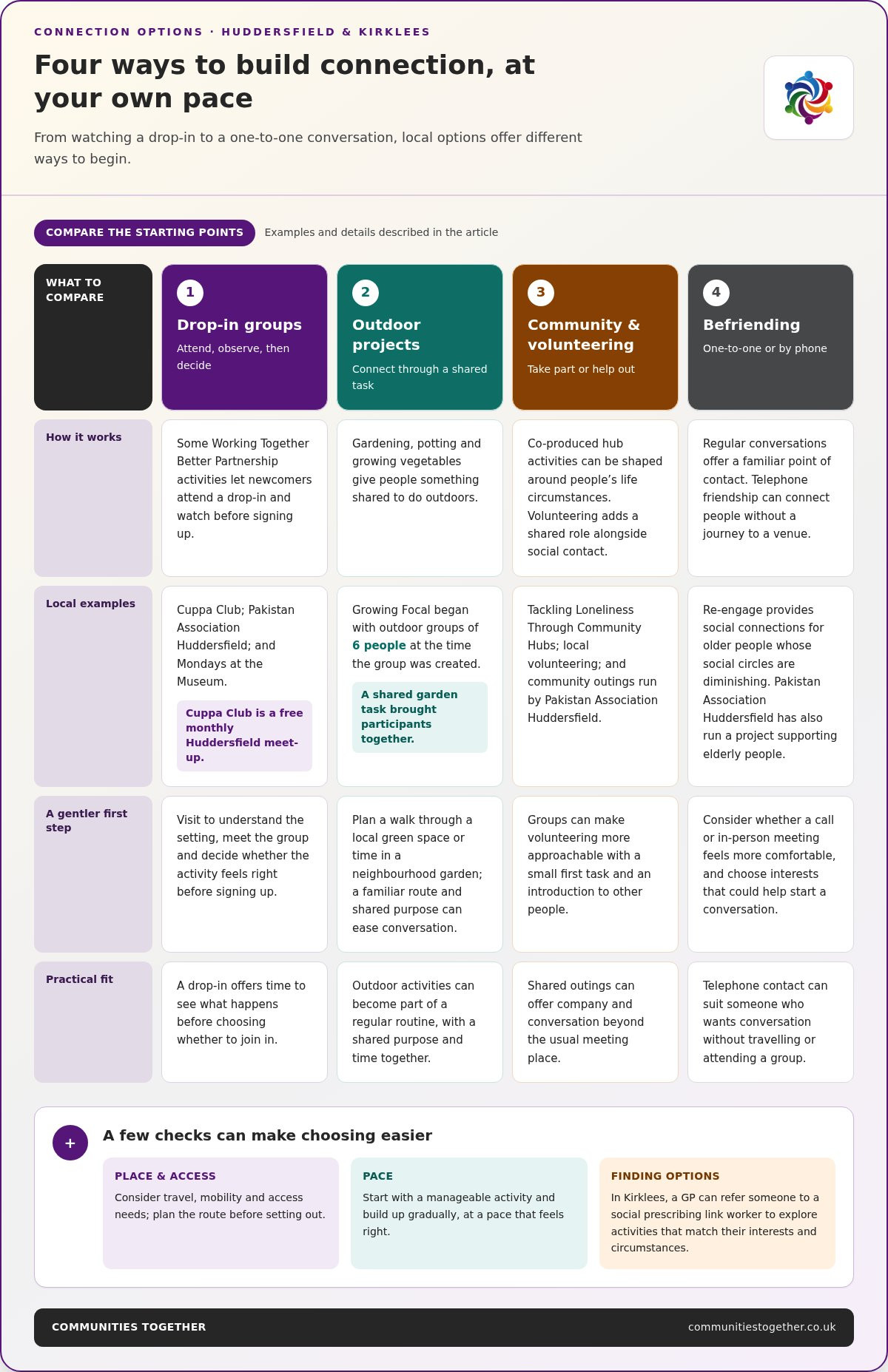
For someone experiencing loneliness, a first visit may feel more manageable if they can observe before joining in. Some Working Together Better Partnership activities offer drop-in sessions where people can attend and watch before signing up. This gives newcomers time to understand the setting, meet the group and decide whether the activity feels right.
Local examples of groups supporting isolated people include the Cuppa Club, Pakistan Association Huddersfield and activities connected with Working Together Better Partnership. Growing Focal and Mondays at the Museum also show how shared interests and accessible activities can create opportunities to connect.
Travel and accessibility affect whether an activity is practical to attend. Choose a nearby venue that meets your mobility and access needs, and plan your route before setting out. In Kirklees, a GP can refer someone to a social prescribing link worker, who can help identify community activities that match their interests and circumstances.
Low-pressure activities and outdoor projects
Situation: During COVID-19 restrictions, opportunities to meet indoors were limited, leaving people with fewer ways to connect. Action: When Growing Focal began, people met in outdoor groups of only 6 people at the time the group was created. Activities included potting and growing vegetables. Result: Gardening gave participants a shared task and a reason to spend time together outdoors.
Outdoor activities can also become part of a regular routine. Plan something in advance, such as a walk through a local green space or time in a neighbourhood garden. A familiar route and a shared purpose can make it easier to start conversations without pressure.
Community hubs, volunteering and collaboration
Situation: Changing life circumstances can shape chronic loneliness, so one standard activity may not suit everyone. Action: The Tackling Loneliness Through Community Hubs project supported local people through co-produced activities tailored to key life circumstances. Result: Participants could shape activities around what mattered in their lives, rather than simply attend a fixed programme.
Volunteering offers another route into community life. Helping with a garden, welcoming visitors or supporting a local event creates a shared role alongside social contact. Community groups can make volunteering more approachable by offering a small first task and introducing volunteers to others. The Cuppa Club, a free monthly meet-up in Huddersfield, is another example of a regular social setting centred on friendship and community.
Community networks can connect people through culture and shared outings. Pakistan Association Huddersfield has run seaside coach trips to Blackpool and Scarborough; the latest trip mentioned here took place in July and went to Llandudno. An outing can offer conversation, company and a shared experience beyond the usual meeting place.
Mondays at the Museum is a partnership that provides accessible health and wellbeing activities intended to reduce health inequalities in areas of deprivation. Together, these examples offer different starting points: observe a drop-in, try an outdoor activity, volunteer locally or join a cultural outing.
Befriending and telephone friendship services
Befriending offers one-to-one contact, while telephone friendship can connect people who find travel or group settings difficult. Regular conversations create space to talk, share interests and build a familiar point of contact. The right format depends on whether someone prefers meeting in person, speaking by phone or joining an online social session.
Older people in Huddersfield can look to Re-engage, which provides social connections for older people whose social circles are diminishing. Pakistan Association Huddersfield has also run a project supporting elderly people since September last year. These examples show organised social connection as well as support rooted in local community networks.
Situation: An older person’s social circle has become smaller, making everyday contact less frequent. Action: Re-engage provides social connections that help older people meet others. Result: The person has an opportunity to build social contact beyond their existing circle.
Befriending differs from a group activity: it centres on contact between people rather than a shared class or event. Before taking the first step, consider what kind of contact feels comfortable, which interests could start a conversation, and whether a call or in-person meeting is more accessible. A short list of preferences can make it easier to explain what would help.
Telephone friendship can suit someone who wants conversation without travelling to a venue. It may also help a person ease into wider social contact at their own pace. To make calls feel more natural, choose a regular time, identify a few interests to discuss and agree on what kind of conversation feels welcome. These small choices give each conversation a comfortable shape.
Situation: Some people want social contact but prefer an online introduction before joining a group. Action: The Connect Over a Cuppa Befrienders Social (Online) webinar is scheduled for November 3, 2026, at 12:30. Result: The online format provides a way to explore befriending and social connection without first travelling to an in-person gathering.
For volunteers, befriending involves listening, consistency and respect for the other person’s preferences. A thoughtful first conversation can cover shared interests, suitable contact methods and boundaries, allowing both people to establish a comfortable pattern. The Huddersfield Station coffee morning hosted by TransPennine Express included Platform 1, Simon on the Streets and Samaritans, showing how organisations can come together around social contact. For groups developing inclusive ways to connect people, explore community-building approaches.
Mental health and social connection
Loneliness and mental wellbeing can overlap, so social connection may be one part of a wider support plan. More than nine million people in the UK experience loneliness, while around one in six people worldwide experience it. These figures describe a broad experience, not an individual’s circumstances. In Huddersfield, consider both practical opportunities to connect and any mental health support that may help.
Kirklees Council advises people to build social connections gradually and at their own pace. Start with one manageable step: attend an activity briefly, speak with someone you already know, or join a group based on a familiar interest. If face-to-face contact feels difficult, begin with a phone or online conversation. Reflect on what felt comfortable before choosing another step.
Situation: Older South Asian men experiencing memory problems may benefit from settings that invite familiar stories. Action: The Staying Well programme used a tailored board game featuring local landmarks to prompt reminiscing. Many men in the group had emigrated to the area in the 1950s and 1960s. Purpose: Recognisable places gave participants a shared starting point for exchanging memories and connecting through conversation.
Creative interests can provide another route into social contact. Situation: Mental health concerns and social isolation can be difficult to discuss directly. Action: The Heavy Metal Therapy case study sought to address both through heavy metal music. Intended focus: Music offered a shared subject through which participants could explore wellbeing and connection. This example shows how a common interest can shape a group’s approach.
Social activity is not a substitute for mental health treatment. NHS talking therapies provide adults with support for stress, anxiety or depression, including Cognitive Behaviour Therapy. Consider what support is needed: a community activity for social contact, talking therapy for mental health concerns, or both. Keeping those needs clear can help identify an appropriate starting point.
The Jo Cox Loneliness Commission reported at the end of 2018, drawing attention to loneliness as a wider social issue. The Jo Cox Foundation’s Great Get Together campaign takes place in June as part of its work on loneliness and social isolation. These examples connect individual participation with a wider culture of community activity. Look for a local gathering linked to an interest, neighbourhood or shared experience, then choose a first step that feels manageable.
For a simple plan, write down one activity to try, one person or group to approach, and any support that would make taking part easier. If the first option does not suit, use what you learned to choose another format, such as a conversation, creative activity or wellbeing group.
Tackling loneliness and isolation in Huddersfield
In Kirklees, tackling loneliness means recognising that isolation can arise in different circumstances and calls for more than one response. Someone may have few regular social contacts, feel disconnected despite being around others, or find it difficult to take part in local life. Start by identifying what is preventing connection, then consider a suitable activity, relationship or source of support.
Situation: Organisations across Kirklees wanted to raise awareness and coordinate their response. Action: More than 60 organisations from Kirklees, including Huddersfield, Dewsbury and Batley, came together at a conference described as the area’s first of its kind. Workshops considered how organisations could work together to support more people. Result: The meeting created a shared space to discuss practical collaboration, rather than treating loneliness as the responsibility of one group alone.
Support for people working to reduce loneliness can include peer learning, shared planning and resources for designing activities. The Loneliness Strategy secured £20 million to help thousands of people from different backgrounds. A local worker or group can use this broader context to consider whose needs are being missed, which community relationships already exist, and where partnership could make support easier to reach.
Place also matters. Thornton Lodge in Huddersfield is among the 10% most deprived parts of Kirklees nationally, so community responses need to reflect local circumstances. A practical starting point is to ask residents what makes connection difficult, then shape activities around their interests, languages, routines and access needs. This helps groups move from general awareness towards a response rooted in everyday experience.
Children and young people need attention in this work too. A second webinar on addressing loneliness among children and young people at school is scheduled for November 12, 2026, at 16:00. For school staff and community organisations, this provides a focused opportunity to consider how isolation may appear in school life and how supportive connections can be encouraged.
Useful resources can support both community groups and practitioners. The Creative Health Toolkit is a fold-out resource designed to help deliver activities and evidence their impact. The TLH Funders Forum webinar is scheduled for November 26, 2026, at 12:00. Together, these examples point to two practical needs: tools for planning and learning opportunities for people funding or coordinating local responses.
Situation: A community group wants its work to reflect local experiences and show what participants value. Action: Gather feedback during activities, note who is taking part, and use the Creative Health Toolkit to support delivery and evidence. Result: The group can use what it learns to refine future activities and strengthen collaboration across Kirklees.
Arts projects for socially disconnected women and girls
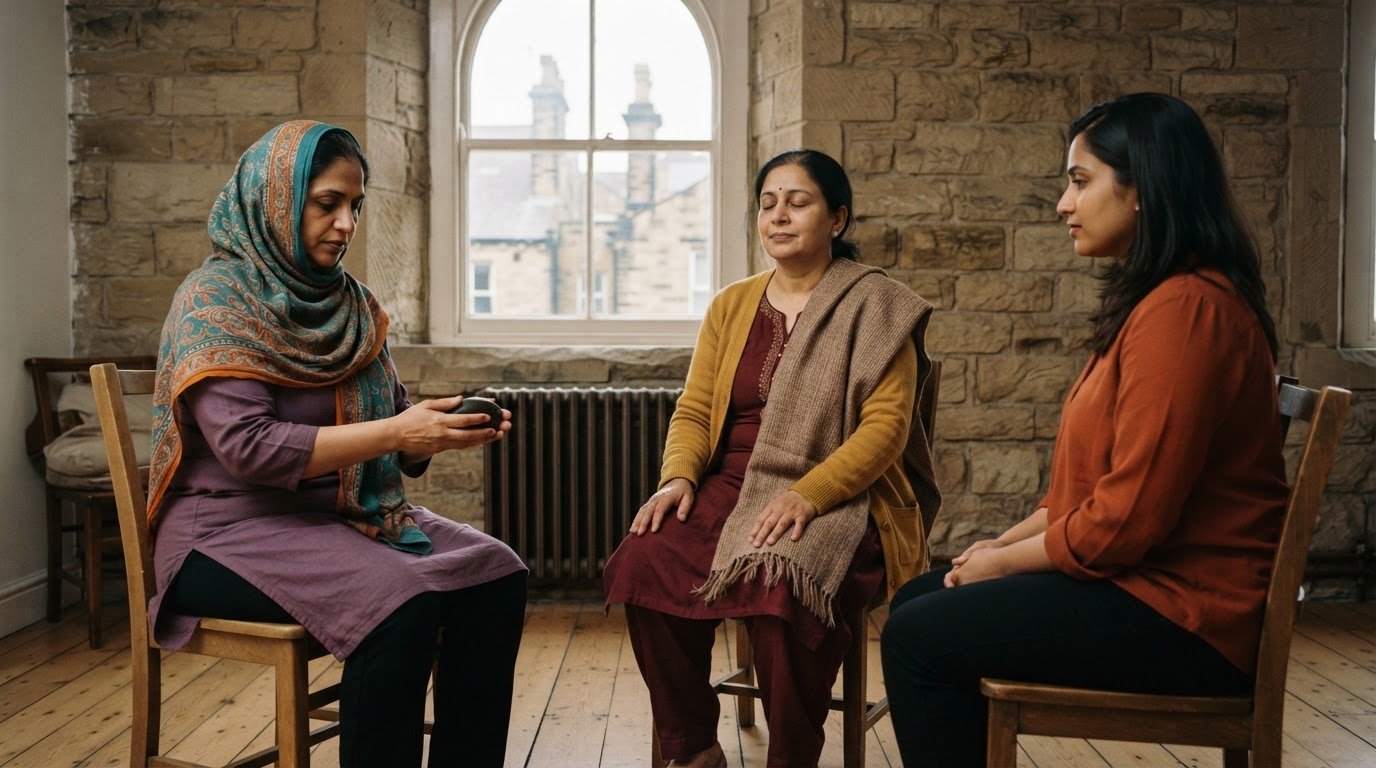
Creative projects can give women and girls a shared focus, making conversation part of doing something together. In Huddersfield, arts activities might involve making art, exploring local nature or sharing stories through voice and performance. The aim is a welcoming space where participants can contribute at their own pace, without previous artistic experience.
Situation: Women in Huddersfield wanted a creative way to connect with place and each other. Action: Rooting into Place offered a six-month journey combining nature, art and voice. Takeaway: Its combination of creative practice and local environment offers a useful example for groups bringing people together through more than conversation alone.
A similar project could begin with a shared walk, followed by an invitation to respond through drawing, writing or spoken reflection. A familiar neighbourhood feature, such as a path or garden, can provide a starting point. Letting participants choose how to contribute supports different preferences, confidence levels and ways of expressing ideas.
Projects for girls can follow the same thoughtful approach while reflecting their interests and circumstances. A group might explore stories about local places through photography, collage or a jointly created map. Agreeing on a theme together gives participants a say from the outset, while a shared creative task can make introductions feel less formal.
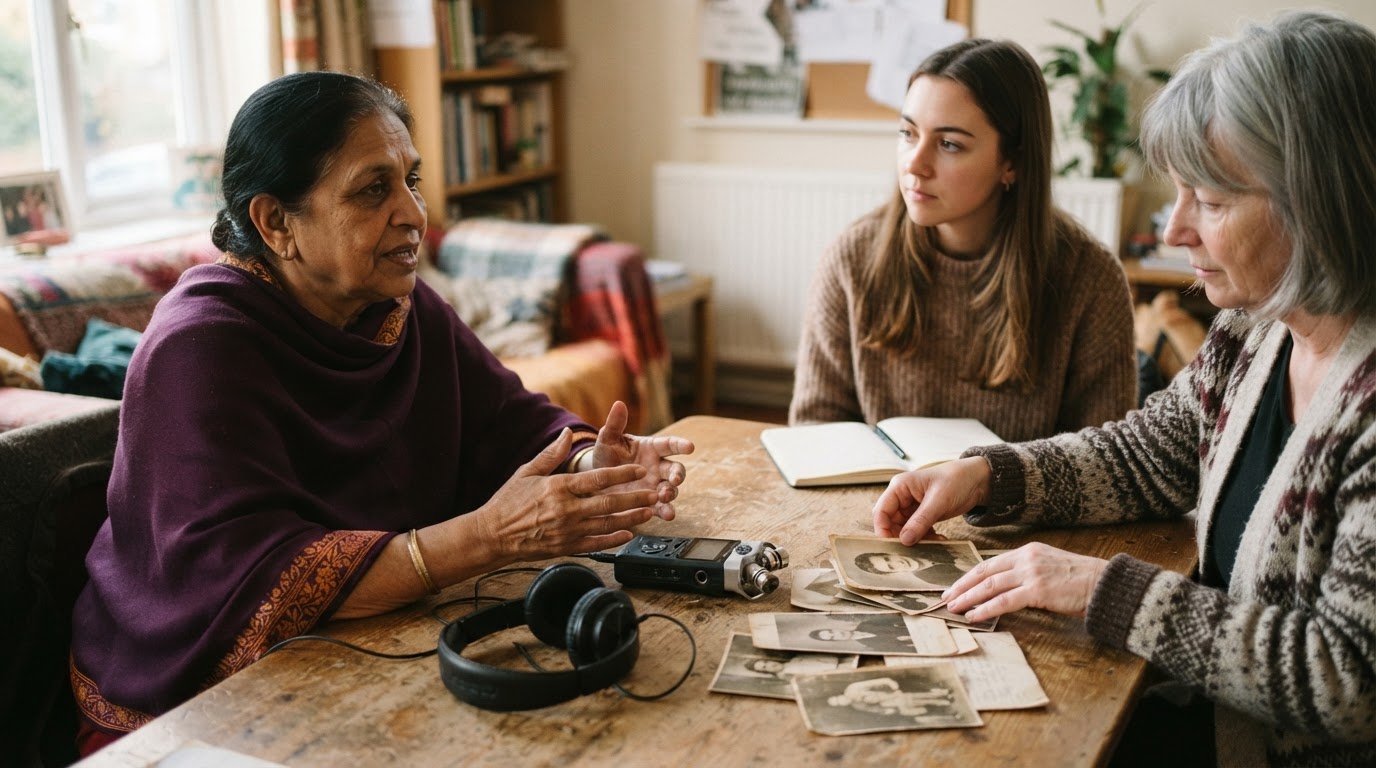
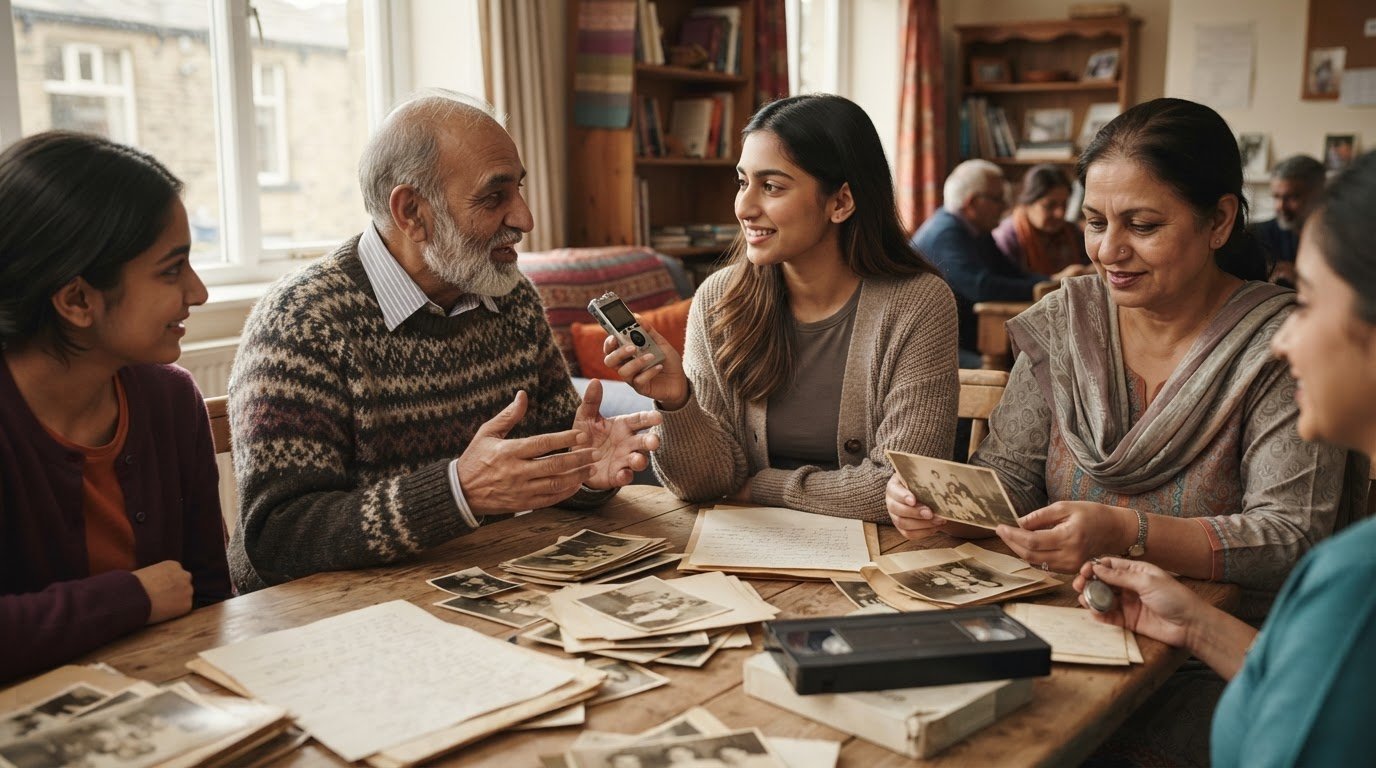
Arts activities can make cultural heritage part of building connections. A group could collect memories, music, patterns or everyday stories, then create something that reflects participants’ contributions. Treat each person’s experience with respect, and do not ask anyone to share more than they wish. The purpose is participation, not a finished artwork judged against professional standards.
A clear structure helps participants know what to expect. Explain the activity beforehand, offer a simple first task and allow time to settle in. At a nature-and-art session, for instance, someone could observe first, choose materials or work alongside another participant. These options make participation flexible without making contribution compulsory.
Groups can also learn what participants value by inviting feedback after a session. This might be a short conversation, a written note or a creative response. Ask what felt welcoming, what they would change and what they might explore next. For a project shaped around local identity, feedback can guide future themes and help participants influence the work.
Rooting into Place shows how nature, art and voice can form a connected programme for women in Huddersfield. The wider lesson is to build projects around a shared interest, participant choice and a meaningful link to place. These features offer women and girls different ways to take part and develop connections through creative activity.
Communities Together: Community Engagement Programmes
Communities Together runs Community Engagement Programmes for groups seeking to strengthen local connections through shared activity and participation. Its South Asian Arts and Heritage Activities bring people together through culture, while Wellbeing and Resilience Workshops offer a community setting to explore wellbeing.
These programmes can suit local groups developing inclusive activities, as well as people seeking connection through arts, heritage and shared learning. Heritage and Cultural Preservation projects can also bring people together around cultural knowledge and community identity. The focus is on relationships and participation, not clinical mental health treatment.
To explore how these activities could support your community, visit Communities Together.
Turn one connection into a lasting next step
A practical approach to tackling social isolation in Huddersfield can begin with one choice: identify the kind of connection that feels meaningful, then make space for it in everyday life. A shared interest, creative activity or conversation can become a starting point for a routine that feels more familiar over time. The aim isn’t to do everything at once, but to find a step that feels possible and build from there.
If you’re part of a local group, consider how participants can influence what happens next. Invite them to share what helps them feel welcome, what they’d like to explore and how they prefer to take part. Listening to their experiences can help activities respond to real needs and make building community connections a shared effort.
Every lasting connection starts somewhere. Choose a first step that suits you, and let participation grow at a pace that feels right.
Frequently Asked Questions
Where to begin?
To begin tackling social isolation in Huddersfield, choose a manageable kind of contact and consider what would make taking part easier. You might prefer a creative activity, an informal conversation or a group centred on an interest. Note any practical barriers, such as travel, unfamiliar surroundings or timing, and use them to guide your choice. A trusted person can help you make the first approach.
What services help tackle loneliness and social isolation in Huddersfield?
Community activities, befriending, social prescribing and creative programmes can all offer a route to connection. Communities Together works across Huddersfield, Halifax, Leeds, Bradford and Wakefield, with programmes in community engagement, South Asian arts and heritage, and wellbeing. Consider whether you want regular social contact, a shared activity or help developing a community project. These programmes provide community-based support, not clinical mental health treatment.
What support is available for young people experiencing isolation in Huddersfield?
A young person can tell a trusted adult, such as a family member, teacher or school pastoral worker, what is making connection difficult. They could ask about suitable school activities or support with joining an existing group. A helpful first conversation can focus on the young person’s interests, preferred way of participating and concerns about meeting others. This gives adults practical information to help identify an appropriate next step.
Are there free or low-cost social groups and activities in Huddersfield?
The Cuppa Club is a free monthly meet-up in Huddersfield, offering a local example of social contact without a participation fee. For other activities, ask the organiser about any costs before attending and whether you can observe or take part informally first. You could also look for outdoor walks or community-led activities that match your interests. Choose based on the format, location and any costs involved.
What mental health and wellbeing support is available for loneliness in Huddersfield?
For adults experiencing stress, anxiety or depression, NHS talking therapies offer support that includes Cognitive Behaviour Therapy. Community activities can create opportunities for social contact, but they do not replace mental health treatment. Consider what support you need and whether community connection, talking therapy or both could help. If you’re unsure how to describe your concerns, note how they affect daily life before discussing them with a health professional.
How can volunteers help tackle social isolation in Huddersfield?
Volunteers can help people connect by welcoming them, making activities accessible and listening to what participants want from a group. If you’re interested in volunteering, approach a local organisation and explain your interests, experience and the contribution you could make. Discuss the role’s expectations and how you’ll communicate with participants. Consistent, respectful involvement builds familiarity, while partnerships between volunteers and community groups can connect people with wider local activities.
Comments