
How to Pass on Cultural Traditions Through Art, Stories, and Community
Fluent heritage-language skills aren’t the only way to keep cultural traditions alive. If you’re considering how to pass on cultural traditions, share them through art, performance, family stories, food and repeated experiences with others. The meaning, context and relationships behind each practice help younger people understand more than the steps alone.
It’s understandable to feel that language loss might create distance from your heritage, but sharing what you know can still create connection and encourage further learning. Creative activities, conversations with relatives and community partnerships can all help carry traditions forward. Cultural teachers can also share context, etiquette and responsibility. You can take part meaningfully even while your own knowledge is still developing.
Table of Contents
Do dance and performance really preserve cultural knowledge?
Dance and performance preserve cultural knowledge when people learn movements, music, stories and context together. In the UK, public libraries, local museums, archives and community heritage groups can support preservation through collections, activities and shared learning.
Family objects and photographs give traditions a visible history. Choose an item, such as a wedding scarf, festival decoration or handwritten recipe, and ask its owner to explain its meaning. Record its name, date or occasion, who used it and the story attached to it. Caption photographs with the people, places and holidays they show, so younger relatives can connect images with family memories rather than treating them as anonymous keepsakes.
Performance adds movement and sound to that record. Traditional dance can carry a community’s stories and values, while music can hold shared feelings and history. Relatives might demonstrate a dance at a family gathering, explain when it is performed, then invite younger people to practise. Repeating the movements lets learners notice details, receive guidance and understand how performance relates to community life.
Learning from Older Family Members
Learning from older family members means receiving traditions directly from relatives who have practised or witnessed them. Their explanations connect a family object, dance or holiday custom to the memories behind it. Ask a grandparent to show how a celebration was prepared, then invite them to describe what each step meant. Listening and practising together can preserve details that photographs alone cannot convey.
Exploring Cultural Expression Together
Exploring cultural expression together means noticing and discussing how family members share identity through creative forms. Look at a photograph, listen to a familiar song, or watch a relative demonstrate a dance, then talk about the stories and feelings each conveys. These shared conversations help children recognise that cultural meaning can be expressed through movement, sound, clothing and images, not only through spoken explanation.
Mixed-culture families can make room for more than one inheritance without treating traditions as competing choices. A household might celebrate holidays from both sides of the family, explain how each custom began and adapt shared activities so everyone can participate. Discussing what matters to relatives helps preserve the values behind a practice, while allowing family traditions to reflect changing relationships and experiences.
Language can carry stories, values and history, but fluency need not be the starting point. Use a greeting at breakfast, label a family photograph with a relative’s words or learn a song together. Pairing a phrase with a meal, dance or holiday gives children a familiar setting for its meaning and opportunities to keep learning through repeated use at home.
Creative and artistic methods
Creative activities give families practical ways to express identity and share customs across generations. A song, drawing, performance or shared cooking activity can carry meaning alongside spoken stories. Families exploring how to pass on cultural traditions can choose forms that reflect their own experiences and invite relatives of different ages to contribute.
Choose an art form connected with your family’s experience, then invite relatives to contribute what they know. A young person might illustrate a family story while an older relative explains its setting and significance. Music can carry a group’s feelings, stories and history; dance can communicate ideas through movement. Combining these forms helps participants express what matters to them, even when they use different languages.
Creative work can bring relatives together around a shared outcome. Family members could prepare a short performance for a community gathering, pairing music with a spoken introduction about its meaning. Children might select images or create programme notes while adults provide context. This makes cultural expression collaborative, rather than casting younger generations as passive observers. Giving each participant a meaningful creative role is one way to pass traditions on.
Creating a Cultural Record
A cultural record brings together creative work and explanations to document customs, stories and practices. Future relatives can encounter more than an image or performance: they can learn why it was created and how family members understood it. Combine oral storytelling, calligraphy, traditional media or digital formats, such as a family website, to preserve different forms of expression.
Describe each contribution clearly. A song recording might note its language, who taught it and when the family sings it; a drawing could include the story that inspired it. Organise items by themes such as celebrations, cooking or migration to make connections between generations easier to follow. Invite contributors to describe their own work rather than assigning one interpretation to everyone.
Making New Traditions
A new tradition is a repeated family activity shaped by shared values and present-day experiences. Creating one lets customs adapt as families change while retaining meanings relatives value. A household with several generations might start an annual evening of music, food and storytelling, giving each person space to contribute a song or dish.
Discuss the idea together before making it part of family life. Relatives can decide what feels meaningful, how everyone might take part, and whether the activity reflects their values. A new member could introduce a celebration practice, while the family adapts it respectfully for the household. If an old custom no longer serves the family, conversation can help them change or set it aside. Communities Together’s heritage and cultural preservation work can support shared efforts to sustain cultural expression.
Can I pass down culture even if I do not speak the heritage language fluently?
Yes. You can share heritage through practices, relationships and continued learning, even without fluent language skills. Younger generations can learn traditions alongside the words, meanings and histories connected to them.
Openness makes cultural learning a shared process rather than a test of fluency. A child might ask a relative what a festival greeting means, then practise saying it together. If relatives follow different customs, listen to each explanation and discuss what each practice means to the people who observe it.
In a mixed-culture household, invite each family member to introduce a tradition they value. One person might explain a religious holiday while another describes a family celebration from a different heritage. Children can notice what the customs share, such as gathering or gratitude, without treating either practice as more important. This gives younger generations room to learn respectfully.
Learning Religious Traditions and Ancestral Languages
Learning religious traditions and ancestral languages means exploring the practices and words that shape a community’s worldview. Language can reveal cultural values, while religious customs can provide context for other traditions. Ask a knowledgeable relative to explain a holiday practice, then learn the greeting or phrase associated with it. Understanding both helps younger family members see why a custom matters.
Start with context rather than memorising unfamiliar terms. If a relative explains a religious celebration, ask what its symbols represent and how the family observes it. An ancestral language can hold ideas that do not translate neatly into English. Learning a phrase alongside its story helps preserve its meaning, even as fluency develops gradually.
Keeping Heritage Languages in Daily Routines
Keeping a heritage language in daily routines means making small, repeated opportunities to hear and speak it. Regular use can make language part of family life rather than an occasional lesson. Choose one greeting to use every day at breakfast, and invite relatives to reply. A familiar routine gives children a natural reason to practise.
Build on the greeting by naming everyday objects or activities together. A family member might use heritage-language words for food while preparing a meal, then explain their pronunciation and meaning. If a child answers in English, keep the conversation going without making it a test. Repeated, friendly exchanges help keep traditions alive and make language learning part of shared experience.
Families can also learn with cultural teachers and mentors, who share skills alongside context, etiquette and responsibility. A young person learning a traditional song can ask who performs it and when it belongs in community life. Listening, watching and practising with guidance helps learners understand more than the words alone and respect the people who carry that knowledge.
Make space for questions from younger and older relatives alike. A teenager might ask why the family observes a custom, while an elder explains its history in whichever language feels comfortable. Record useful phrases in a family notebook alongside their meanings and situations for use. This practical learning aid encourages relatives to keep sharing knowledge across generations.
Interviewing relatives and community members
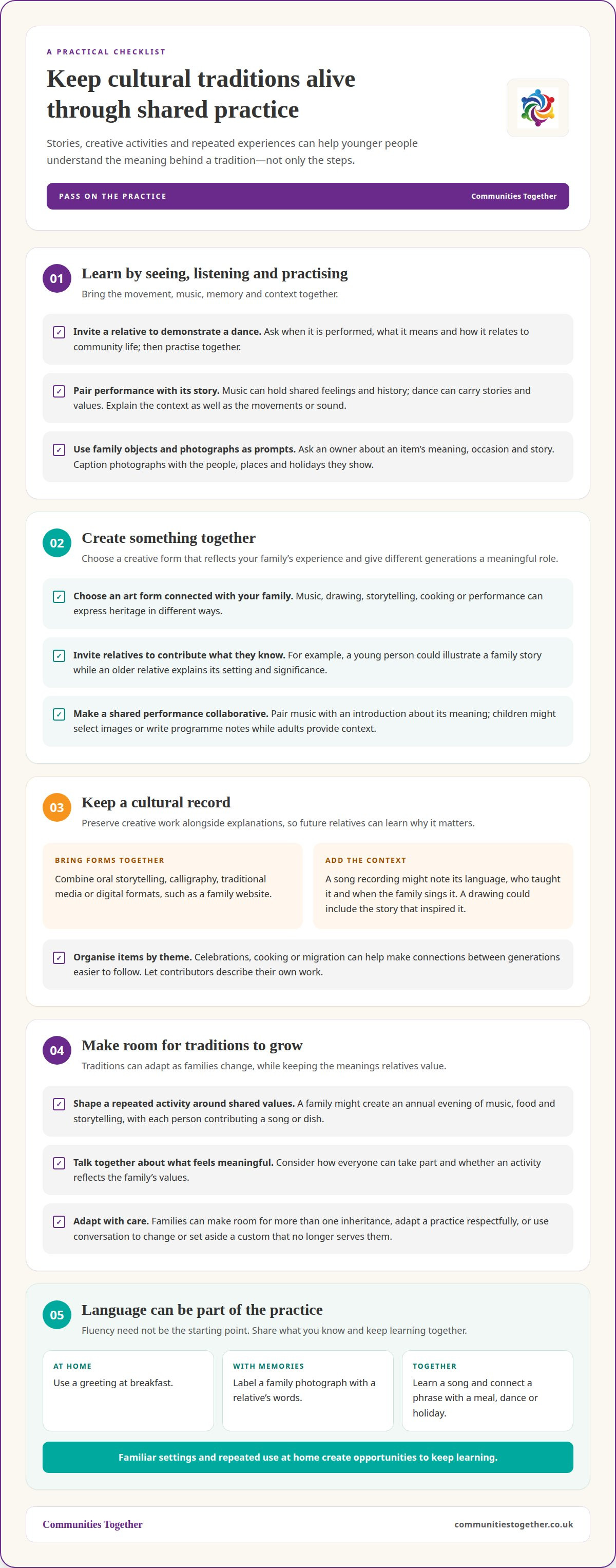
A conversation with a relative can preserve details that photographs cannot show. Ask about a specific celebration, place, object or decision, then listen for the values and relationships behind the story. An aunt describing a wedding might recall who prepared the food, which songs were played and how customs changed after moving to the UK.
Choose one person and a clear topic before starting. A family member may feel more comfortable discussing a familiar event than recounting their whole life. Try open prompts such as these:
“What do you remember about preparing for that celebration?”
“Who taught you this custom, and what did they explain?”
“Did your family observe it differently in another place?”
“Which part would you like younger relatives to understand?”
These prompts encourage storytelling without requiring a relative to remember events in a fixed order. Follow up on names, places and family relationships as they come up. A story about a journey, for instance, may reveal connections to a village, a neighbour or a community gathering.
Talking with community members can add perspectives beyond one family’s memories. A local elder might describe how a festival was celebrated across a neighbourhood, while another member recalls helping organise music or prepare a shared meal. Ask how their experiences relate rather than assuming one person speaks for everyone. Different accounts can show how traditions vary between families and generations.
Choose a calm setting that suits the speaker, such as a kitchen table after a family meal. Let them decide whether they prefer talking, writing or sharing photographs. If they pause, give them time; a photograph of an old celebration may bring back a name or detail. Avoid correcting a memory as someone tells it. Note points for later discussion instead.
Before recording a conversation, explain how you plan to keep and share it, then ask what the speaker is comfortable contributing. Some relatives may prefer a private family archive; others may welcome having their story shared at a community event. Respect their preferences and note any names or details they want kept within the family. This preserves trust alongside the account.
Afterwards, organise the account so younger relatives can understand its context. Note the speaker’s name, the people mentioned, the place and the occasion, then add a short summary in their own words. Compare related stories with family members and draw a family tree together if connections are unclear. This can reveal relationships that help each account find its place in family history.
Make the interview a shared activity rather than a formal examination. A young person can ask questions while another relative takes notes, then everyone can discuss what they learned over tea. Involving family members in the process gives them a role in preserving stories, celebrations and connections to belonging.
Learning from cultural partners
Cultural partners can help families learn traditions through shared practice and guidance. A teacher, artist or community group can explain a skill as well as its context, etiquette and responsibilities. This matters because a dance, song or festival activity can lose meaning when separated from the people and values that sustain it.
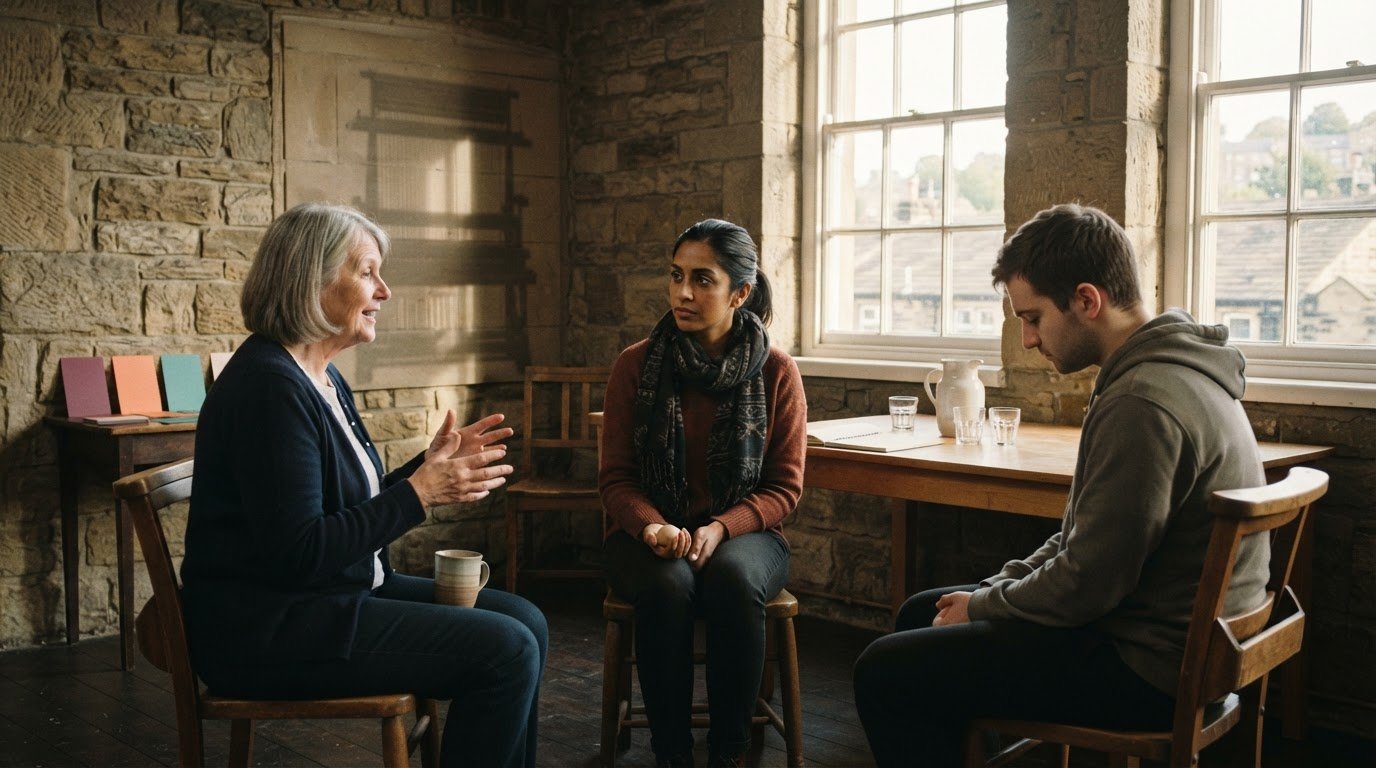
Learning with a cultural teacher is different from copying a performance. A dance mentor might demonstrate a movement, explain its place in a particular story, then guide learners as they practise. The group can ask when the dance is appropriate and what respectful participation involves. This connects technique with living knowledge, helping learners understand what they express through movement.
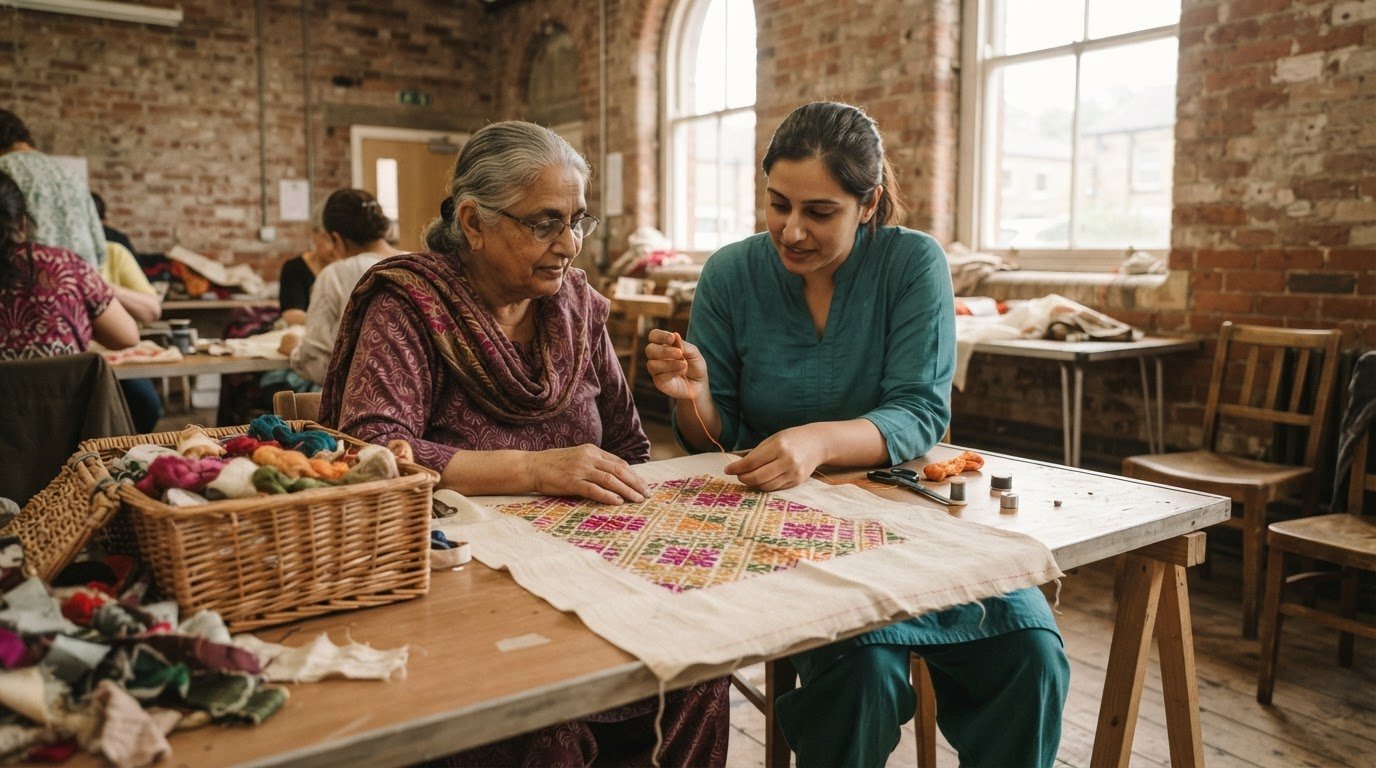
Community partners can also show how traditions work collectively. A local group preparing for a festival might involve younger participants in arranging music, welcoming guests or learning a customary greeting. Taking part gives learners practical experience of cooperation and shared responsibility. It can show how a celebration brings people together, rather than presenting culture as a display separate from everyday community life.
Partnerships are especially valuable when families have different levels of knowledge. A fluent speaker could help interpret a song’s words, while an experienced performer explains its rhythm and setting. Each person brings a distinct perspective. Learners can then understand how language, sound and community values interact without expecting one individual to represent every family or tradition.
Approach another culture by listening before sharing your own assumptions. In an international youth project, participants might introduce a customary greeting, describe its meaning and invite respectful questions. Openness helps people learn about unfamiliar languages and practices while reflecting on their own. Sharing should be reciprocal: participants contribute knowledge and listen carefully to others.
Partnership learning also requires care about who teaches and how knowledge is used. A community mentor may explain which parts of a practice are suitable for public participation and which need particular context. Follow their guidance, credit the people who share their knowledge, and avoid presenting one person’s account as universal. These actions build trust and support responsible cultural exchange.
The practical takeaway for families is to learn with people connected to the tradition, then practise what they teach with respect. A music workshop, community arts activity or festival project can offer opportunities to observe, ask questions, participate and reflect. This shared process keeps traditions active while helping younger learners understand the values carried through each practice.
Communities Together: Community Engagement Programmes
Communities Together helps families and local groups create shared opportunities to explore cultural traditions. Its Community Engagement and Cohesion programmes bring people together, while South Asian Arts and Culture programmes offer ways to participate in and express cultural knowledge through creative practice.
Turn to these programmes when you want to move from individual learning to a wider community effort, such as developing heritage activities with local participants or supporting cultural preservation. Communities Together also offers Health, Wellbeing and Social Connection activities that can complement community work through connection and shared learning. Its work focuses on strengthening relationships and supporting participation in cultural life across Huddersfield, Halifax, Leeds, Bradford and Wakefield.
To explore a community-based approach to sharing traditions, contact Communities Together.
Shape the next chapter of your family’s heritage
Passing traditions forward is an ongoing relationship between memory and change. As you consider how to pass on cultural traditions, invite younger relatives to help decide what they want to learn, practise and carry forward. Their ideas can shape how family heritage remains meaningful in the years ahead.
Start a conversation about what you hope future generations will understand about your family and community. Agreeing on that intention can guide your choices while leaving space for new voices and experiences. Cultural continuity grows through participation, care and a willingness to keep learning from one another.
Every shared contribution can strengthen connections between generations. Take the next step at a pace that feels right for your family, and let its heritage continue to grow through the people who value it.
Frequently Asked Questions
How do multicultural families balance more than one tradition?
Make room for each tradition without requiring them to be identical or equally familiar. A family could mark important dates on a shared calendar, then decide together what participation means for each person. Children might choose a song, greeting or family role for each celebration. Explain that different customs can coexist, and revisit arrangements as relatives’ needs and interests change.
How do you explain heritage to a child?
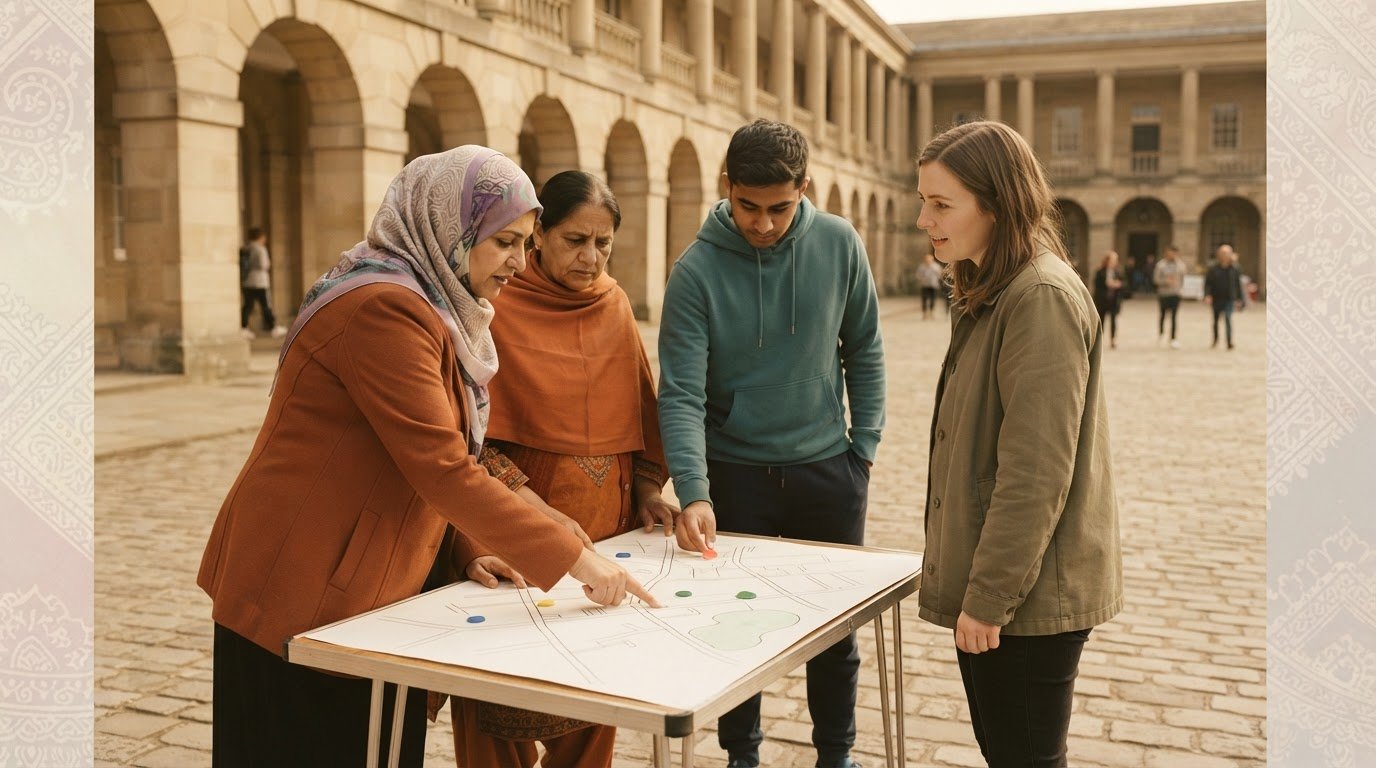
Explain heritage as the people, places, experiences and values that have shaped a family. A child might understand this through a relative’s hometown on a map, a familiar family name or a phrase used at home. Connect explanations to their questions and everyday life. If they ask why a custom matters, answer plainly and invite them to share what interests them.
How is cultural knowledge passed down through generations?
Cultural knowledge passes between generations through relationships and opportunities to participate. A child might first watch relatives prepare for a gathering, then take on a small role, such as welcoming guests or setting out meaningful items. Explain the choices behind each task and how it has changed over time. This gives younger people practical understanding as well as family context.
Quick Answer: How Do You Pass Down Family Traditions?
Choose a tradition with personal meaning, involve relatives who know it and give younger family members a way to participate. A family might share responsibility for preparing a celebration, explaining what each task represents as they go. Keep the activity flexible so people can contribute in different ways. Afterwards, discuss what everyone valued and what they would like to carry forward.
What if my child is not interested in family traditions?
Offer a choice rather than making participation a test of loyalty. A child who dislikes performing might prefer selecting music, helping with a practical task or asking a relative about one detail. Keep invitations open and let their interests guide their role. An interest in cooking, drawing or local history can be a starting point for exploring family culture at their own pace.
Why do stories matter so much in passing culture forward?
Stories help children understand how values shape real decisions, relationships and belonging. A relative’s account of moving home, welcoming a neighbour or learning a family skill can show kindness or responsibility in practice. Children can ask what the storyteller learned and whether the same value appears in their own lives. That connection makes family history relevant beyond the original event.
What are effective ways to pass cultural traditions on to children?
Pair a tradition with an activity children can shape, such as choosing a theme for a family gathering or helping prepare a display. In Huddersfield, Halifax, Leeds, Bradford and Wakefield, families can also find ways to take part in local community life. Give children a meaningful role, explain its purpose and let them suggest changes that keep the activity engaging.
How can families preserve cultural traditions across generations?
Make preservation a shared responsibility rather than relying on one relative to remember everything. A family can keep an updated record with names, dates, places and notes about how practices change. Ask relatives from different generations to contribute their perspectives, then agree who will maintain the record. This gives family members a clearer account of continuity and change to revisit later.
Comments