
Digital storytelling workshops for life stories in Wakefield
A life story is more than a sequence of dates. It can bring memories, meaning and personal perspective together in a carefully shaped narrative. Digital storytelling combines spoken or written narration with photographs, recorded voice and sound. Digital storytelling workshops in Wakefield can help people develop personal stories and scripts in a guided, creative setting.
It’s understandable to want to tell a story faithfully but feel unsure where to begin, what to include or how to shape memories into a clear narration. This article explains what digital storytelling involves, how life story workshops can help develop a personal narrative and what the process of writing a narration script may look like. It also covers practical considerations for planning a workshop, so you can see how storytelling can support individual expression, shared heritage and community connection.
Table of Contents
What is Digital Storytelling?
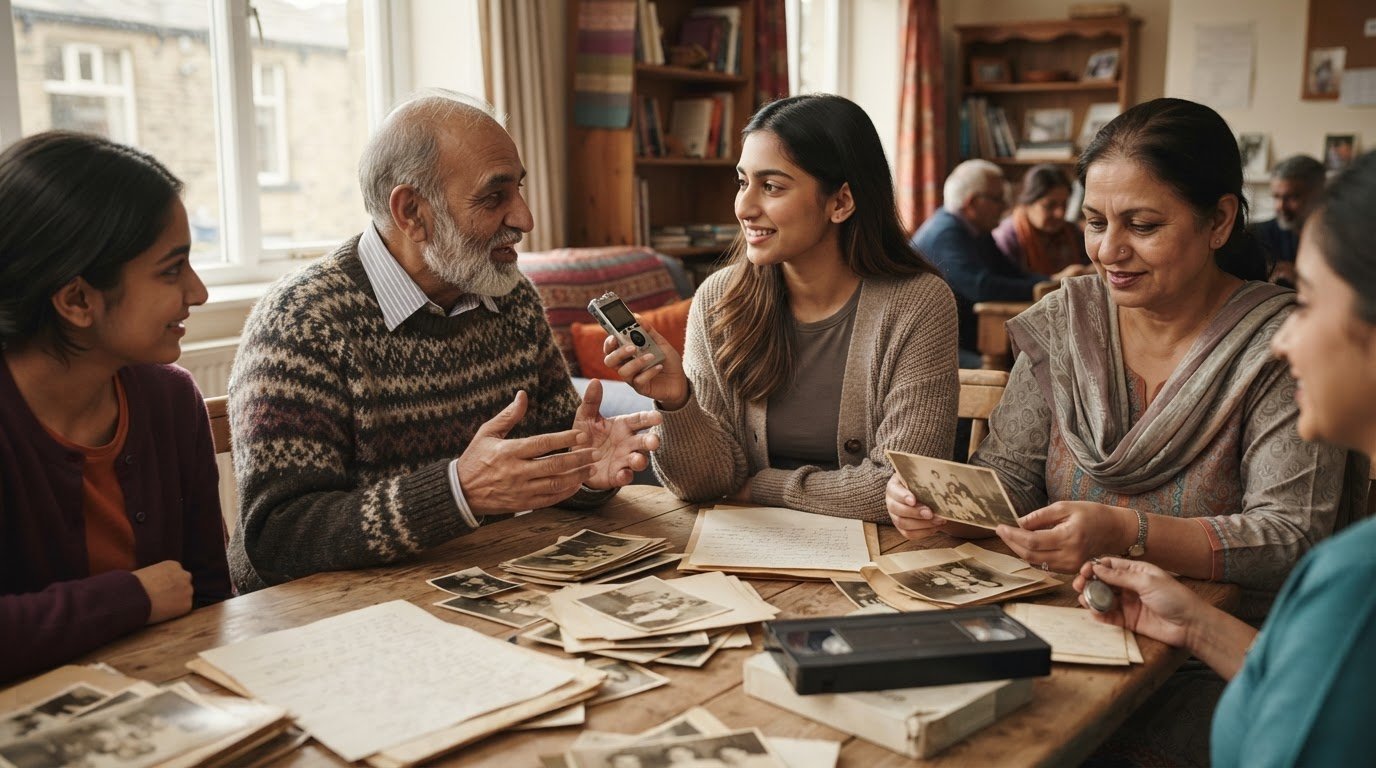
Digital storytelling brings a personal or community story together with digital media, such as photographs, recorded narration, music or short video. A participant might describe a family tradition, then pair the narration with photographs and meaningful sounds. The result can be a short, shareable story that preserves a perspective, place or memory.
For community partners, training can offer a practical way to guide people through the storytelling process. A facilitator can help a group choose a theme, gather memories, organise material, write a script and combine it with images or sound. For example, a neighbourhood group could collect stories about a local gathering place, with each participant choosing which memories to share.
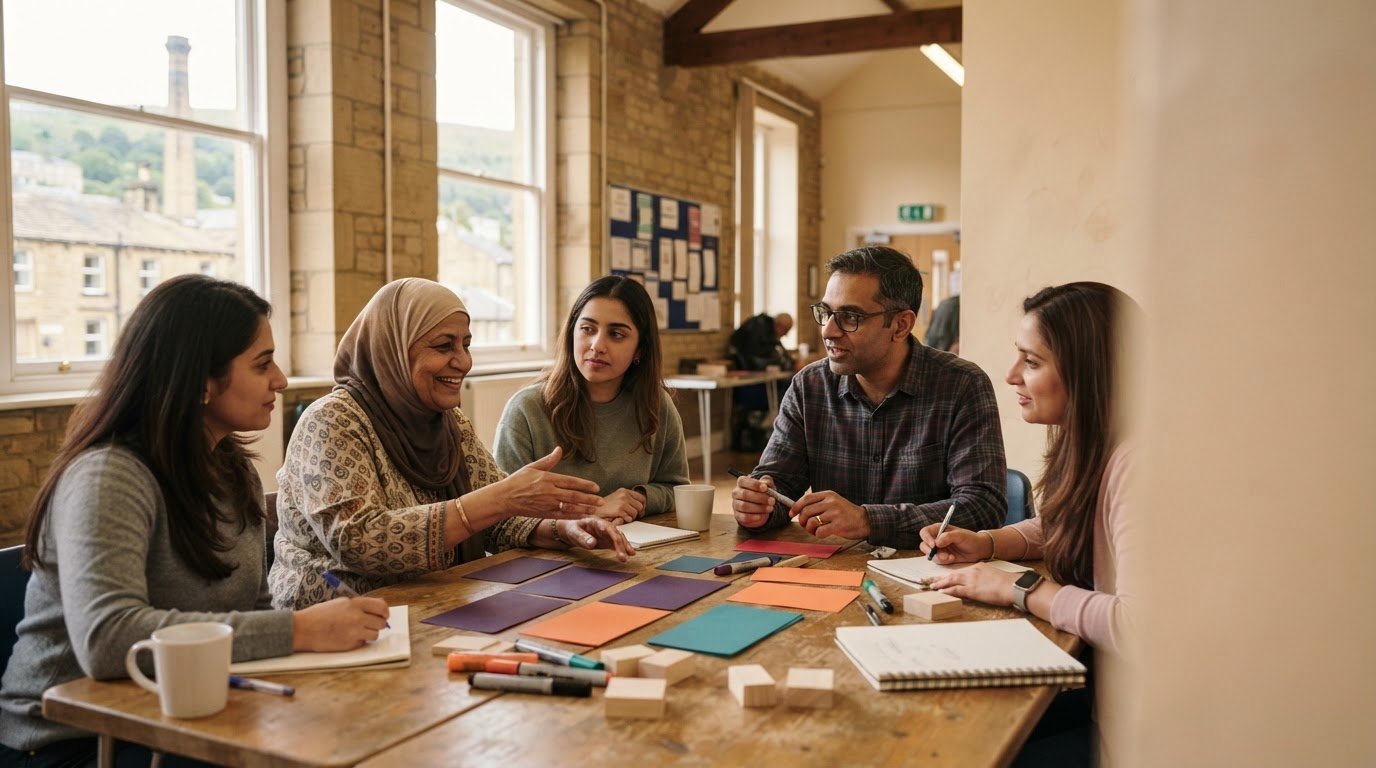
Good workshop design reflects both the participants and the purpose of the session. A community group may focus on shared heritage, while an organisation could use storytelling to help people express experiences and build understanding. Activities might include paired interviews, choosing photographs, drawing a scene or arranging events in sequence.
Are there online or nearby alternatives to digital storytelling workshops in Wakefield? Online sessions can use video calls and shared digital documents, while local community or arts settings can host in-person activities. The right format depends on whether participants benefit most from remote access, group discussion or practical help with materials.
Which organisations and venues in Wakefield run digital storytelling workshops? Community groups, arts organisations and learning providers may organise workshops in local spaces or online. Each programme has its own organiser and venue, rather than one shared Wakefield schedule.
Who can attend Wakefield digital storytelling workshops, and are there age or skill requirements? The intended participants and any age or skill criteria depend on the workshop. Digital storytelling can start with simple choices, such as selecting a photograph and describing its meaning, so advanced editing skills aren’t essential to share a story.
What dates and times are upcoming digital storytelling workshops in Wakefield? Each organiser sets its own dates and session times, so there’s no single schedule for all workshops. A programme might run as a one-off session or as several meetings, depending on its activities and aims.
How do I book a place on a digital storytelling workshop in Wakefield? Booking depends on the organiser’s process and may involve an online form, email or registration through a community programme. The programme information should explain how to reserve a place and whether you need to prepare anything beforehand.
What equipment, software or materials are provided or needed? A basic story can be developed using a written script, photographs and a phone or computer for recording. The tools depend on the final format: a spoken story with still images needs different editing steps from a film using video clips and sound.
Are workshops accessible, and what support is available for participants with disabilities? Accessibility depends on the session format, venue and activities. Inclusive planning can offer choices such as speaking, writing, drawing or selecting images, and consider readable materials, breaks and ways to contribute without appearing on camera.
Digital storytelling and life story workshops
A life story workshop helps participants explore experiences and decide how to share them. Someone might begin with a childhood memory, family custom or important turning point. A facilitator can help identify the details that give the memory meaning. Participants then shape it into a clear narrative instead of trying to include every event. This gives each storyteller control over the focus and perspective of their account.
For example, a participant could centre a story on learning a family recipe. They might describe who taught them, what the recipe represents and how it has changed over time. This focus connects a personal memory with cultural knowledge and relationships across generations. A workshop can make room for different ways to contribute, including speaking, writing or arranging remembered events. The aim is a story that reflects the storyteller’s own voice.
Life story work also involves deciding thoughtfully what should remain private. Before developing a story, participants can consider which memories feel appropriate to share, who might hear them and whether names or details should be changed. A facilitator can help the group agree to listen respectfully and respond without judgement. This matters when stories involve family, loss, migration or difficult transitions. Participants should retain control over what they tell and how it is presented.
Some storytelling practices use folk or fairy tales to prompt reflection. Restorative Stories workshops begin with a different tale connected to restorative themes, giving participants a shared starting point before they consider their own experiences. A familiar story can help a group discuss choices, relationships and repair indirectly. It also gives people time to listen before deciding whether to share a personal account. The tale is a prompt, not a substitute for anyone’s lived experience.
Sharing stories may support connection and personal reflection, but it is not clinical mental health treatment. A facilitator can give participants space to pause, pass on an activity or choose a less personal topic. For instance, someone could tell a story about a significant place rather than recount a painful event. These options respect different comfort levels while allowing the group to take part in a shared activity.
For community wellbeing, the value can lie in listening as much as storytelling. A group can notice common themes, preserve memories that might otherwise go unrecorded and build understanding between generations. A useful closing step is to invite participants to reflect on what they want others to take from the session. If you’re exploring how community activities can nurture connection and resilience, community wellbeing work offers a relevant starting point.
The Joy of Storytelling weekend workshop is intended for story lovers aged 18-118. Its invitation offers another setting for people who enjoy stories to gather, listen and share.
Personal narrative development
Developing a personal narrative starts with choosing one experience that has clear meaning. It could be the first day at a new school, a journey to Wakefield or a moment when a friendship changed. A focused memory gives the storyteller a manageable starting point. They can then identify what happened, who was there and why the moment still matters. This approach builds a story around personal meaning instead of trying to recount an entire life at once.
A simple structure can make a story easier to follow. Set the scene, introduce the event, describe its key moment and reflect on what followed. For example, a story about moving home might begin with an unfamiliar street, then recall a neighbour’s welcome. The ending could explain how that first meeting changed the storyteller’s sense of belonging. These stages guide the reader through the memory without dictating the conclusion.
Conversation can help people find details they might overlook when writing alone. A facilitator can invite someone to describe a remembered place, sound or phrase. The storyteller chooses which details belong in the final account. Informal one-to-one conversations can gather material, followed by a separate editing discussion with the storyteller. This gives them room to review the wording, correct details and keep the narrative true to their perspective.
Personal stories may include other people, shared events or sensitive experiences. Before recording, the storyteller can decide whether to use names, change identifying details or leave out a memory. For instance, someone describing a family disagreement might focus on their own response rather than identify relatives. Agreeing who will hear the finished story also helps participants make informed choices about sharing.
Once the narrative has taken shape, participants can adapt it for a digital format. They might pair an account of a first job with a photograph of the workplace, or use a hand-drawn map to show a meaningful route. Each image or sound should add context, not distract from the spoken story. Reading the draft aloud can reveal awkward sentences or transitions that need more explanation.
Feedback works best when it helps the storyteller achieve their own purpose. A listener might ask which moment feels central or whether the ending says what they want it to say. The storyteller can then revise the script, reorder events or remove material that no longer fits. This process supports learning and personal development through planning, expression and reflection, while leaving authorship and final decisions with the person telling the story.
Tailored digital storytelling workshops
A tailored workshop starts with a defined purpose and a clear understanding of its participants. A residents’ group might want to preserve memories of a changing neighbourhood, while a workplace team may focus on belonging and shared values. Those aims shape the prompts, activities and final format. Agreeing on the purpose first helps facilitators design a session for participants instead of asking everyone to follow an unsuitable template.
Next, consider who will take part and how they prefer to communicate. Some participants may enjoy speaking, while others express ideas through writing, drawing or choosing photographs. A workshop can offer several ways to contribute, such as paired conversation followed by an individual choice of story material. This flexibility helps people with different levels of confidence, literacy or digital familiarity participate meaningfully.
The story theme should suit the group’s context. A cultural association could explore how a celebration has changed across generations, while a youth group might document what makes a local place feel welcoming. Facilitators can prepare prompts about objects, sounds, places or shared traditions. Participants then choose what feels relevant, keeping ownership of their experiences and avoiding pressure to disclose personal details.
Practical planning also shapes the session. Before the workshop, organisers can agree:
The intended audience and the story’s purpose.
Whether participants will work individually, in pairs or as a group.
Which materials suit the activity, such as photographs, paper, voice recordings or drawings.
How stories will be reviewed and who may see the finished work.
Whether the output should be an audio piece, a narrated slideshow or another simple format.
These choices connect the creative activity to the group’s needs. For example, a community project preserving local heritage might invite participants to contribute a memory each, then arrange the accounts around a shared place. A staff development session could instead use fictional scenarios, allowing colleagues to practise listening and narration without sharing private experiences. In both cases, the format should serve the purpose, not dictate it.
Accessibility and consent belong in the plan from the outset. Organisers can provide large-print prompts, offer breaks and let participants pass on an activity. They can also agree whether names, faces and identifying details will appear in a finished story. A clear review stage lets each contributor correct, remove or approve their material before it is shared.
After the session, a short reflection helps organisers assess whether the workshop met its aims. Participants might identify what they learned, which activity helped them contribute or what they would change next time. This feedback can guide future sessions and help the programme better serve the community or organisation.
Writing and recording narration scripts
A narration script provides the spoken thread of a digital story, connecting memories, images and sounds into a coherent account. Begin by deciding what listeners should understand or feel by the end. A story about a family journey, for example, might focus on the moment a new place began to feel like home. That purpose helps the storyteller choose relevant details and leave out events that distract from the central meaning.
Write as you speak. Short, direct sentences are easier to read aloud than formal prose, while specific details help listeners picture each moment. Instead of writing, “The day was memorable,” describe rain on a station platform or a familiar voice in the crowd. Draft freely, then read the words aloud and mark phrases that sound awkward or unlike your usual voice.
A practical script can follow a simple progression: set the scene, describe the key event, explain its significance and close with a reflection. Transitions guide listeners between these parts. For instance, “Years later, I understood why that conversation stayed with me” signals a shift from memory to reflection. The sequence should feel natural, not rigid. The storyteller can rearrange sections to suit their account.
Before recording, check that every sentence contributes something useful. Remove repeated explanations, clarify names or places, and pause where listeners need time to absorb an idea. A printed copy or text on screen can help the narrator keep their place. Reading the draft aloud also reveals whether a sentence needs rewriting, a word is difficult to pronounce or the ending arrives too suddenly.
For a clear voice recording, choose a quiet space and reduce interruptions such as nearby conversations or notifications. Keep the recording device steady and speak at a comfortable pace, leaving room between phrases for natural pauses. A phone or computer can record the narration, while editing software can trim unwanted silence and arrange the recording alongside images. The final format determines the tools and editing steps needed.
Review the recording alongside its visuals. If a photograph shows a family home, the narration might explain what made the room important instead of simply naming the image. Check that the spoken words match what appears on screen and that background sound doesn’t compete with the voice. The storyteller should listen to the finished version and approve edits before it is shared.
A narration script can be developed through learning and personal development activities that build confidence in writing, speaking and reflection.
The process can also reflect how a story will be shared. The Abandoned Library launched at The Art House as a physical exhibition and installation that ran for three weeks alongside family creative-writing workshops. This example shows how narration can be connected with a shared creative experience.
Chronicle records life stories through informal one-to-one conversations with clients, then edits each story separately with them. For narration, this can mean shaping a script through conversation and review rather than treating the first draft as final. Writers can still read each passage aloud and consider whether it reflects the storyteller’s intended meaning.
Communities Together: Community Engagement Programmes
Communities Together delivers Community Engagement Programmes for groups seeking to strengthen local connection, participation and shared understanding. If your community wants to make space for stories, cultural knowledge or collective reflection, these programmes offer a relevant starting point for collaborative activity. South Asian Arts and Heritage Activities and Heritage and Cultural Preservation projects support communities exploring and sustaining cultural traditions, while Wellbeing and Resilience Workshops focus on strengthening personal and community wellbeing. The right approach depends on your group’s priorities and the outcomes you want to build together. For community projects that need partnership or stronger local capacity, Communities Together can support collaborative development. Contact Communities Together to discuss your community’s aims.
Shape a next step for your community
A story can provide a shared starting point for conversation, learning and cultural connection. If you’re considering digital storytelling workshops in Wakefield, begin by identifying whose perspectives you want to make space for and what your community hopes to carry forward. That purpose can guide the stories, activities and ways of sharing that suit your group.
Communities Together’s Community Engagement Programmes, South Asian Arts and Heritage Activities, and Wellbeing and Resilience Workshops offer related ways to build participation, preserve cultural knowledge and support community wellbeing. They can be a helpful next step when you want to bring people together around shared experiences and local priorities.
Every meaningful community story begins with someone willing to listen and make room for another voice.
Frequently Asked Questions
What digital storytelling workshops are available in Wakefield, UK?
In Wakefield, Communities Together’s Community Engagement Programmes and South Asian Arts and Heritage Activities provide local opportunities to explore shared stories and cultural participation. These can suit community groups interested in documenting traditions, local identity or collective experiences. People in nearby Huddersfield, Halifax, Leeds and Bradford can also take part in the organisation’s community-focused activities. The most suitable approach depends on whether your priority is learning digital techniques, preserving heritage or bringing people together.
What skills and activities do Wakefield digital storytelling workshops cover?
Workshops can help participants practise asking clear interview questions, selecting useful material and arranging it into a story listeners can follow. A practical group activity might involve recording a short conversation, choosing relevant images and assembling them in a simple editing programme. Participants can also practise reviewing playback, adjusting sound levels and organising files so the final story is easier to revise, share and preserve.
Comments