
Community project funding: Find grants and local support
What if the strongest funding bid begins with the community, not the application form? To understand how to get funding for a community project, start by identifying what local people need and what the project aims to achieve.
It’s understandable to want a clear route through eligibility rules, application requirements and waiting times, particularly when a project depends on support from several partners. The right opportunity will depend on the project’s purpose, location, scale and the organisation applying, so matching these details to a fund’s criteria is an important first step.
This guide explains where to look for grants and local support, which groups may be eligible, what to include in an application and what can affect decision times. It also shows how community members can shape a project from the outset, helping you make a grounded case for its activities, resources and lasting local benefits.
Table of Contents
Where does the funding come from?
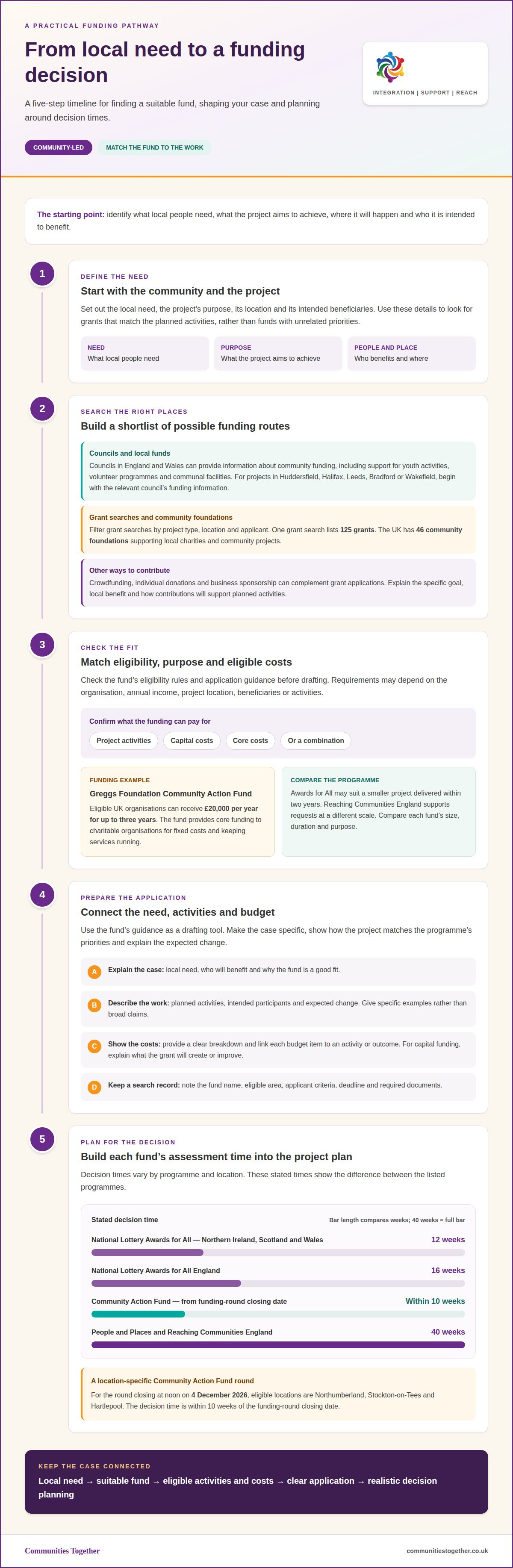
Begin with the project’s purpose, location and intended beneficiaries. These details help you find grants that match the planned activities rather than funds with unrelated priorities. Councils in England and Wales can provide information about community-based funding, including grants for youth activities, volunteer programmes and communal facilities. For projects in Huddersfield, Halifax, Leeds, Bradford or Wakefield, start with the relevant council’s funding information.
Next, use a grant search tool to filter by project type, location and applicant. One grant search lists 125 grants in total, so filters can help narrow the results. Read each fund’s eligibility criteria and application guidance before drafting a bid. Check whether funding supports project activities, capital costs, core costs or a combination, since the eligible spending determines how you present the budget.
Greggs Foundation Community Action Fund: Eligible UK organisations can receive £20,000 per year for up to three years.
Choose a programme whose priorities match the project’s outcomes. A cultural activity, for example, may suit an arts fund, while a programme that increases local participation may fit a community-focused grant. The Community Action Fund provides core funding to help charitable organisations meet fixed costs and keep services running. This differs from a project grant restricted to specific activities.
Prepare a concise case for support before completing an application. Explain the local need, who will benefit, what the grant will fund and how the work can create lasting community benefit. Set out proposed costs clearly, linking each budget item to an activity or outcome. For capital funding, explain what the grant will create or improve.
Use the fund’s application guidance as a drafting tool, not just a final checklist. Match each response to the programme’s priorities, give specific examples and avoid broad claims about community impact. Describe the planned activity, intended participants and expected change. This makes the case easier to assess and shows why the grant is a good fit.
Compare grant size, duration and purpose before deciding where to apply. Awards for All may suit a smaller project delivered within two years, while Reaching Communities England supports requests at a different scale. A well-matched application links local need, practical activities and a credible budget to the fund’s stated aims.
Other local authority, public body and business funding
To find local council and community foundation grants in the UK, search your council’s funding pages and contact its community or grants team. The UK has 46 community foundations supporting local charities and community projects, so a foundation serving your area may help identify relevant funds.
Alongside grants, crowdfunding, individual donations and business sponsorship can help fund a project. Set a clear target, explain the local benefit and show potential sponsors how their contribution would support the planned activities.
Local searches matter because eligibility can depend on a project’s borough, beneficiaries or connection to a particular place. Search council and borough funding pages using the project’s location and purpose, then record each fund’s eligible area, applicant types and closing date. A community fund serving one borough may not accept a project elsewhere, even if its aims seem relevant.
Community foundations can provide a local route into charitable funding. Their knowledge of the area may help connect projects with opportunities shaped by local priorities. Prepare a short project summary before making an enquiry. Include the community need, proposed activities, intended beneficiaries and amount requested to help identify whether a fund’s objectives align with the project.
Business and public-body programmes may have narrower remits. Before preparing a full application, compare the project’s beneficiaries and planned work with the fund’s eligibility requirements.
The Community and Environment Fund and Business and Local Economy Fund support communities and local economies disrupted by construction of HS2 Phase One and Phase 2a between London and Crewe. Public sector and non-profit organisations can apply. This is a location-specific example, not a general source for projects outside affected communities.
The Connect Fund is another public-body route: public sector organisations, non-profit organisations and local authorities can apply. Compare its aims with the project, then explain that fit in the application rather than treating every public fund as interchangeable.
For crowdfunding, describe a specific goal and explain how donations will contribute to it. You can approach sponsorship as a partnership: identify a local business whose priorities connect naturally with the project, then set out the community benefit and proposed activities. These routes can complement grant applications, but contributions need clear plans for management and progress reporting.
Keep a simple search record with the fund name, eligible area, applicant criteria, deadline and required documents. A community-led approach can help ground the project in local priorities before you present it to potential funders.
Application documents and decision times
Major UK grant processes vary by programme, location and application round. National Lottery Awards for All England takes 16 weeks to make a funding decision; its Northern Ireland, Scotland and Wales programmes take 12 weeks. People and Places and Reaching Communities England take 40 weeks, so include assessment time in project planning.
For the funding round closing at noon on 4 December 2026, eligible locations are Northumberland, Stockton-on-Tees and Hartlepool. Community Action Fund applicants can expect a decision within 10 weeks of the funding-round closing date. The Connect Fund listing gives a closing date of 18 December 2026 at 5:00pm, so plan around each programme’s stated deadline.
Prepare documents that show the organisation can manage the grant and deliver the proposed work. Community Action Fund applicants must have latest audited accounts, a current-year income and expenditure forecast, and a full breakdown of requested costs. They must also have annual income between £25,000 and £1,000,000 in their latest accounts, services delivered for over a year, free reserves below six months’ running costs, and at least three unrelated trustees or directors.
Useful application tools include the funder’s guidance, a project budget spreadsheet and a document checklist. Guidance clarifies eligible activities and required answers; a spreadsheet links each cost to delivery; a checklist helps organise accounts, forecasts and supporting evidence before submission. For a non-profit applicant, present income, expenditure and reserves clearly rather than relying on general statements about financial stability.
Grant conditions also shape what happens after an award. Read the funding agreement for permitted spending, project dates, reporting requirements and changes that need approval. Organise invoices, attendance records and activity summaries against the approved budget. These records help show how funds were used and whether the project delivered its intended outcomes.
Restrictions differ between programmes, so the award terms determine eligible spending and reporting duties. Spending outside the approved purpose or missing a report may put future payments or compliance at risk. Add reporting dates to the project calendar and assign responsibility early.
For a stronger application, answer each prompt directly and use evidence suited to the fund. A council or national funder may ask for a case for support, delivery plan and budget, so connect local need, activities and outcomes. Check opening dates as well as closing dates: the Woodland Creation Planning Grant is open year-round, while time-limited rounds need advance preparation. Allow time to gather documents, obtain trustee approval and refine the submission before applying.
Eligible organisations and locations
Eligibility depends on the funder’s mission, the applicant’s structure and the project’s location. Compare all three with the fund criteria before applying. A fund for registered charities may not suit an informal group, while a regional programme may support work only in named communities. Check both the organisation’s and project’s requirements, not just the grant amount.
Income limits can be just as important. These examples show why financial thresholds must be checked against the applicant’s accounts.
Other programmes consider an organisation’s age or the people it serves. The Educational Opportunity Foundation supports charitable organisations improving education access or quality for children and young people under 25.
Geography can define eligibility as closely as charitable purpose. The Boots Charitable Trust funds charities and voluntary organisations working in health, lifelong learning, community development and social care. Its sector priorities matter alongside location and applicant type. For example, a project addressing mental wellbeing should describe its community activities accurately and not present them as clinical treatment.
For each opportunity, use an eligibility matrix to record applicant type, income threshold, project location, beneficiary group and deadline. A grant search tool can help identify programmes, but the funder’s criteria page is key to checking whether the organisation and project fit. Record evidence beside each requirement, such as the latest accounts for an income test or a project address for a geographic test. This makes gaps visible before you draft an application.
There is no single UK-wide requirement for match funding or community contributions. The individual fund’s criteria determine whether a contribution is required and which forms it accepts. Distinguish cash match funding from donated time or resources only where the application guidance allows.
Deadlines can also affect eligibility. A funding round may accept applications only from specified places, even when the programme operates more widely. Confirm the eligible area and closing date for the exact round, then check that the applicant’s legal form, mission and accounts meet its conditions. This avoids spending time on an application that cannot proceed.
Community-led projects
Start with a clear idea of what the project aims to achieve. A community-led proposal grows from a need identified by local people, rather than an activity chosen before hearing their views. For example, if residents want more opportunities for children to take part in local cultural activities, describe that need and the proposed response. This defines the project’s purpose before you look for a funding scheme.
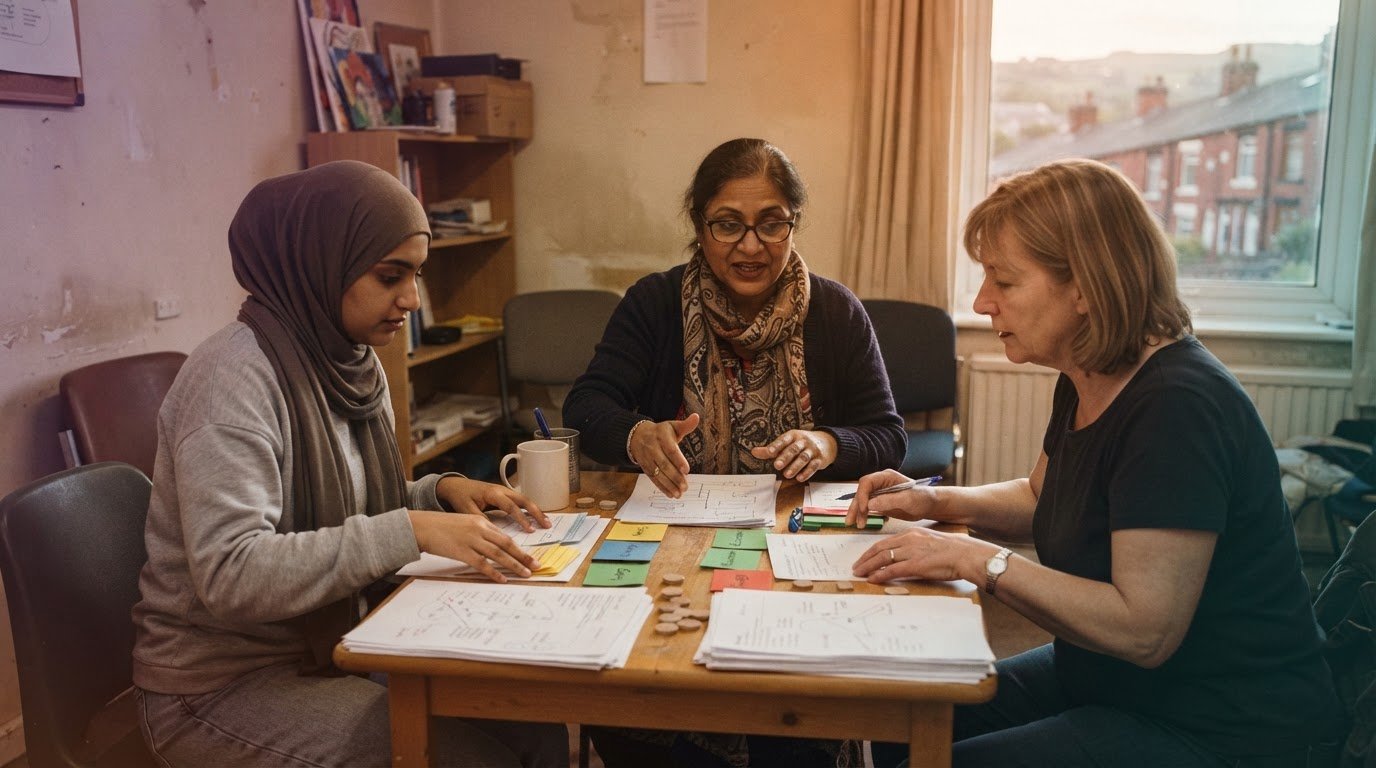
Show how local people shaped the idea and how they will help deliver it. Record who contributed, what they said and how their views changed the plan. A short meeting summary or feedback record can illustrate this process. If a group identifies barriers to attending activities, explain how the project responds instead of making broad claims about community support.
Make the application connect community priorities to practical delivery:
Need: Describe the issue residents identified, using a specific example.
Activities: Set out what the group will do and who will take part.
Outcome: Explain what change participants and the local community should experience.
This connection helps funders understand why the project matters and how its activities serve its stated mission. A charitable scheme may have particular aims, so make the link explicit. For a heritage project, for example, explain how the activities support cultural participation and preserve knowledge within the community.
Community leadership should continue after an application is submitted. Agree on roles for planning, delivery and reviewing progress so local participants remain involved throughout. A simple responsibility table can show who coordinates activities, gathers participant feedback and records progress. It can also help the group identify decisions that need wider discussion before they affect delivery.
Choose evidence that fits the project. A meeting record can show how residents shaped the proposal; a draft activity plan can demonstrate how their ideas will be put into practice. If children are among the intended participants, describe their role in a way that suits the project and explain how their views inform its activities. Keep claims proportionate to the evidence the group can provide.
Align community involvement with the fund’s timetable. Work backwards from the closing date, allowing time for local discussion, partner input and trustee approval where needed. A brief project summary can help the group explain its idea consistently while refining the details. The central takeaway is simple: define the community’s aim first, then connect each activity and outcome to it.
Communities Together
Communities Together supports groups to strengthen the community foundations behind a project before they seek funding. Its Community Engagement Programmes and partnership and community capacity building help local groups bring people together, develop shared priorities and build collaborative approaches. This support can help when a project needs stronger community involvement or clearer local ownership before an application is prepared.
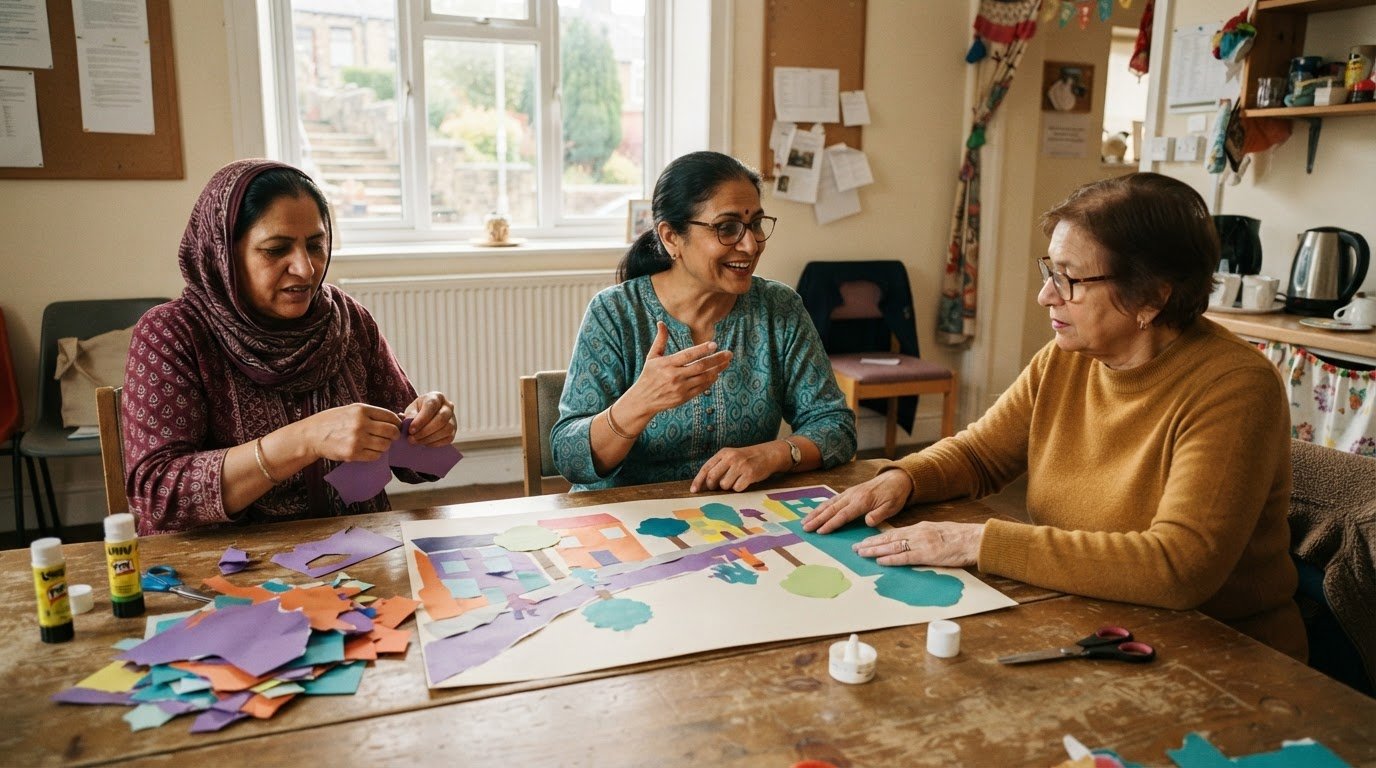
For projects centred on South Asian arts, heritage or cultural preservation, relevant activities can help sustain cultural knowledge and participation. The focus is community development, not a promise of grant funding or bid-writing outcomes. A well-grounded project begins with the people it aims to benefit and a purpose they recognise.
Build the next step around your community
A funding plan can be the beginning of a longer process: turning a shared idea into activities that people can shape, take part in and sustain. As you decide how to get funding for a community project, consider how residents can stay involved after the application is submitted, from refining the project’s purpose to contributing to its development.
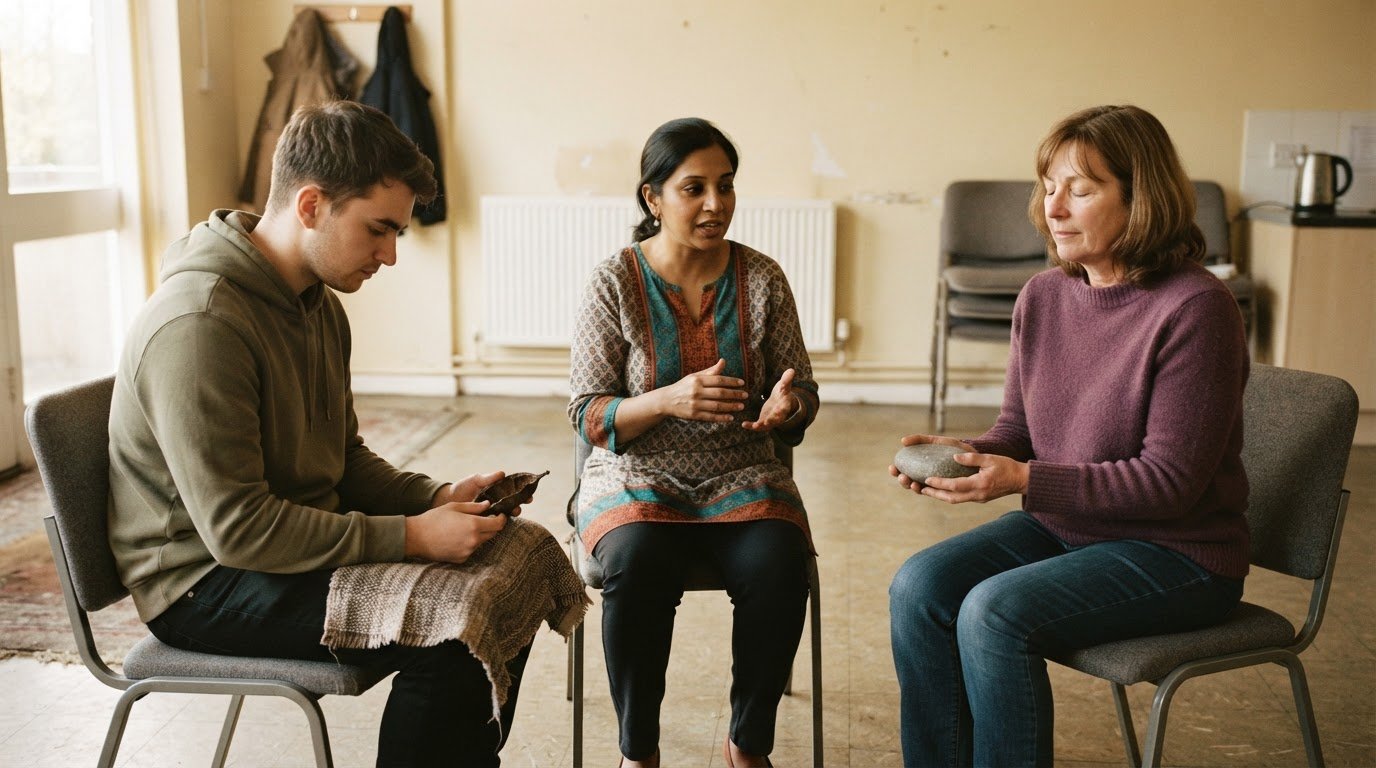
Communities Together offers Community Engagement Programmes, South Asian Arts and Heritage Activities, and Wellbeing and Resilience Workshops. These can support community participation, cultural continuity and collective wellbeing as groups develop projects rooted in local priorities. A useful next step is to bring people together around an idea and identify how their knowledge can shape it.
Your project does not need to begin as a complete plan. A shared purpose and a considered next step can help your community build towards meaningful, lasting activity.
Frequently Asked Questions
Can you help me write my funding bid?
Communities Together supports the community engagement and capacity building that can inform a funding bid. This helps groups clarify whose priorities shape a project and how local partners can contribute. For communities in Huddersfield, Halifax, Leeds, Bradford and Wakefield, grounding a proposal in local participation makes its purpose clearer. The application should then address the chosen funder’s questions, eligibility criteria and assessment priorities directly.
What other support can I get?
Alongside support for developing a project with its community, Communities Together offers Community Engagement Programmes, South Asian Arts and Heritage Activities, Wellbeing and Resilience Workshops, and Heritage and Cultural Preservation. These activities help groups build participation, develop shared priorities and sustain cultural knowledge. The right support depends on the project’s aims and intended participants, whether its focus is local connection, heritage or community wellbeing.
What funding options are available for community projects in the UK?
UK community projects may seek support through council grants, National Lottery programmes, charitable trusts, community foundations, public-body or business funds, donations, crowdfunding and sponsorship. Each route has its own priorities and eligibility rules. A local fundraising plan might combine an application to a suitable grant programme with community donations or a business partnership, provided each contribution is managed and used in line with its terms.
Which UK grants fund community projects, and who is eligible?
Eligibility varies by fund. Compare applicant type, beneficiary group, purpose and location: meeting one criterion does not establish eligibility for every fund.
What documents and evidence do UK community grant applications require?
Requirements depend on the programme and applicant. A fund may request governing or financial documents; the Community Action Fund requires the latest audited accounts, a current-year income and expenditure forecast, and a full breakdown of requested costs. Prepare evidence about the project as well as the organisation, such as a project plan, activity timetable and records showing how community views informed the proposal. Follow the fund’s own document list.
How to write a successful community project funding application and budget?
To plan how to get funding for a community project, connect a clear community need to activities, costs and intended outcomes. For example, a programme of cultural workshops could itemise facilitator time, materials and access needs, then explain how each cost enables participation. Organise the case under the funder’s headings, keep the budget consistent with the project plan and explain how you will record progress.
How much funding do UK community project grants typically offer?
There is no single typical grant amount: awards vary by fund, project purpose and eligible applicant. Treat these as examples of different programme scales, not a forecast of what a particular organisation or project will receive.
Can a community project receive funding without being a registered charity?
Yes, some funding routes can support applicants that are not registered charities, although eligibility depends on the scheme. Check the fund’s applicant criteria and make sure the project’s purpose fits its priorities.
Comments