
Building a support network in a new city with balanced support
A balanced support network is stronger than a circle built around one close friendship. If you’re building a support network in a new city, look for different people and places to turn to as your needs change, rather than expecting one person to provide every kind of help.
It’s natural to want familiar, trusted connections after a move, while also needing practical advice, shared interests and a sense of belonging in your new community. This guide explains what a support network can include and how to find local people and activities that suit your circumstances.
You’ll learn how to identify the support you need, build connections through shared activities and community groups, and maintain a balanced network of confidants, practical supporters and knowledgeable advisers. The aim isn’t to collect contacts, but to develop relationships that offer encouragement, useful guidance and mutual support over time.
Table of Contents
1. What is a support network?
A support network is the group of people and community connections you can turn to for company, advice or practical help. It may include family, friends, colleagues, neighbours and acquaintances, not just your closest companions. Building a support network in a new city means making connections in different parts of everyday life, so support doesn’t depend on one person or social circle. For example, a neighbour might share local knowledge, while a colleague offers a friendly conversation during the working day.
Families can start locally with parent groups and family activities at public libraries or recreation centres. These settings give parents a chance to meet others with similar routines while children take part in shared activities. Choose something that fits your family’s schedule, attend regularly and begin with brief conversations. Familiar faces make it easier to exchange local recommendations, arrange another meeting or recognise someone at a future session.
Connections also form through work, hobbies, volunteering and neighbourhood life. You might meet colleagues at work, join a walking group and get to know nearby residents through regular conversations. Each setting offers a different route into the community, and each relationship may provide a distinct kind of help. A colleague, for instance, may explain workplace routines, while someone in a local group shares knowledge about accessible activities nearby.
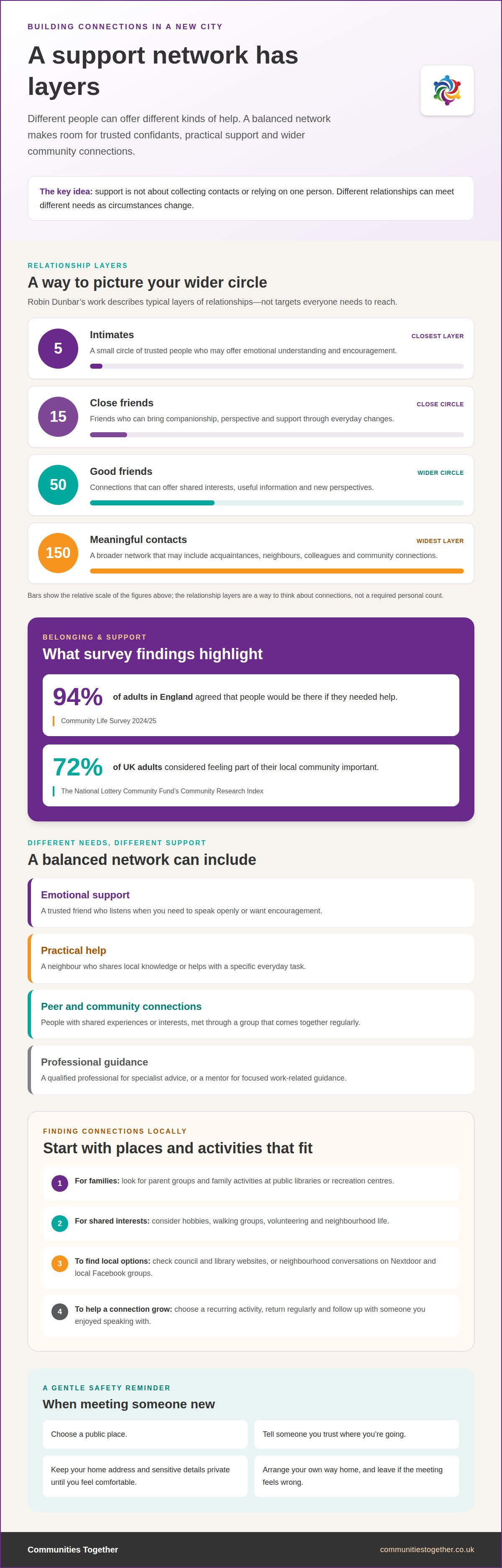
Social circles can be thought of as layers, rather than one fixed group. Robin Dunbar’s work describes typical layers of roughly five intimates, fifteen close friends, fifty good friends and a hundred and fifty meaningful contacts. These figures are a way of thinking about relationships, not a target everyone must reach. One trusted confidant may offer emotional understanding, while wider connections bring new perspectives, information and opportunities to participate.
Building and maintaining connections takes effort, particularly when a move disrupts familiar routines. It can be difficult to meet people repeatedly, stay in touch around work or family commitments, or move from polite conversation to trust. Choose a recurring activity, then follow up with someone you enjoyed speaking with. A simple message or coffee invitation can keep an initial conversation going when schedules get busy.
Regular contact can help you feel supported through change, from adjusting to a new job to finding your way around an unfamiliar neighbourhood. A trusted person may offer encouragement, while a practical contact can help with a specific task, such as finding a local service. Social connections can contribute to resilience throughout life, and shared walks or meals bring social contact into routines linked with physical health. A balanced network makes room for both.
2. Emotional, peer, professional and community support
Support can be emotional, practical, professional or community-based, with each serving a different purpose. A trusted friend may listen after a difficult day; a neighbour might help carry groceries; a colleague can explain workplace routines. Peer support groups connect people with similar experiences, while qualified professionals offer specialist guidance. Distinguishing these roles helps prevent one relationship from carrying every need and gives you more than one source of support.
Emotional support might mean speaking openly with a friend, while practical help could involve asking a neighbour about local transport. Community support can come from a group that meets regularly, and professional advice may help with a specific challenge. In England, 94% of adults agreed people would be there if they needed help, according to the Community Life Survey 2024/25. The National Lottery Community Fund’s Community Research Index found that 72% of UK adults considered feeling part of their local community important. These findings point to both personal relationships and wider belonging.
Balance matters at work as well as at home. A colleague can explain team routines, but a friend outside work may offer a different perspective without workplace pressures. If a change at work creates uncertainty, a mentor can provide focused guidance, while a social group offers company beyond professional roles. Keep sensitive personal matters with people you trust, and use professional networks for work-related advice, introductions and shared learning.
In the UK, Nextdoor and local Facebook groups can help you find neighbourhood conversations, recommendations and meet-ups. Council and library websites may list nearby activities, while online support groups connect people with shared experiences. Use these sources to find a relevant group, then choose a low-pressure way to take part, such as joining an online discussion before attending an event.
When meeting someone through an app or group, choose a public place and tell someone you trust where you’re going. Keep your home address and sensitive personal details private until you feel comfortable, arrange your own way home, and leave if the meeting feels wrong. These steps help you stay in control as you get to know new people.
For mental health concerns, peer support can offer understanding, but it doesn’t replace professional care. Consider seeking a professional referral if everyday activities become difficult, progress stalls or someone you trust raises concerns about your wellbeing. NHS services, charities and employer programmes may also provide assistance. Groups seeking to strengthen local connections can explore community engagement programmes as a way to support participation and shared activity.
3. Finding local groups and shared-interest communities
After moving, start with activities that fit your interests and weekly routine. A book group, walking club, language class or volunteering session gives you something specific to share with others. Search council listings, library noticeboards and local community pages for nearby options. Choose one group and attend regularly instead of trying several unrelated events at once. Repeated contact creates more opportunity for conversation than a single introduction.
Local clubs, classes and social activities in the UK have no standard cost; fees depend on the organiser, venue, materials and membership arrangements. Some activities charge a fee, while others are based on shared participation. Before committing, consider whether the timing, location and format suit your routine, as well as any stated costs. A weekly class near home, for example, may be easier to keep attending than an event that involves a long journey.
Community events offer a way to meet people without needing an existing invitation. A neighbourhood celebration, volunteer activity or local arts event gives newcomers a shared focus for conversation. The National Lottery Community Fund’s Community Research Index found that 45% of people who felt part of their local community named meeting people as a benefit. Treat an event as a first connection, then follow up by attending another activity or exchanging contact details where appropriate.
Shared interests can make it easier to communicate your needs and expectations. In a gardening group, for instance, you could say you’re new to the area and want to learn about local growing conditions. If you need a quieter setting, ask about the session format before joining. Clear, simple communication helps others understand whether you’re looking for company, practical knowledge or a chance to contribute.
Eating together can also create a natural setting for conversation. A community meal or cooking group combines a shared task with time to get to know people, without making every interaction feel like a formal introduction. Choose a setting where the activity itself interests you, so attending remains worthwhile while connections develop. A strong support network can grow through several groups, rather than relying on one activity to meet every social need.
Community involvement can lead to mentorship as well as friendship. If you’re changing jobs, a professional association or volunteering project may introduce you to someone with relevant experience. Keep the first request specific, such as asking how they entered a particular field, and respect their time. Research from the University of Kansas estimates that around 50 hours of shared leisure time can move acquaintances towards casual friendship, while around 90 hours can help people become proper friends. Such estimates underline the value of showing up consistently, not rushing familiarity.
Using self-care needs to identify useful support
Start by noticing which parts of daily life feel manageable and which feel challenging. After a move, you might feel confident at work but isolated in the evenings, or find errands harder without familiar local knowledge. These experiences can point to different kinds of support. A friend might listen, while a neighbour could share practical advice about the area.
Briefly assess your emotional, practical and professional needs. Ask yourself whether you have someone to talk to, help with everyday tasks, and guidance for work or study. You might also consider cultural connection, family responsibilities or support during a health-related change. This isn’t a test of how many relationships you have; it helps clarify what kind of connection would be useful now.
Next, take stock of relationships you already have, including contacts outside your new city. A relative who lives elsewhere may still offer emotional support by phone, while a former colleague could provide career advice. Notice who makes time to listen, respects your boundaries and follows through on practical offers. Also consider whether a relationship leaves you feeling drained or misunderstood, rather than assuming every connection must meet every need.
Identify gaps by comparing your needs with the support available. If you have trusted people to talk to but no local contacts for practical questions, a neighbourhood group may be a useful next step. If you know people through work but miss shared interests, look for a recurring activity beyond the workplace. Choose what fits your circumstances, such as a daytime group if evening commitments make attendance difficult.
Self-awareness also helps you communicate clearly. Instead of saying, “I need more support”, you could tell a friend, “Could you listen while I talk through this change?” For a practical need, ask a neighbour where local residents find reliable information about transport or family activities. Specific requests make it easier for others to respond, while leaving you free to accept, adapt or decline their suggestions.
Your needs can shift as routines settle or circumstances change, so revisit your assessment after a significant event. A new job, a change in caring responsibilities or a difficult period may reveal a different gap. If distress begins to affect everyday activities, or someone you trust expresses concern, consider seeking professional support. A support network can provide connection and encouragement, but a crisis or complex mental health concern may require help beyond friends and peers.
5. Building a balanced network of confidants and advisers
A balanced network isn’t measured by how many people you know; it depends on whether different relationships meet different needs. One trusted confidant might listen without judgement, while a neighbour offers practical support and a colleague explains workplace expectations. A group connection can create a sense of belonging, and a knowledgeable adviser can help you consider choices from another perspective. This mix reduces pressure on any one person and makes support more meaningful.
Start by assigning roles, not ranks. Think of someone you could call for an honest conversation, someone who could help with a practical task, and someone with relevant knowledge. These roles may overlap, but they don’t have to. A friend might offer emotional understanding, while a local group member shares useful information about activities and services. This approach makes gaps easier to spot than simply counting names in your address book.
Different perspectives can strengthen decision-making. If you’re considering a job change, a former colleague may explain the industry, while a friend outside work can help you reflect on how the change feels. An adviser needn’t agree with every choice; thoughtful questions can help you see options you might otherwise miss. Include people with different experiences, while keeping your own priorities central.
Support should move in both directions. Check in with people who have helped you, listen to their concerns and show appreciation in ways that feel natural. A message after a difficult week or an invitation to share a meal can maintain connection without turning friendship into a transaction. Mutual care helps relationships stay reciprocal, rather than making one person the permanent helper.
Review your network quarterly, or after a major change such as starting a new job or taking on caring responsibilities. Ask whether your relationships provide emotional connection, practical support and useful advice. Consider whether you have people who broaden your perspective, and whether any connection consistently leaves you feeling undermined. It’s acceptable to create distance from relationships that no longer feel supportive, while investing in connections that respect boundaries.
A useful network changes as your circumstances do. You might need local practical help at first, then seek professional advice as work or family routines develop. Keep in touch with trusted people, make space for new connections and avoid expecting one friendship to meet every need. This flexible balance supports belonging and gives your social circle room to grow as your experiences change.
Communities Together: Partnership and community Capacity Building
Communities Together supports people and local groups seeking to strengthen connections through partnership and community capacity building. Its Community Engagement Programmes create opportunities to participate, while South Asian Arts and Heritage Activities bring people together around shared culture and heritage. Wellbeing and Resilience Workshops offer another way to support wellbeing and connection in community settings.
This can be a useful next step if you’re looking beyond individual relationships and want to take part in, or help strengthen, community activities. Local groups can explore collaborative approaches that support participation, shared learning and lasting connections.
You’re welcome to contact Communities Together to discuss community capacity building.
Make space for connections to grow
Building a support network in a new city isn’t a task to finish; it’s part of making a place feel more like home. Let connections develop alongside your routines, and allow your needs to change as you become more familiar with your surroundings. A considered next step could be returning to a group, following up with someone you enjoyed meeting, or helping create an activity that brings local people together.
For community groups, this can also mean strengthening the relationships and shared capacity that help participation continue. Progress looks different for each person and community, so focus on the connections and possibilities that feel relevant to you now.
Every meaningful connection begins somewhere. Take the next step at a pace that feels right, and give new relationships room to grow.
Frequently Asked Questions
What is a support network?
A support network is the people and community connections you can turn to for different kinds of help. It might include a friend who listens, a colleague who shares work advice, or a neighbour who knows the area. Its value lies in having relationships suited to different situations, rather than expecting one person to meet every need. It can include long-standing contacts as well as people you meet locally.
What Does a Strong Support System Mean and Look Like?
A strong support system is made up of relationships that are dependable, respectful and suited to your needs. You might have someone to call when a decision feels difficult, a practical contact for local information, and a group where you can participate without explaining your background. Notice whether people listen, respect boundaries and communicate honestly. Strength comes from trust and reciprocity, not the size of your contact list.
How can I build a social support network after moving to a new city?
When building a support network in a new city, choose one recurring activity that fits your interests and routine, then attend consistently. Introduce yourself with a simple detail, such as what brought you to the area or what you enjoy doing. If the conversation feels comfortable, suggest continuing it over coffee or at the next session. Keep in touch with existing friends and family too, so familiar relationships remain part of your support.
Where can newcomers meet people and make friends in UK cities?
Newcomers can meet people through libraries, adult learning sessions, sports clubs, faith communities, volunteering and neighbourhood activities. In Huddersfield, Halifax, Leeds, Bradford and Wakefield, local council and library listings can help you find activities near home or work. Choose a setting with a shared focus for conversation, such as a class or walking group. Returning to the same activity gives people a chance to recognise you and pick up earlier conversations.
How can I find local clubs, hobby groups and community events?
Start with a hobby you already enjoy, such as gardening, music, reading or walking, then look for related local listings. Council event pages, library noticeboards and community social media groups can point you towards clubs and gatherings. Search by neighbourhood as well as town, and consider travel time and meeting schedules before committing. If an activity interests you, attend an introductory session and ask how members usually keep in touch.
How can I meet people through volunteering in my area?
Look for volunteering opportunities connected to a cause or skill that matters to you, such as helping at a community activity or supporting a local project. A clear role gives you a shared task and a natural reason to speak with other volunteers. Explain your availability and interests, then begin with the responsibilities agreed for the role. Working alongside the same people can turn brief conversations into ongoing connections.
How can I find local support groups and community services?
Use your local council’s community information, library noticeboards and GP practice information to find services or peer groups relevant to your circumstances. Search by need, such as bereavement, caring responsibilities or adjusting to a health change, rather than relying only on broad terms. Read the group description before attending so you understand its focus and format. Community services and peer groups can offer connection, but they are distinct from clinical care.
How can I build connections at work, university or through my children’s school?
At work, join a shared lunch or ask a colleague about a team activity; at university, attend course societies or study sessions. Through your child’s school, a conversation at pick-up or a parent activity can be an easy first connection. Keep an invitation specific, such as suggesting coffee after class or asking whether someone is attending the next event. Respect people’s time and privacy, and let familiarity develop through regular, friendly contact.



Comments