
Strengthening Community Organisations: A Guide to Building Resilient Infrastructure
With total donations to UK charities falling to £14 billion in 2025, many local groups are discovering that traditional methods of survival are no longer sufficient to meet the complex needs of their neighbourhoods. You've likely experienced the relentless pressure of managing fragile funding streams, the heavy weight of volunteer burnout, and the persistent difficulty of engaging with the diverse demographics that give our communities their unique character. We understand that strengthening community organisations is not simply about immediate survival, but rather about facilitating a deeper transformation that integrates robust operational infrastructure with meaningful cultural participation. This article serves as a professional guide to help you implement strategic capacity building to achieve sustainable operational structures, stronger social cohesion, and a clearer roadmap for community impact. We'll examine the essential steps for creating a stable foundation that ensures your organisation remains a reliable conduit for cultural continuity, social responsibility, and long-term collective growth.
Table of Contents
What Does Strengthening Community Organisations Truly Mean?
Strengthening community organisations involves much more than simply securing the next grant or maintaining a steady bank balance; it's a deliberate, multi-faceted process of enhancing a group's fundamental ability to deliver its mission with consistency and depth. Whilst many groups find themselves trapped in a cycle of short-term project survival, true organisational resilience requires a shift towards sustainable structures that can weather economic shifts and social changes. By focusing on the internal health of the group, we ensure that the social fabric remains intact and that the organisation acts as a reliable pillar of support for those it serves. It's about building capacity, facilitating growth, and maintaining trust.
To better understand how these connections form the backbone of local groups, watch this helpful video:
Measuring the success of these efforts often comes down to social cohesion, which serves as a powerful metric for assessing how effectively a group brings people together and fosters mutual trust. When we prioritise inclusive engagement, we don't just fill seats; we build a representative leadership team that reflects the diverse voices of our local neighbourhoods, ensuring that decisions are grounded in lived experience. This methodical approach to community building allows us to move beyond superficial fixes and instead create a stable foundation for long-term growth. It's a journey of continuous improvement that benefits everyone involved.
Beyond the Balance Sheet: A Holistic View
Financial health is undoubtedly crucial, yet it represents only one pillar of a truly robust organisation. In West Yorkshire, the value of social capital—the networks of relationships and community trust built over decades—is often the most significant asset a group possesses. By investing in the personal development of volunteers, we strengthen the collective whole, creating a resilient environment where people feel valued, supported, and empowered to contribute to the group's wider goals. This holistic approach ensures that the organisation remains a stable foundation for others to build upon.
The Impact of Stronger Grassroots Groups
When grassroots groups are resilient and well-organised, they play a vital role in reducing social isolation in urban centres like Leeds. A well-structured organisation creates a positive ripple effect across the local area, where one successful initiative encourages further collaboration, increases local social cohesion, and builds a sense of shared purpose. Structured programmes for community wellbeing provide a clearer roadmap for impact, ensuring that every action taken contributes to the enduring strength and harmony of the neighbourhood. This is the essence of strengthening community organisations for the benefit of all.
Building Robust Community Infrastructure for Resilience
Creating a resilient future for local groups requires more than passion; it demands a sturdy internal framework that supports governance, people, and purpose. Whilst many groups begin as informal gatherings, strengthening community organisations involves a transition towards structured non-profit entities that can reliably manage resources, meet legal obligations, and sustain long-term impact. As part of this professionalisation, you can discover You Can Do It Training Ltd to ensure your staff and volunteers are fully equipped with accredited health and safety awareness. A clear, well-defined mission statement acts as a beacon, helping you attract collaborative partnerships and ensuring that every stakeholder understands the collective goal. By establishing these core components, you create a stable environment where social impact can flourish, volunteer morale remains high, and collaborative partnerships become more attainable.
Governance and Collaborative Leadership
Effective governance is the primary safeguard against volunteer burnout, financial instability, and mission drift, as transparent decision-making ensures that responsibilities are shared fairly amongst the team. When boards are diverse and truly reflect local community demographics, they bring a wealth of lived experience that informs better strategy and deeper trust. This process of Strengthening Relationships between leadership and the wider community is vital for long-term sustainability. Moving from a casual friendship group to a formal structure allows for greater accountability, helping you navigate the revised Charity Governance Code requirements that trustees are expected to review throughout 2026.
Resource Management and Skills Development
In our modern era, digital literacy has become an essential tool for effective community engagement programmes, allowing groups to reach diverse demographics and manage data securely. Strengthening community organisations through digital adoption and policy excellence ensures that no one is left behind as we move towards more modern engagement methods. Learning from global technology experts like Torch Services can help groups understand the importance of strategic cost management within their digital infrastructure. However, technical skills must be balanced with foundational requirements, such as robust safeguarding policies, which remain a non-negotiable standard for all UK organisations working with the public.
To maintain this balance, groups should prioritise continuous learning and personal development for their staff and volunteers. We often find that our partnership and community capacity building initiatives help groups organise their resources effectively whilst keeping that warm, approachable atmosphere that makes local work so special. Community infrastructure is the invisible framework that supports visible social action. By investing in wellbeing and resilience workshops, you ensure your team has the emotional and professional tools to sustain their efforts and continue weaving the social fabric of your neighbourhood.
Integrating Cultural Heritage to Deepen Community Roots
We believe that celebrating our shared history is a wonderful way to make everyone feel at home, especially for those who might feel a bit distanced from traditional services or formal institutions. When we weave our cultural stories into the very heart of what we do, it creates a warm sense of ownership that turns a simple visit into a lifelong connection. A key part of strengthening community organisations is ensuring that our work feels personal and relevant to the families we serve, creating a space where everyone feels they belong. South Asian arts and heritage activities are a lovely way to spark new friendships and keep our traditions alive, helping to bridge the gap between younger people and their elders. It’s about creating a welcoming environment where stories are shared across generations, ensuring that the wisdom of the past helps to shape a brighter, more connected future for us all.
South Asian Arts as a Bridge for Cohesion
Our workshops in traditional arts often provide the first step for someone to walk through our doors, offering a friendly and non-intimidating start to their journey with us. In vibrant areas like Bradford and Halifax, we’ve seen how heritage projects in schools can give children a real sense of pride in their background whilst helping them understand their neighbours better. By celebrating these diverse traditions, we're building a culture that isn't just inclusive on paper, but feels genuinely welcoming in practice. This friendly approach is especially important for our older residents, as it helps reduce feelings of loneliness by giving them a chance to share their skills, memories, and laughter with a new generation of learners.
Preserving Identity Whilst Building the Future
Finding the right balance between honouring our precious traditions and updating how we run our groups is vital for staying relevant in our fast-moving world. When people see their own culture and values reflected in the leadership and activities of a group, they feel much more confident about stepping up into leadership roles themselves. It’s wonderful to see how our inclusive community programmes can combine the beauty of the arts with practical skills training, giving everyone the tools they need to grow. This approach helps us build a sturdy future that respects our roots whilst branching out into new and exciting areas. By keeping our doors and our hearts open, we're making sure our organisations stay strong, friendly, and ready to support our neighbourhoods for many years to come.
Practical Strategies for Capacity Building and Growth
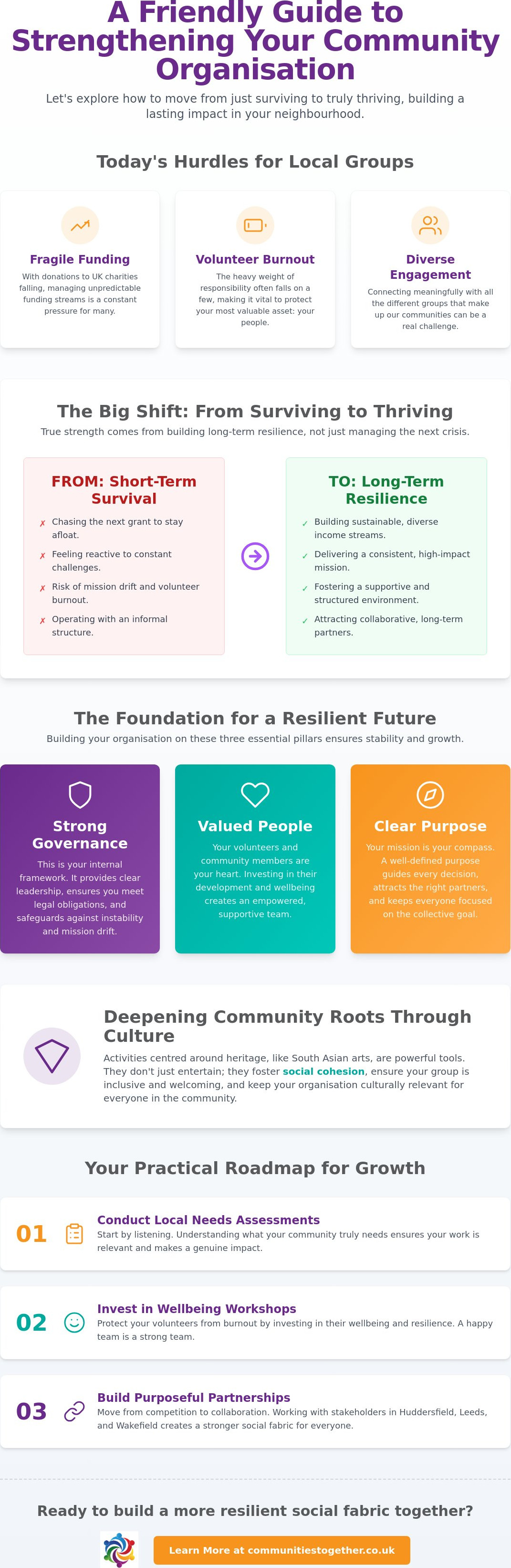
Building a resilient foundation requires a transition from reactive project management to proactive organisational development. We recommend a structured five-step roadmap for strengthening community organisations that prioritises both structural integrity and human connection. First, conduct a thorough needs assessment within your local West Yorkshire neighbourhood to identify service gaps and ensure your mission remains relevant to current social needs. Second, invest in wellbeing and resilience workshops for your core volunteer team to safeguard their mental health and ensure the longevity of your group. Third, develop a partnership strategy to share resources with other local charities, thereby increasing efficiency and reducing duplication of effort. Fourth, implement a continuous feedback loop that involves participants in project design, which fosters a sense of ownership and accountability. Finally, review and update your operational policies at least once a year to ensure long-term stability and adherence to the latest governance standards.
Empowering Individuals Through Skills Workshops
When we provide personal development opportunities for our members, we aren't just improving individual lives; we're increasing the overall group capacity to deliver complex social outcomes. Our Learning, Skills and Personal Development programmes demonstrate how non-clinical wellbeing interventions can significantly improve a participant's confidence and sense of belonging. By offering workshops that focus on transferable skills, organisations can also help improve employability for local residents, creating a cycle of growth that benefits the entire neighbourhood. This approach ensures that the organisation acts as a professional conduit for collective progress whilst remaining a supportive, welcoming space for everyone.
Monitoring Impact and Success
Measuring the success of your work doesn't always require complex academic tools or expensive software; often, the most powerful data comes from simple surveys, attendance records, and direct participant testimonials. Sharing these success stories is vital for future partnership building, as it provides tangible evidence of your impact to potential stakeholders and governing bodies. Data-led insights must always be balanced with a friendly, human-centric approach that values individual experience above raw statistics. By documenting your journey, you build a narrative of interconnectedness that illustrates the measurable effects of your organisation on the wider social fabric of West Yorkshire.
Collaborative Growth: Building Partnerships in West Yorkshire
We've seen throughout this guide that true resilience isn't something we have to build all on our own, as the real secret to strengthening community organisations is simply being there for one another and sharing what we have so that everyone in our neighbourhood can thrive. In a time when funding can feel a bit less certain, moving away from the old idea of competing for resources and instead embracing a friendly culture of togetherness allows us to create a much stronger safety net for our families across Huddersfield, Leeds, and Wakefield. We believe that every group has something valuable to offer, and by opening up our doors to share our skills, our knowledge, and our spaces, we build a stable foundation where everyone feels supported and valued. If you're part of a smaller group, please don't feel shy about reaching out to some of the larger organisations in our region for a bit of a helping hand; most are delighted to offer mentorship and share the lessons they've learned to help you grow your own capacity in a way that feels manageable and right for you.
Community hubs are such a vital part of this friendly ecosystem, acting as the warm heart of our streets where people from all walks of life can come together to share a cup of tea and a great idea. These welcoming spaces provide a steady home for local groups to grow side-by-side, facilitating the kind of natural, everyday connections that make our neighbourhoods feel so much more resilient and alive. When we work together in these shared spaces, we're not just running projects; we're weaving a closer social fabric that keeps us all connected and ensures that no one has to face challenges alone.
The Power of Local Networks
It is so inspiring to see how groups in Bradford are reaching out to share their favourite ways of working with friends in Halifax, creating a lovely cycle of mutual support that benefits our entire region. Our local authorities are also a big part of this friendly team, as they provide the essential guidance and support that helps us turn our local passion into a lasting legacy for our communities. We'd love for you to explore our community engagement programmes that focus on building these heart-centred partnerships, as they offer a wonderful way to connect with others who share your commitment to making West Yorkshire a better place for everyone. By joining these wider networks, you're ensuring that your organisation stays grounded in local tradition whilst feeling confident and supported as you look towards the future.
Next Steps for Your Organisation
If you're feeling ready to take that next friendly step in your journey, we've put together a little checklist to help you feel organised and encouraged as you move forward:
Have a relaxed chat with your team to see if your mission still feels like a perfect fit for what your neighbours need today.
Look around for three local groups you'd love to grab a coffee with to chat about how you might support each other.
Set up a simple, welcoming way to listen to your participants' stories so your projects always stay on the right track.
Do a quick, friendly check of your policies to make sure you're comfortably following the latest 2026 standards.
It is completely normal to feel a little bit overwhelmed by the idea of "strengthening" everything at once, but please remember that you are doing incredible work and you have a whole community of friends ready to support you. We would be so happy to connect you with experts who truly understand and love the unique spirit of West Yorkshire, so please do reach out if you'd like a friendly bridge-builder to walk alongside you on this journey.
Building a Legacy of Resilience and Connection
Building a future where local groups don't just survive but truly thrive requires a thoughtful blend of structural integrity and heartfelt cultural connection. By prioritising transparent governance, honouring the rich traditions of our diverse neighbourhoods, and seeking out collaborative partnerships, we ensure that our organisations remain vibrant anchors of support. This journey of transformation is about more than operational efficiency; it's about facilitating a sense of togetherness and collective endurance that empowers every resident to contribute to the social fabric of West Yorkshire.
We'd love for you to explore our community engagement and capacity building programmes as you take the next steps in strengthening community organisations across our region. Our team serves as specialists in South Asian arts and heritage preservation throughout Huddersfield, Halifax, Leeds, Bradford, and Wakefield, focusing on the long-term wellbeing and resilience of every group we support. It's a privilege to walk this path with you, and we're here to help you weave a stronger, more inclusive foundation that will endure for years to come. Your dedication is the heartbeat of our community, and together, we can build a legacy of lasting impact.
Frequently Asked Questions
What is the first step in strengthening a small community group?
We've found that the best place to start is by simply listening to your neighbours and having a few honest chats about what they'd like to see happen in their street. This friendly approach to strengthening community organisations helps you find out what really matters to people before you dive into any big plans. It's about building a project that feels like it belongs to everyone, ensuring your group stays relevant and loved by the very people you're here to support.
How can cultural heritage projects help my organisation grow?
These projects are a lovely way to find new volunteers who are passionate about sharing their skills and keeping local traditions alive. When people see their own culture being celebrated, they're often much more excited to get involved and help out behind the scenes. This doesn't just help your group grow in numbers; it brings in a wealth of fresh ideas and energy that keeps your organisation feeling vibrant and full of life for everyone involved.
Why is community capacity building important for local resilience?
Capacity building is really just about giving your team the peace of mind that the group can keep running smoothly, even when life gets a bit busy. It's about setting up simple ways of working that support your volunteers and protect the heart of your mission for the long term. This kind of resilience means you can keep being there for your neighbours, year after year, without feeling like you're constantly starting from scratch or losing your way.
Can strengthening our organisation help us secure more funding?
It definitely can, as funders are always looking for groups that feel stable, well-organised, and ready to work well with others. When you show that you've got a clear plan and a happy team, you become a much more attractive partner for those looking to invest in West Yorkshire's future. Strengthening community organisations makes you "partnership-ready," which is often the key to unlocking new pots of funding that might have felt out of reach before you focused on your internal health.
How do I involve the local community in our decision-making process?
You could try hosting informal "community cafes" or pop-up chats where people can share their thoughts in a relaxed, friendly setting. It's much nicer than a formal meeting, and you'll often find that people are much more open when they're having a cuppa and a biscuit. By making decision-making a shared, everyday conversation, you ensure that your neighbours feel a real sense of pride and ownership in everything you do together, making your projects even more successful.
What skills do community leaders need to manage growth effectively?
Being a great listener and a good storyteller are some of the most important skills you can have as you start to grow. You'll need to be able to hear what your community is really saying and then share those stories in a way that inspires others to join your journey. Of course, being organised helps too, but it's that human connection and the ability to bring people together that truly makes a leader successful and keeps the group's spirit alive.
How can we reduce volunteer burnout whilst expanding our services?
One of the best ways is to break down big roles into smaller, "micro-volunteering" tasks that feel easy and fun for people to take on. This means no one person is carrying too much on their shoulders, which keeps everyone feeling happy and refreshed as you grow. When you share the load this way, you can expand your services whilst making sure that volunteering remains a joyful experience rather than a stressful chore for your lovely team of supporters.
Where can I find support for community infrastructure building in West Yorkshire?
You'll find a wealth of support by connecting with local peer-to-peer learning groups and networks that are already active across West Yorkshire. There's so much wisdom to be found just by chatting with other groups in Huddersfield or Wakefield who've been through similar challenges. We're also here to help you find those connections, acting as a friendly guide to help you build the sturdy, resilient infrastructure your organisation needs to flourish and grow for the benefit of your neighbourhood.


Comments