
South Asian Arts Heritage Education: Busting 5 Common Myths
Updated: Jul 15
What if the most effective way to mend the fraying edges of our local social fabric in West Yorkshire isn't found in a top-down policy, but within the rhythmic pulse of a dhol drum, the vibrant storytelling of traditional dance, and the shared discovery of a common history? It's completely natural for organisers to feel a quiet apprehension when considering South Asian cultural workshops UK; you might find yourself navigating the nuances of cultural misappropriation, managing increasingly tight budgets for arts programmes, or seeking authentic ways to engage diverse groups that feel truly meaningful. We understand these challenges and believe that heritage education is a vital tool for social resilience that shouldn't feel out of reach for those dedicated to community development.
In this guide, you'll discover the transformative power of South Asian heritage education and learn how these initiatives build stronger, more cohesive communities by fostering mutual understanding, promoting inclusivity, and celebrating our local diversity. We're going to provide you with practical workshop ideas and the professional confidence to partner with expert facilitators, whilst debunking five persistent myths that often hinder progress in our cultural sector. By the end, you'll see how heritage improves social cohesion by creating a stable foundation for collective growth and long-term harmony.
Table of Contents
Myth 1: South Asian Arts Heritage Education is Only for South Asian Communities
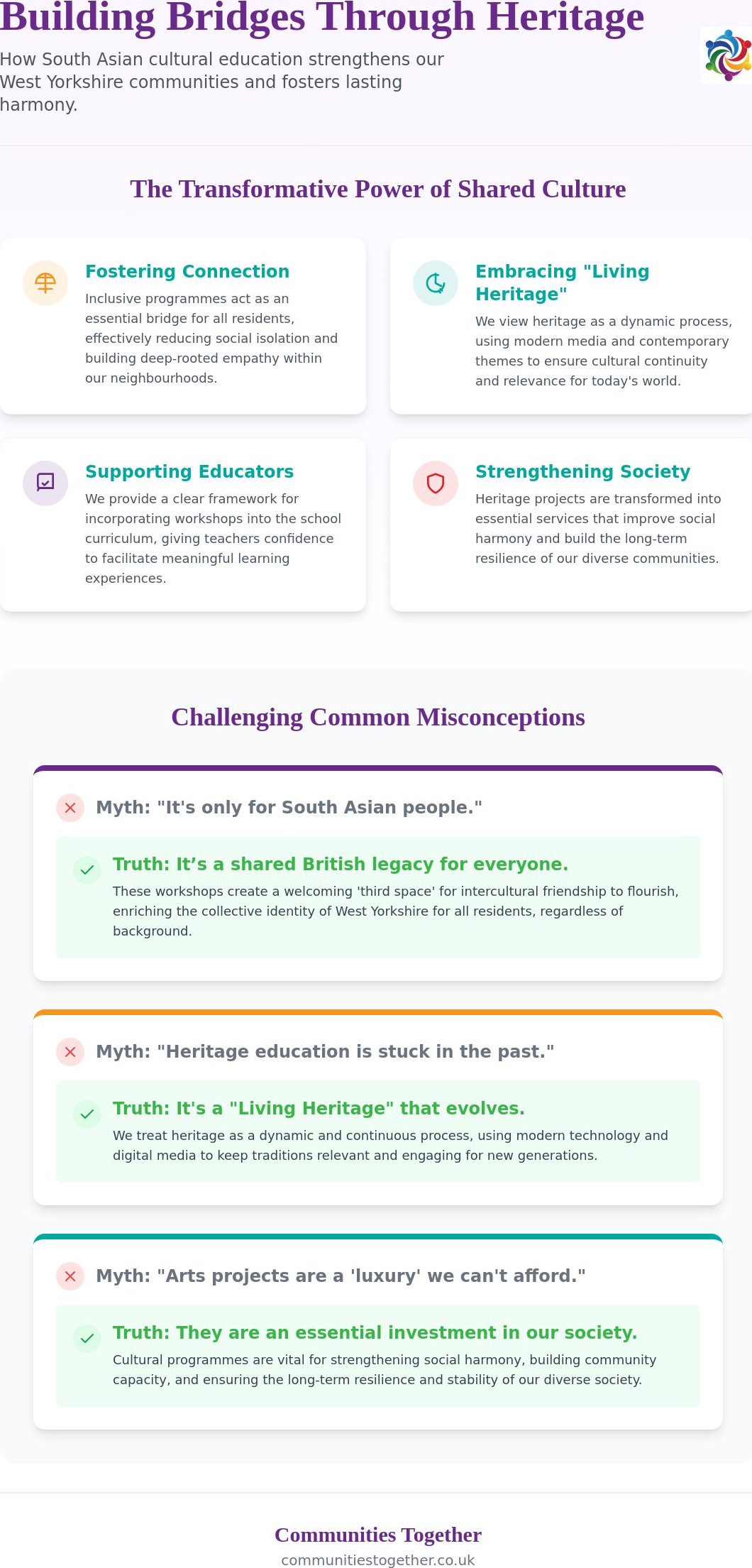
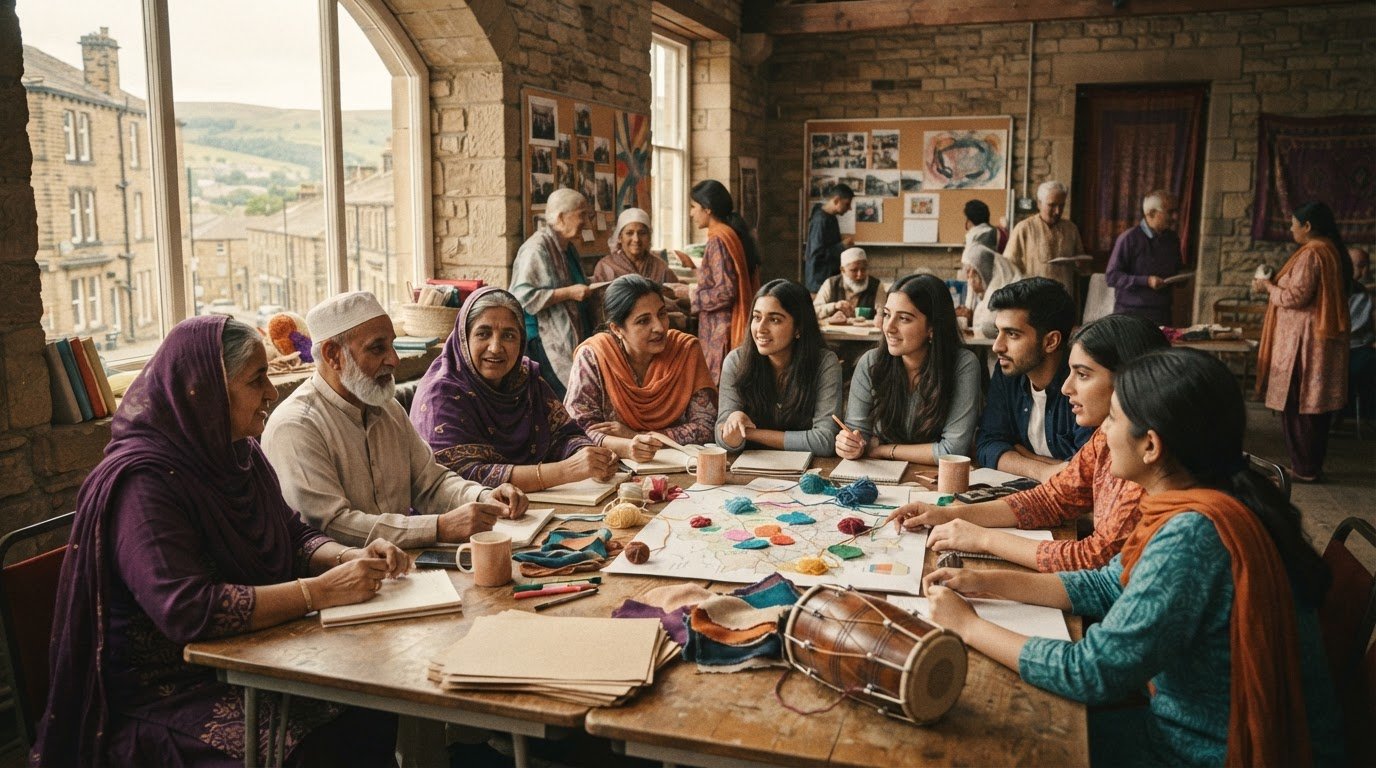
One of the most persistent misconceptions we encounter is the belief that heritage education is a niche activity reserved exclusively for those with direct ancestral links to the Indian subcontinent. This perspective overlooks the profound capacity for cultural education to foster empathy, cultivate understanding, and nurture deep-seated respect amongst all residents of Leeds and Bradford, regardless of their personal background. When we facilitate South Asian cultural workshops UK, we aren't just teaching a specific art form; we're creating a "third space" where intercultural dialogue can flourish and where the threads of friendship are woven through shared creative exploration. Heritage education serves as a multifaceted bridge for social cohesion in diverse urban areas by providing a common language of creative expression that transcends linguistic, social, and economic divides.
Inclusive community programmes play a critical role in breaking down historical barriers and reducing local social friction by humanising the "other" through shared experience. Instead of viewing cultural differences as obstacles, these projects allow participants to see them as assets that enrich the collective identity of West Yorkshire. By engaging in these activities, residents from all walks of life contribute to a more stable and harmonious social environment where diversity is recognised as a source of structural strength rather than a point of contention.
Building Universal Social Cohesion
Learning about South Asian traditions offers non-South Asian participants a transformative opportunity to expand their worldviews, challenge internalised biases, and recognise the interconnectedness of our global history. It's vital to frame this heritage not as an "imported" or "othered" culture, but as an integral part of the collective history of South Asians in the United Kingdom, which has shaped the social, economic, and cultural fabric of our nation for generations. At Communities Together, we purposefully organise inclusive workshops that welcome every resident of West Yorkshire, ensuring that the benefits of cultural continuity and social resilience are accessible to the entire community. This inclusive approach ensures that heritage is treated as a shared British legacy that belongs to everyone, fostering a sense of belonging and mutual investment in our shared future.
Fostering Inclusive Community Engagement
Our work in Huddersfield and across the region demonstrates that moving beyond simple "tolerance" towards active cultural appreciation is essential for collaborative growth and long-term harmony. Practical examples include cross-cultural participation in Huddersfield arts projects where residents from diverse backgrounds collaborate on traditional crafts or music, discovering commonalities in their creative processes. We focus on partnership and community capacity building to ensure that these South Asian cultural workshops UK are not mere one-off events, but sustainable platforms for personal development and collective endurance. By investing in these programmes, we help local organisations develop the skills and confidence needed to maintain vibrant, inclusive spaces that serve the needs of all demographics, ultimately strengthening the social fabric of our towns and cities.
Myth 2: Heritage Education is Stuck in the Past
It's a common misconception that heritage education is a purely retrospective exercise, a static preservation of ancestral traditions that offers little utility to the fast-paced, digital world of today. We advocate for a concept known as "Living Heritage," which we define as a dynamic and iterative process that prioritises the continuous adaptation of cultural practices to ensure their social relevance, structural strength, and collective endurance within modern society. This approach is central to the South Asian cultural workshops UK we facilitate, where ancient techniques are meticulously integrated with contemporary themes to reflect the nuanced British South Asian identities found in communities like Wakefield. Traditional arts provide a profound foundation for modern creative skills and personal development by cultivating a unique blend of technical discipline, historical literacy, and cross-cultural communication.
Research such as The Cultural Value of South Asian Arts from the University of Leeds highlights how these practices contribute significantly to social and personal well-being, proving that they are far from being "stuck in the past." By viewing heritage as an active resource rather than a finished product, we can unlock its potential to address contemporary challenges and foster a sense of belonging amongst residents from all walks of life. If your organisation is looking to revitalise its outreach, exploring our Community Engagement Programmes could be the next step in fostering local resilience and togetherness.
The Evolution of South Asian Cultural Activities
Young British South Asians are currently at the forefront of reimagining ancestral art forms, using these contemporary workshops as a platform to explore the intersections of their dual identities whilst maintaining the integrity of their roots. This evolution often involves the sophisticated integration of oral histories with modern digital storytelling techniques, a method that preserves the wisdom of the past whilst making it accessible and engaging for a technologically-driven generation. By keeping heritage relevant for the next generation, we ensure that cultural continuity remains a vital part of our community's social fabric, providing a stable foundation for future growth and innovation.
Developing Transferable Skills
Beyond the immediate artistic output, these heritage projects serve as vital conduits for developing essential transferable skills such as project management, strategic leadership, and collaborative communication. There's an undeniable and powerful link between the mastery of traditional crafts and the acquisition of competencies required for success in the modern creative industries, providing a clear pathway for individuals to excel in professional environments. We are committed to empowering residents through these learning, skills and personal development opportunities, ensuring that every participant gains the tools necessary for both personal growth and meaningful community contribution.
Myth 3: Arts and Heritage Projects are a "Luxury" Priority
In times of fiscal constraint, there's a recurring tendency amongst decision-makers to categorise arts and heritage as a secondary "luxury" that should only be funded once "practical" community services are secured. We believe this view is fundamentally flawed because it overlooks the essential role that culture plays in maintaining the structural integrity and social health of our towns. Evidence from our collaborative work in Halifax and Bradford demonstrates that cultural participation acts as a powerful, direct intervention against social isolation, providing residents with a vital sense of purpose and connection that purely functional services often cannot replicate. By facilitating South Asian cultural workshops UK, we aren't just offering an optional extra; we're providing a necessary platform for community resilience and mental wellbeing that serves as a non-clinical support system for those who might otherwise feel disconnected from their neighbours.
The economic argument for these projects is equally compelling, as cultural vibrancy is a proven catalyst for strengthening local infrastructure and attracting significant inward investment to West Yorkshire. High-level strategic initiatives, such as the British Council's arts work in South Asia, illustrate how cultural exchange is a cornerstone of modern, sustainable creative economies that foster stability on both a local and international scale. When a community is culturally active and its heritage is celebrated, it becomes more attractive to businesses and residents alike, creating a virtuous cycle of growth, social harmony, and collective endurance that benefits everyone.
Wellbeing and Resilience Workshops
Engaging with the specific rhythms, vibrant colours, and deep narratives found in South Asian arts offers profound therapeutic benefits that can significantly reduce anxiety and improve overall mental health. These activities provide a crucial sense of belonging and identity, helping individuals to navigate complex social environments with greater confidence and personal agency. We regularly utilise our wellbeing and resilience workshops to support vulnerable community members, ensuring they have the emotional tools and social networks required to thrive whilst building their personal capacity for long-term stability.
Strengthening the Social Fabric
Heritage projects act as a vital "social glue" in areas facing economic or social pressures, weaving together disparate groups through shared creative goals and mutual respect. The long-term impact of this cultural education is a more stable and harmonious community that possesses the collective strength to endure and overcome systemic difficulties together. Our recent impact assessments in Huddersfield districts show that measuring the outcomes of cultural engagement reveals a marked increase in local togetherness and a significant reduction in social friction, proving that these initiatives are a fundamental necessity for a healthy, functioning society.
Myth 4: Heritage Education is Too Difficult for Schools to Implement
Many educational leaders perceive the inclusion of diverse histories as a logistical challenge that complicates an already saturated curriculum, yet we find that integrating these perspectives is a matter of strategic alignment rather than additional burden. By identifying natural synergies within existing subjects like History, Religious Education, and the Expressive Arts, schools can facilitate South Asian cultural workshops UK that enrich the learning environment whilst meeting core academic objectives. Overcoming the "expertise gap" doesn't require individual teachers to become specialists in every cultural nuance; instead, it involves establishing methodical partnerships with established community organisations that possess the professional literacy and cultural sensitivity to bridge these knowledge gaps effectively.
Furthermore, for schools interested in broadening these perspectives through international travel, International Student Experiences offers comprehensive advice on organising educational and sports tours to Asia, providing students with a direct connection to the regions being studied.
Curriculum Integration Strategies
Linking the rich tapestry of South Asian history to the broader British Empire and the industrial development of Yorkshire provides students with a grounded, local context for global events, making abstract historical concepts tangible and relevant to their own surroundings. These South Asian heritage projects are particularly effective at fulfilling "British Values" and Spiritual, Moral, Social and Cultural (SMSC) requirements by promoting mutual respect, individual liberty, and a sophisticated understanding of modern Britain's diverse social fabric. To ensure these initiatives remain sustainable, we recommend a methodical approach:
Audit the existing curriculum to identify natural entry points in subjects like History, Art, or Music where South Asian perspectives can be seamlessly woven in.
Identify and collaborate with professional facilitators in West Yorkshire who can provide the necessary cultural expertise and resources.
Co-design workshop series that move beyond one-off events, focusing instead on building cumulative knowledge and skills across different year groups.
Implement teacher training sessions to build internal staff confidence in facilitating ongoing cultural dialogue and heritage exploration.
Engaging Diverse Student Bodies
Ensuring that heritage education resonates with students of all ethnicities is essential for building a truly inclusive school culture where every child feels that their background is recognised as a vital part of the British story. The power of representation cannot be overstated, as seeing South Asian heritage reflected accurately and positively within the curriculum directly bolsters student self-esteem, cultivates a sense of belonging, and encourages academic engagement amongst underrepresented groups. By incorporating South Asian cultural workshops UK into the standard school calendar, we move away from tokenistic celebrations and towards a meaningful, year-round commitment to diversity and inclusion. One highly effective method for deepening this connection is through the organisation of intergenerational learning sessions, where students engage with local elders to record oral histories and share traditional skills. If you are ready to enhance your school's cultural provision, we invite you to explore how we can support your goals through our Partnership and community Capacity Building services.
Partnering for Success: How Communities Together Facilitates Heritage
We see our role as a vital and purposeful conduit between the profound traditions of South Asian arts heritage education and the specific, evolving needs of the various communities we serve across West Yorkshire. By facilitating South Asian cultural workshops UK, we provide a stable and professional foundation for local authorities, non-profits, and educational institutions to achieve measurable social impact, foster meaningful intercultural dialogue, and strengthen the structural integrity of their local neighbourhoods. Our unique approach is defined by a methodical commitment to professional accountability, ensuring that every project we undertake is designed to deliver long-term social benefits whilst maintaining a warm, accessible, and welcoming environment for all participants. We believe that by acting as a wise facilitator, we can help our partners navigate the complexities of social cohesion, cultural continuity, and collective growth with confidence and clarity. We're here to ensure that your vision for a more connected community becomes a tangible reality through collaborative action and shared purpose.
Our Strategic Community Engagement
Our work is rooted in the belief that effective heritage preservation must be hyper-local, which is why we meticulously tailor our heritage programmes to fit the unique demographic, economic, and social contexts of different West Yorkshire districts, spanning from the vibrant urban centres of Leeds and Bradford to the diverse wards of Huddersfield and beyond. Our community engagement programmes are built upon high-quality, professional standards that ensure cultural preservation, personal development, and social resilience are at the core of every activity we facilitate. Local partners who've collaborated with us frequently highlight how our methodical approach has empowered them to build community capacity, reduce social friction, and create a lasting legacy of togetherness that resonates deeply amongst their residents. We take pride in being a reliable bridge-builder, providing the expertise and stability required for others to build their own successful cultural initiatives that stand the test of time.
How to Get Involved
If you're ready to discover how heritage can revitalise your school, community centre, or local group, we warmly invite you to book a consultation with our team to discuss your specific objectives and community needs. We also offer a range of rewarding opportunities for passionate volunteers and talented artists to contribute their unique skills to our heritage preservation work, ensuring that our collective mission remains grounded in authentic, community-led progress and social responsibility. Taking the next steps to launch a cultural identity programme in your area is an achievable and empowering process when you have a dedicated partner to guide you through the initial planning, practical delivery, and long-term impact measurement. We look forward to welcoming you into our collaborative network and working together to foster a more harmonious and resilient society for everyone in West Yorkshire. Let's start a conversation today about how we can support your community's journey towards greater unity and creative expression.
Building a Resilient Future Through Shared Heritage
Forging a harmonious and stable society requires us to move beyond restrictive misconceptions and embrace the profound potential of our collective cultural legacy. Throughout this exploration, we've demonstrated that heritage education is not a niche interest or a static relic, but a vital, living resource that fosters deep-rooted empathy, supports mental wellbeing, and provides a robust foundation for modern creative development. By integrating South Asian cultural workshops UK into the fabric of our local schools and community centres, we can cultivate an environment where diversity is celebrated as a source of structural strength and mutual respect. Our mission-driven non-profit remains dedicated to this work as specialists in West Yorkshire community engagement, acting as experienced facilitators of heritage preservation and wellbeing workshops that serve the needs of all residents. We warmly invite you to explore our South Asian arts and heritage programmes at Communities Together to see how we can partner with your organisation to build a more cohesive future. Together, we can ensure that our shared traditions continue to weave a stronger, more inclusive social fabric for generations to come.
Frequently Asked Questions
What is South Asian arts heritage education exactly?
South Asian arts heritage education is a methodical practice of teaching traditional art forms, historical narratives, and cultural values originating from the Indian subcontinent to ensure their continuity and social relevance. This discipline includes music, dance, visual arts, and oral histories, creating a stable foundation for personal development and collective identity whilst acting as a bridge between ancestral wisdom and modern creative expression. It helps participants build structural strength in their understanding of global history and its local impact on our shared society.
Is South Asian Heritage Month the only time to run these programmes?
No, whilst South Asian Heritage Month in July provides a significant focal point, these programmes are most effective when they are integrated into year-round activities to maintain cultural continuity and long-term social impact. We encourage organisations to move beyond tokenistic annual events and instead develop sustainable workshops that provide consistent opportunities for learning, skills, and personal development. This steady approach ensures that the benefits of heritage education aren't lost once the specific month concludes, fostering a more permanent sense of togetherness.
How does heritage education help with social cohesion in West Yorkshire?
Heritage education facilitates social cohesion by creating inclusive spaces where residents from diverse backgrounds can engage in shared creative goals, mutual respect, and intercultural dialogue. By participating in South Asian cultural workshops UK, individuals in Leeds, Bradford, and Huddersfield discover commonalities that reduce social friction and strengthen the local social fabric. This process-oriented approach builds togetherness and collective endurance, turning cultural diversity into a shared asset for community resilience and long-term harmony.
Can schools in Bradford or Leeds get funding for South Asian heritage workshops?
Yes, schools can access various funding streams that support cultural and heritage initiatives. The UK government's late 2025 curriculum reforms and the establishment of the National Centre for Arts and Music Education in September 2026 indicate a growing commitment to revitalising arts education. We recommend checking local council portals for Bradford, Leeds, and other West Yorkshire areas, as well as regional arts organisations and educational trusts for upcoming grant opportunities that support inclusive learning and community-focused activities.
Do I need to be South Asian to participate in these arts and heritage activities?
Absolutely not, as our programmes are intentionally designed to be inclusive and welcoming to every resident, regardless of their ancestral background or previous cultural knowledge. Engaging with these traditions allows non-South Asian participants to expand their worldviews, challenge internalised biases, and recognise heritage as a shared British history that belongs to everyone. This inclusive participation is essential for building mutual understanding, fostering active cultural appreciation, and ensuring that our social fabric remains resilient and harmonious.
What are the benefits of heritage preservation for young people?
Heritage preservation empowers young people by providing a sense of belonging, bolstering self-esteem through representation, and equipping them with essential transferable skills like leadership and communication. As entries in Expressive Arts GCSEs fell by 42% since 2010, these workshops offer a vital alternative for creative development and historical literacy outside the standard curriculum. By engaging with their roots, young people build the personal capacity and collective endurance needed to navigate complex modern identities with professional confidence.
How does Communities Together support local community capacity building?
We support community capacity building by acting as a methodical advocate and authoritative bridge-builder between specialist heritage knowledge and local community needs. Our approach involves providing training, facilitating partnerships, and offering technical expertise to help local groups launch their own sustainable South Asian cultural workshops UK. By investing in these collaborative networks, we ensure that community organisations have the stability and professional literacy required to maintain vibrant, inclusive cultural spaces that serve their residents effectively.
Are there specific programmes for reducing social isolation through culture?
Yes, our Wellbeing and Resilience Workshops are specifically designed to use rhythm, colour, and narrative as non-clinical interventions to reduce social isolation and improve mental health. These programmes provide vulnerable residents in areas like Halifax and Huddersfield with a reliable social network and a sense of collective purpose that functional services often lack. By focusing on shared creative exploration, we help participants overcome anxiety, build lasting friendships, and contribute to the overall togetherness and harmony of their local community.

Comments