
How to Reduce Social Isolation in the UK: A Practical Community Guide
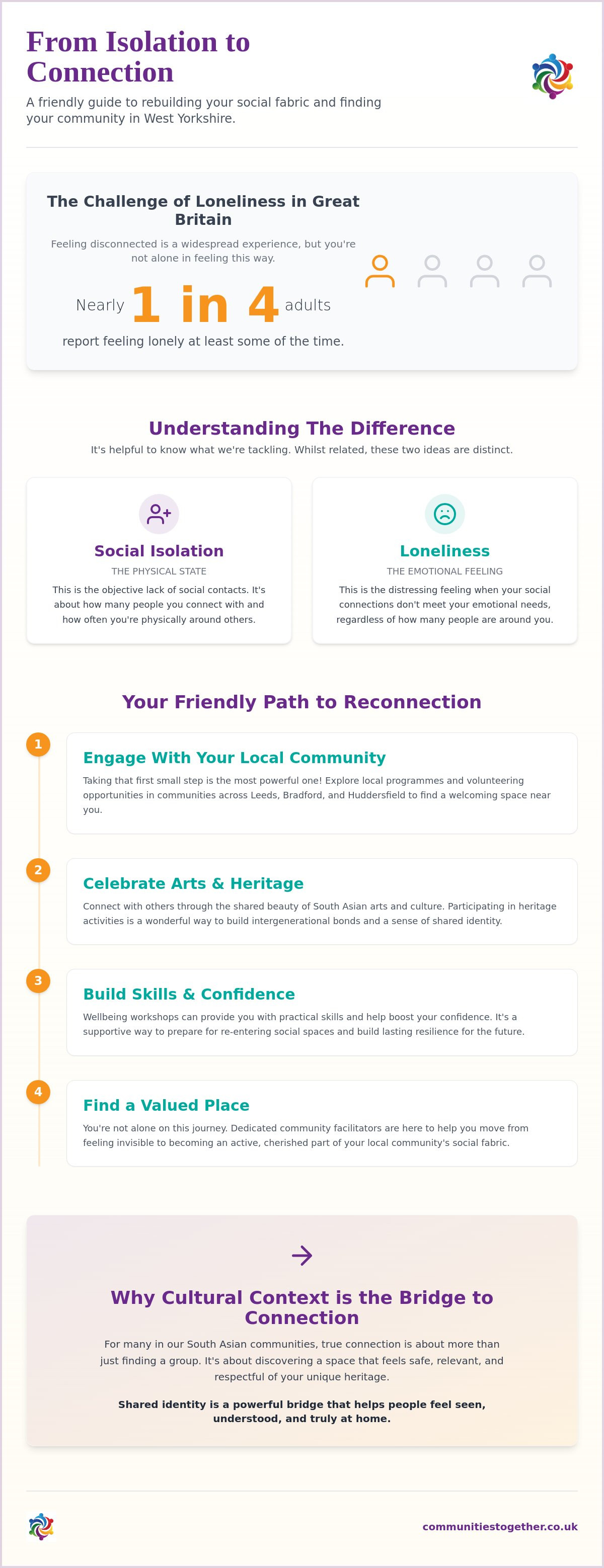
With nearly 23% of adults in Great Britain reporting that they feel lonely at least some of the time as of February 2026, the challenge of reducing social isolation UK wide has become a vital mission for those of us dedicated to fostering community cohesion, cultural continuity, and collective endurance. It's often incredibly difficult to feel seen whilst living in a bustling urban environment; many people find themselves grappling with a profound sense of invisibility, a lack of culturally relevant spaces to gather, or a natural anxiety about re-entering social circles after long periods of solitude. We understand that finding your place again isn't just about showing up, but about discovering a space where your heritage is celebrated and your presence truly matters.
In this guide, you'll discover how engaging with South Asian arts, participating in heritage preservation, and joining local wellbeing workshops can help you build lasting social resilience and meaningful connections. We'll explore practical ways to find groups that resonate with your identity, whilst providing you with the skills to facilitate growth in others and weave yourself back into the vibrant social fabric of your local area. By focusing on these purposeful activities, we can work together to transform isolation into a shared journey of learning, skills development, and mutual support.
Table of Contents
Understanding Social Isolation and Loneliness in the UK
Social isolation is defined as the objective lack of social contacts and remains a significant challenge across the UK in 2026, with data from early in the year indicating that nearly 23% of adults continue to experience feelings of loneliness. Whilst these two terms are often used interchangeably, it's vital to recognise the crucial difference between the physical state of social isolation and the emotional experience of loneliness. Isolation refers to the structural absence of a social network, whereas loneliness is the distressing feeling that occurs when our actual social connections don't meet our emotional needs. By understanding this distinction, we can better design interventions that focus on reducing social isolation UK wide by rebuilding the physical and cultural spaces where people naturally meet.
The rise of isolation in modern British urban environments is often linked to the steady decline of traditional community hubs, the erosion of local high streets, and the increasing digitisation of essential services that once required face-to-face interaction. This systemic issue was brought to the forefront of national policy by the Jo Cox Commission on Loneliness, which successfully highlighted how a lack of connection impacts our collective health and social stability. To better understand how these concepts affect our wellbeing and what we can do to change them, watch this helpful video:
The Impact of Isolation on Community Resilience
Individual isolation isn't just a personal struggle; it actively weakens the broader social fabric of our neighbourhoods by reducing the collective "social capital" that communities rely on to remain resilient. When residents are disconnected, we lose the shared trust, mutual support, and local knowledge that allow a community to thrive during difficult times. Building a truly inclusive environment requires the active participation of individuals from all diverse backgrounds to ensure we're facilitating growth, maintaining harmony, and creating a structural strength that benefits everyone. We've seen that when people feel part of a larger social fabric, they're more likely to contribute to the long-term endurance of their local area.
Why Cultural Context Matters in Social Connection
For many people in West Yorkshire, particularly within our vibrant South Asian communities, the challenges of isolation are often compounded by language barriers, a lack of cultural representation in mainstream services, or the anxiety of being "othered" in busy spaces. It's not enough to simply provide a group; we must ensure these spaces feel safe, relevant, and respectful of a person's heritage. At Communities Together, we believe that shared identity is a powerful bridge for reconnection, allowing vulnerable individuals to find belonging through cultural preservation and creative participation. By focusing on culturally-rich engagement, we can help people rediscover their confidence whilst ensuring their unique history is celebrated within the wider community.
Practical Steps to Reconnect with Your Local Community
Reconnecting with your local area might feel like a significant challenge, especially if you've spent a long time away from social spaces. However, taking that first step is the most effective way of reducing social isolation UK wide and within our specific West Yorkshire neighbourhoods. Across Leeds, Bradford, and Huddersfield, there are numerous community centres and local organisations dedicated to bringing people together in ways that feel safe and welcoming. You don't have to jump into a large crowd immediately; instead, you can look for smaller, structured environments that allow you to engage at your own pace.
Local libraries and heritage centres are fantastic entry points for social participation. These spaces offer a quiet, low-pressure atmosphere where you can explore shared history or attend a small workshop without the immediate pressure of intense socialising. Many of these hubs host regular sessions focused on local culture or creative skills, providing a natural reason to be amongst others whilst you focus on a specific task. If you're looking for a more active role, volunteering is a powerful pathway for building personal confidence. It shifts the focus from your own anxieties to the act of helping others, which naturally fosters new social networks and a sense of purpose.
Finding the Right Local Engagement Programme
When you're searching for a group, it's helpful to seek out community engagement programmes that prioritise inclusive growth and cultural sensitivity. A good programme should feel supportive of your specific needs, offering a clear structure that helps you build connections without feeling overwhelmed. We recommend looking for "capacity building" initiatives; these are designed to empower you with the skills to eventually take a lead role in your area, ensuring that you aren't just a participant but a vital part of the community's structural strength. If you're ready to explore these opportunities, our wellbeing and resilience workshops are a great place to start your journey.
Small Steps to Overcome Social Anxiety
Approaching a new group with a "learning first" mindset can significantly reduce the pressure of socialising. By focusing on acquiring a new skill, such as a craft or a piece of local history, you give yourself a natural icebreaker that makes conversations feel less forced. Consistency is also key to feeling comfortable. Attending the same session every week helps you build familiar, reassuring relationships over time, as faces become recognisable and the environment feels more like home. Using shared interests as a foundation allows you to weave yourself back into the social fabric whilst maintaining your personal boundaries.
For those in specific life stages, such as early parenthood, these shared interests often revolve around infant wellbeing. Participating in baby massage classes east london is a perfect example of how a "learning first" approach helps new parents build confidence and social ties in a supportive environment.
Using Arts and Heritage to Bridge the Social Gap
Engaging in creative expression and the preservation of heritage offers far more than just a passing interest; it provides a vital, culturally-grounded pathway for reducing social isolation UK wide by establishing common ground through shared history and artistic practice. South Asian cultural activities foster social cohesion by celebrating shared traditions, allowing individuals to reconnect with their roots whilst building new relationships based on mutual respect and cultural pride. This process of creative participation possesses a unique therapeutic power, helping to mitigate the debilitating symptoms of chronic isolation by providing participants with a sense of purpose, a tangible feeling of accomplishment, and a renewed level of social visibility. When individuals contribute their personal stories to the collective community narrative, they're no longer merely recipients of support but become active custodians of a living history that strengthens the entire social fabric.
By focusing on these culturally-rich activities, we can create a unique platform for intergenerational connection where older generations share wisdom and younger individuals discover their place within a broader lineage. This exchange helps to build a more resilient community, ensuring that cultural heritage isn't just remembered but is actively used to facilitate social harmony, personal growth, and collective endurance. At Communities Together, we've seen how these artistic bridges can transform a person's outlook, moving them from a state of solitude to a position of active engagement within their local area.
The Role of Heritage Preservation in Wellbeing
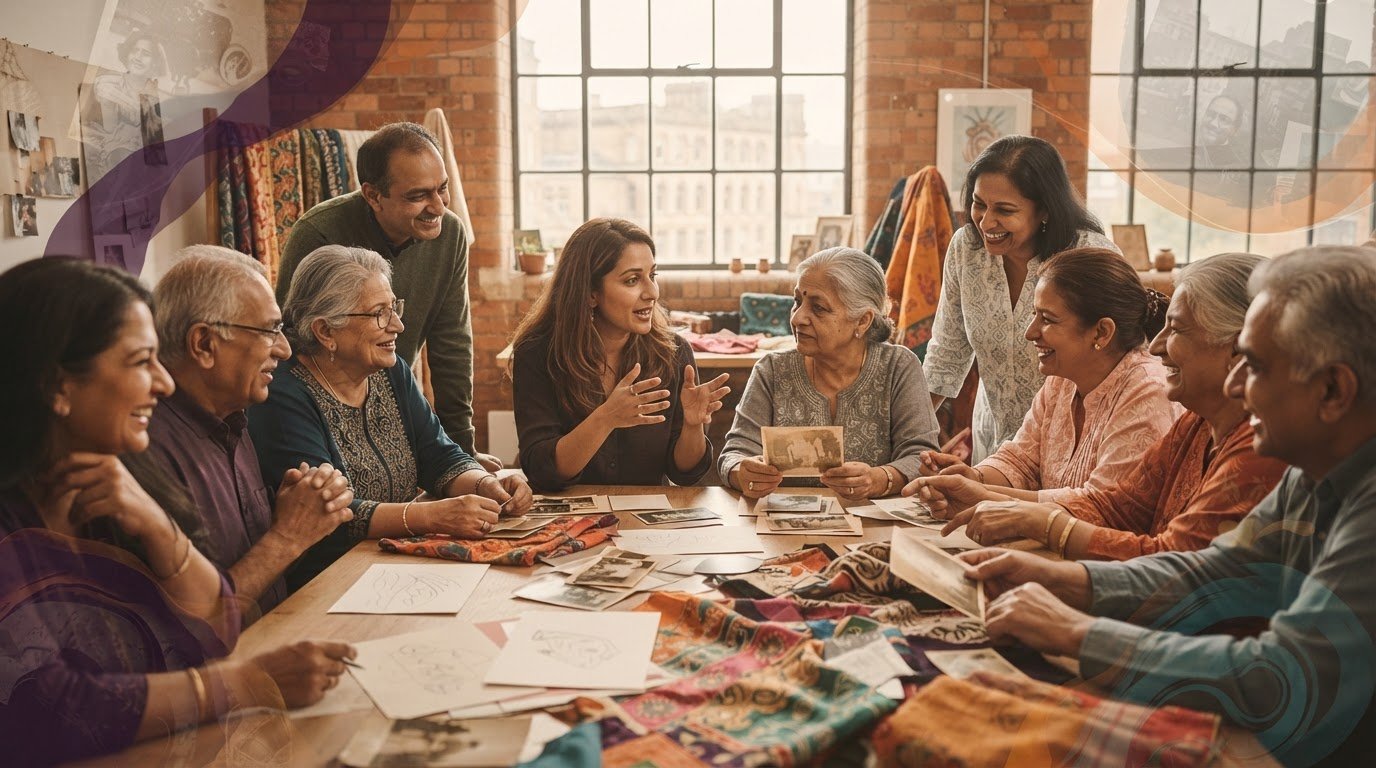
Heritage preservation acts as a profound anchor for wellbeing, connecting the complexities of the past with the challenges of the present to create a lasting sense of continuity and belonging. By learning about one’s roots through structured community workshops, individuals can build the personal resilience needed to navigate modern life whilst maintaining a strong sense of self. For those who may feel marginalised or invisible in a busy urban environment, cultural participation significantly enhances self-esteem and identity, providing a safe space where tradition and progress can exist in harmony. This focus on cultural continuity helps to facilitate long-term emotional stability, social harmony, and collective endurance amongst diverse groups.
Participating in South Asian Arts Activities
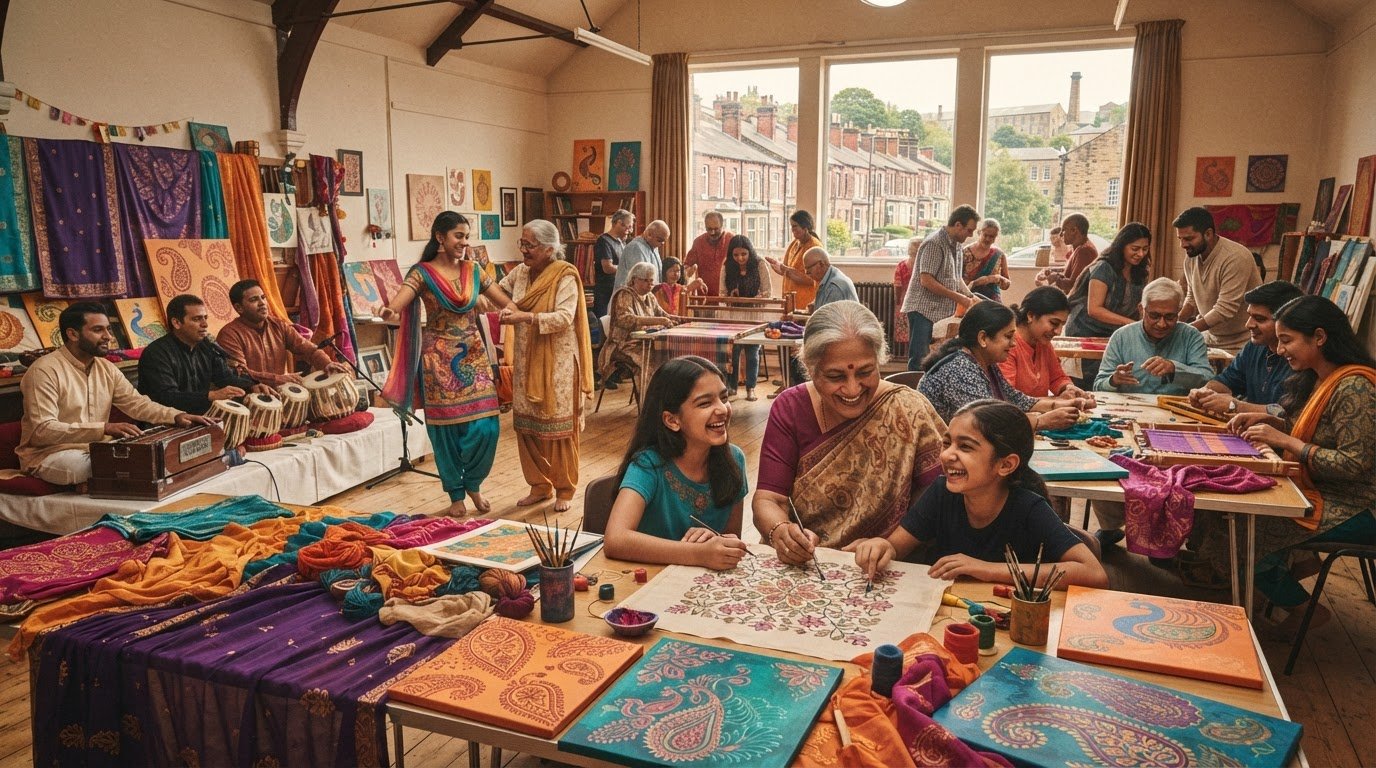
Finding local workshops in areas such as Bradford or Halifax that focus on traditional music, dance, or visual arts is an excellent way to begin your journey of reconnection. These activities often act as a universal language, possessing the unique ability to bring people from entirely different backgrounds together through shared rhythm, colour, and form. We believe that maintaining accessible, high-quality arts education in urban community centres is essential for fostering inclusive growth and ensuring that cultural expression remains a right for everyone. By joining these vibrant spaces, you aren't just learning a craft; you're participating in a collaborative effort to build, facilitate, and maintain a more connected and supportive society for all.
Building Skills and Resilience for Long-Term Connection
Developing personal resilience and acquiring new practical skills are essential components in the long-term strategy for reducing social isolation UK wide, as they provide individuals with the internal "readiness" needed to navigate complex social environments with confidence, poise, and a sense of belonging. When we commit to learning something new, whether it's a creative craft or a technical skill, we're doing more than just filling time; we're building a foundation of self-efficacy that allows us to engage in broader community life without the constant fear of social judgement. This relationship between competence and confidence is a powerful one, as the mastery of a new ability acts as a natural shield against the anxieties often associated with re-entering busy social spaces after long periods of solitude.
Resilience training is equally vital, particularly for those who have experienced chronic isolation, because it provides the emotional tools to manage the inevitable setbacks and awkward moments that can occur during social re-entry. It's about maintaining a steady, methodical approach to connection, ensuring that one's social journey is built on a stable foundation of self-regulation, personal strength, and collective endurance. In our increasingly online-centric world, developing digital literacy is also a key part of this process, as it ensures that individuals can maintain their connections and access vital community resources whilst navigating the digital landscape with safety and competence. By staying updated with the latest digital skills, as outlined in the government's 2026 digital inclusion progress reports, we can ensure that no one is left behind in an increasingly connected society.
Wellbeing Workshops as a Foundation
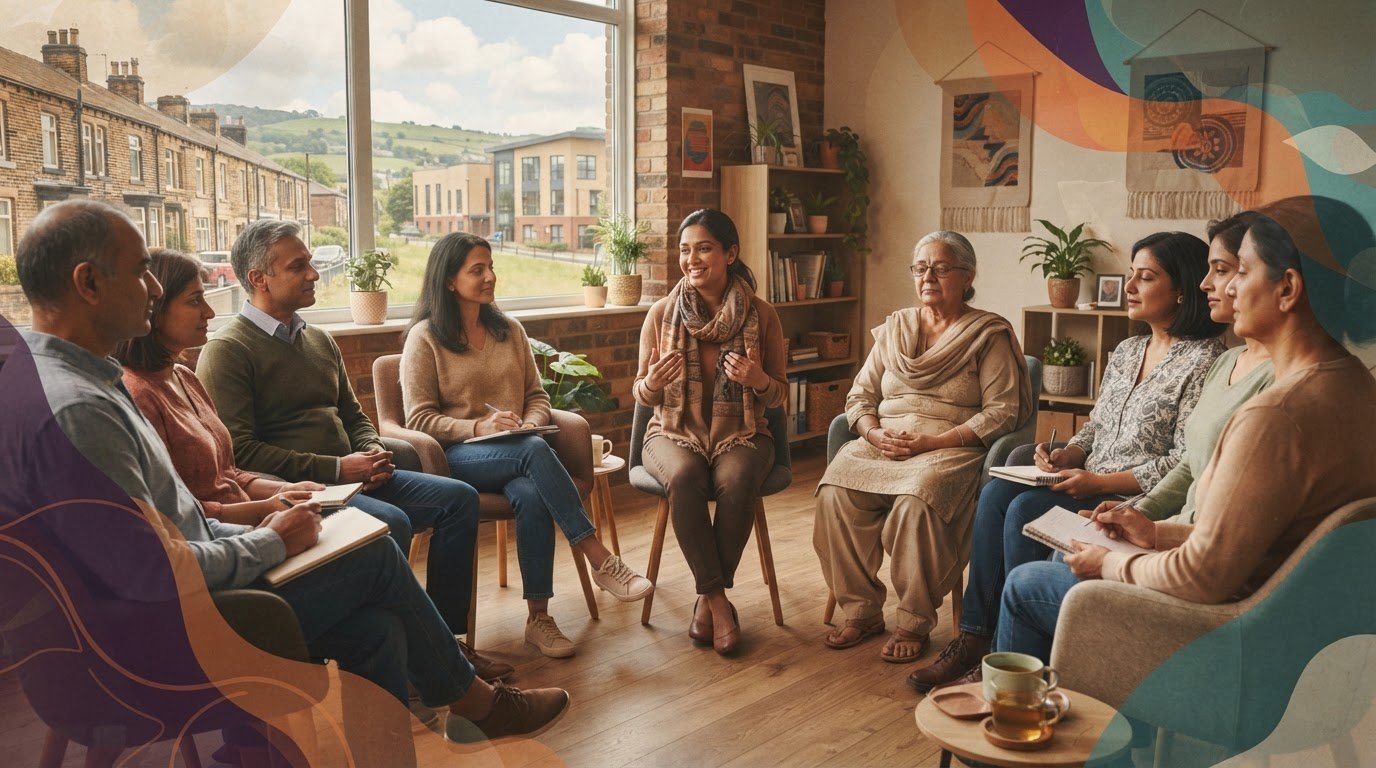
Non-clinical interventions play a crucial role in managing the emotional weight of isolation, providing a safe and welcoming space where individuals can address their challenges without the pressure of a clinical environment. Our wellbeing and resilience workshops are designed to offer practical tools for self-regulation, helping you to build the social confidence needed to reconnect with others in a meaningful and lasting way. By creating a supportive environment where participants can share their experiences without judgement, we're facilitating a sense of togetherness that strengthens the individual and the community alike. These sessions focus on building, facilitating, and maintaining a positive mindset that is essential for long-term social health.
Capacity Building for Community Leaders
One of the most effective ways to reduce your own sense of isolation is to move from being a participant to becoming a facilitator, as the act of helping others naturally fosters a deep sense of belonging and social purpose. We believe that community capacity building is essential for ensuring that local groups across West Yorkshire remain sustainable, effective, and inclusive for all who need them. By participating in training opportunities that strengthen our social infrastructure, you're helping to build, maintain, and protect the very fabric of our neighbourhoods. If you're ready to take that next step in your personal growth, we invite you to explore our programmes for Learning, Skills and Personal Development today.
Joining the Movement: Communities Together in West Yorkshire
Communities Together acts as a professional bridge-builder across the diverse landscapes of Leeds, Huddersfield, and Wakefield; we're dedicated to the essential task of reducing social isolation UK wide by creating stable foundations for inclusive growth and collective endurance. We're here to ensure that you feel supported as you navigate your way back into community life. Our inclusive programmes are specifically designed to foster social cohesion, cultural pride, and personal development, ensuring that every individual has the opportunity to reconnect whilst contributing to the structural strength of our region. We maintain a deep commitment to collaborative partnerships, working alongside local authorities, heritage organisations, and community leaders to empower every member of the local population through shared purpose and mutual support. Whether you're interested in upcoming heritage projects in Bradford or wellbeing workshops in the Wakefield district, our team is here to facilitate your journey back into the vibrant social fabric of West Yorkshire. Your presence matters to us.
Our Approach to Social Cohesion
Our philosophy is rooted in the concept of "togetherness," achieved through the deliberate integration of shared arts, continuous learning, and meticulous cultural preservation. We don't simply offer activities; we build, facilitate, and maintain environments where tradition and progress exist in harmony, allowing for the long-term emotional stability of our participants. By working closely with local partners, we ensure that our programmes remain accessible to the most isolated individuals, removing the barriers of language, representation, and social anxiety that often hinder participation. We invite you to join our community engagement initiatives to see how collective action can transform individual lives and strengthen our neighbourhoods. It's a journey we take together.
Taking the First Step Today
Taking that first step toward reconnection often requires a balance of courage and professional support, which is why we encourage you to contact our team for a friendly, professional conversation about which specific programme might suit your unique needs and aspirations. You can find us active across Huddersfield, Halifax, and the wider West Yorkshire area, where we're ready to provide the stable foundation you need to begin your journey toward lasting social resilience. We promise a warm welcome, a purposeful path, and a steadfast commitment to reducing isolation together through our Learning, Skills and Personal Development offerings. Your presence is a vital thread in our community's story; let's work together to ensure it is celebrated, sustained, and strengthened for years to come. We're ready when you are.
Start Your Journey Toward Lasting Connection
Reconnecting with your community is a steady, rewarding process of understanding the nuances of loneliness, engaging with shared cultural heritage, and building the personal resilience needed for long-term social confidence. We've seen how reducing social isolation UK wide involves more than just joining a group; it requires finding spaces that celebrate your identity whilst providing the structural support to grow. By participating in South Asian arts and heritage preservation, you're not just filling time but actively weaving yourself back into a supportive social fabric that values your unique story and contribution.
At Communities Together, our specialist facilitators are dedicated to providing an inclusive, professional, and friendly environment where every participant feels seen and respected. With a proven track record of building community capacity across West Yorkshire, we're here to act as your methodical advocate and bridge-builder. We invite you to join our community engagement programmes today to begin a purposeful path toward reconnection and collective endurance. You don't have to navigate this transition alone, and we're truly looking forward to welcoming you into our vibrant local network.
Frequently Asked Questions
How can I find local community groups near me in West Yorkshire?
You can identify local groups by visiting community hubs such as libraries and town halls in Leeds, Bradford, or Huddersfield, where local council directories and noticeboards often list active organisations. Many residents find that engaging with established facilitators who specialise in South Asian heritage or creative arts provides a structured and welcoming entry point into the local social fabric. Our team is also available to help signpost you toward programmes that align with your specific interests and cultural identity.
Is there a difference between social isolation and feeling lonely?
Yes, social isolation is the objective state of having few social contacts or roles, whilst loneliness is the subjective, distressing emotion that occurs when your existing connections don't meet your personal needs. Recognising this distinction is vital for reducing social isolation UK wide because it allows us to address both the structural lack of community spaces and the emotional barriers to connection. By rebuilding social networks, we can effectively mitigate the impact of both states on long-term wellbeing.
Can participating in arts and heritage projects really help with my wellbeing?
Participating in South Asian arts and heritage activities provides a unique platform for creative expression, which has been shown to reduce the symptoms of chronic isolation and enhance individual self-esteem. These projects allow you to contribute your own story to a larger collective narrative, fostering a sense of continuity and cultural pride that clinical interventions alone may not provide. This process of creative participation helps to maintain emotional stability and build lasting social resilience within your local area.
What are the best ways to help an elderly neighbour who seems isolated?
The most effective way to support an isolated neighbour is to offer consistent, small gestures of connection, such as a regular friendly chat or an invitation to a local community coffee morning. You might also help them by sharing information about local wellbeing workshops or heritage projects that match their interests, acting as a gentle bridge to wider social opportunities. For those balancing isolation with caregiving, resources from organisations like Im with you can provide essential guidance on maintaining high standards of care, regardless of where they are located. Encouraging their participation in inclusive local groups can help them rediscover their sense of purpose and belonging.
Are community engagement programmes suitable for people with social anxiety?
Our community engagement programmes are specifically designed to be inclusive and supportive, offering a structured environment that is ideal for individuals navigating social anxiety. We encourage a "learning first" mindset, where the focus remains on acquiring a new skill or exploring heritage, which naturally reduces the pressure of socialising. This methodical approach allows you to build familiar, reassuring relationships at your own pace whilst maintaining your personal boundaries.
How does Communities Together support diverse groups in Leeds and Bradford?
We act as a professional bridge-builder by delivering culturally-rich programmes that celebrate South Asian arts and heritage across Leeds, Bradford, and the wider West Yorkshire region. Our work focuses on building community capacity, facilitating wellbeing workshops, and maintaining safe spaces where everyone feels seen and valued regardless of their background. By prioritising cultural representation and inclusive growth, we help diverse groups weave themselves back into the structural strength of their local neighbourhoods.
What role does digital literacy play in reducing isolation in 2026?
Digital inclusion is a core component of modern connection, as evidenced by the UK's 2026 Digital Inclusion Action Plan progress report which confirms that all national commitments to improve access and skills are currently on track. Having the confidence to use digital tools allows individuals to maintain social networks and access community resources even when they cannot meet in person. We provide support for developing these essential skills to ensure that everyone can stay connected in an increasingly online-centric world.
Can I volunteer for heritage projects if I don’t have a background in arts?
You don't need any prior experience in the arts to volunteer for our heritage projects, as we value a diverse range of skills and a simple willingness to contribute to the community. Volunteering is a fantastic way to build personal confidence whilst helping to facilitate the growth and sustainability of local cultural initiatives. We provide the necessary training and capacity building to ensure you feel empowered in your role, helping you to build new social networks whilst preserving our shared history.
Comments