
Empowering Local Communities UK: A Strategic Case Study on Collaborative Community Projects
Updated: Jul 15
What if the most enduring way to mend fragmented social cohesion in our urban centres isn't through temporary interventions, but through the deliberate, professional facilitation of collaborative community projects UK that centre on shared cultural narratives? Many organisations across West Yorkshire recognise the profound difficulty of engaging underrepresented South Asian groups whilst simultaneously managing the intricate demands of heritage initiatives, often finding themselves constrained by a lack of internal capacity or the absence of a clear, strategic framework. We understand that building a truly inclusive environment requires more than just good intentions; it demands a methodical approach to weaving together the complex threads of our social fabric to ensure long-term stability, harmony, and social responsibility.
This article explores how professional collaborative community projects and cultural heritage initiatives foster social resilience, structural strength, and collective endurance across our local regions. You'll discover the practical strategies we employ to facilitate sustainable local partnerships, achieve the authentic preservation of South Asian cultural heritage, and secure a measurable increase in community resilience. By examining successful case studies, we'll outline a roadmap for building capacity, enhancing social value, and creating a lasting legacy of togetherness that benefits every member of the community.
Table of Contents
Defining Collaborative Community Projects in the Modern UK Landscape
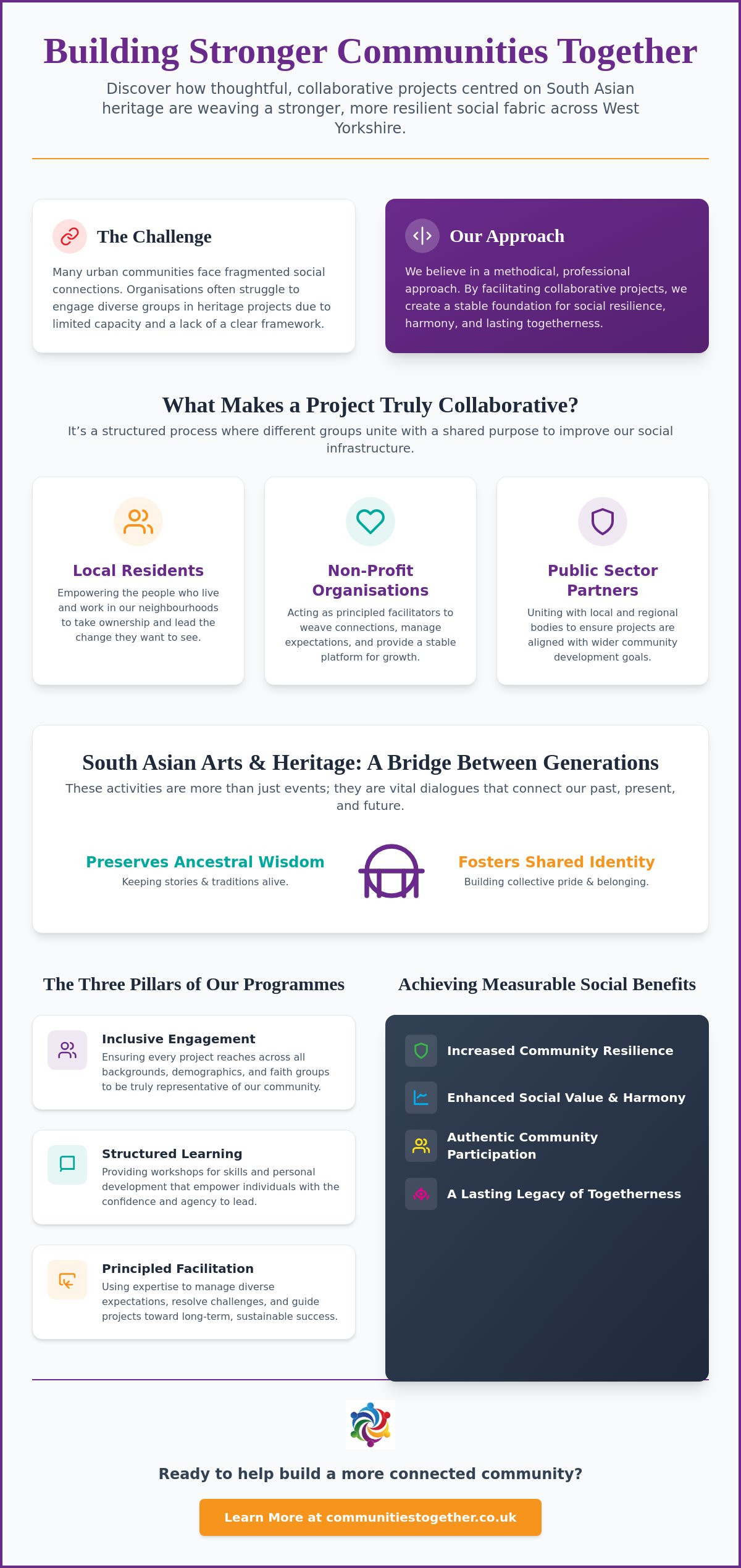
We define collaborative community projects UK as a deliberate, structured process of joint action where local residents, non-profit organisations, and public sector partners unite to improve the social infrastructure that underpins our daily lives. Within the vibrant and diverse urban centres of Leeds and Bradford, these initiatives serve a vital purpose by fostering a deep sense of togetherness whilst carefully respecting the unique individual cultural identities that make our region so rich. It's heartening to observe how these professional frameworks move beyond simple socialisation to create a durable foundation for collective growth, cultural continuity, and structural strength through shared purpose and mutual respect.
The landscape of community development has seen a significant shift away from traditional top-down interventions toward community-led, grassroots initiatives that empower people to take ownership of their local environment. This evolution aligns with the historical principles of Community Organising in the UK, which emphasises the importance of building collective power to facilitate meaningful change, maintain social harmony, and promote accountability. By prioritising the voices of those who live and work within these neighbourhoods, we ensure that every project is grounded in reality and designed for long-term endurance.
To better understand how these partnerships function in practice, watch this helpful video regarding information sessions for such initiatives:
The Pillars of Inclusive Community Programmes
Effective community engagement programmes must be built upon the principle of inclusive engagement to ensure they reach every background, demographic, and faith group within the district. We find that structured learning, skills, and personal development workshops provide the necessary scaffolding for long-term empowerment, allowing individuals to gain the confidence, knowledge, and agency needed to lead their own projects. Non-profit organisations act as the principled facilitators in this process, using their expertise to weave together complex social connections, manage diverse expectations, and provide a stable platform for others to build upon.
Reducing Isolation Through Strategic Engagement
In many of our urban areas, the epidemic of social isolation remains a significant challenge that can erode community resilience and impact the wellbeing of our neighbours. Through strategic, non-clinical interventions like our wellbeing and resilience workshops, we can measurably improve collective health by creating safe spaces for interaction, dialogue, and mutual support. We define social resilience as the ability of a community to withstand and recover from collective challenges. By focusing on these proactive collaborative community projects UK, we help facilitate a society that is not only more connected but also more capable of navigating future uncertainties with grace and collective strength.
The Intersection of South Asian Arts, Heritage, and Social Cohesion
We believe that South Asian arts and heritage activities serve as a vital bridge between generations and cultures, facilitating a transformative dialogue that preserves ancestral wisdom whilst simultaneously fostering a shared sense of contemporary identity. These collaborative community projects UK provide a structured environment where individuals can explore their roots, share their stories, and build a collective narrative that strengthens the social fabric of our local regions. It's truly heartening to see how these initiatives move beyond mere cultural display to become essential tools for social responsibility, collective growth, and structural strength.
Engaging in cultural participation has a measurable impact on individual confidence and community pride, as it allows participants to see their heritage reflected in the public sphere, validated by institutional support, and celebrated by their peers. This process of visibility is crucial for underrepresented groups, as it counters the effects of social fragmentation and provides a stable foundation for personal development and structural strength. By facilitating these professional programmes, we help maintain a sense of harmony and purpose that resonates across the entire district.
Cultural Identity as a Vehicle for Wellbeing
Our cultural identity programmes are specifically designed to improve mental resilience and personal development amongst participants by providing a safe, welcoming atmosphere in local community centres. In multi-ethnic districts such as Huddersfield and Halifax, the benefits of 'arts for social cohesion' are evident as people from diverse backgrounds come together to create, share, and learn, thereby reducing isolation and building a resilient network of mutual support. You may find that our South Asian Arts and Heritage Activities offer a particularly effective way to integrate these concepts of togetherness and personal growth into the daily lives of residents.
Educational Access and Heritage Preservation
Heritage projects expand educational access for underrepresented groups by providing informal learning opportunities that are both culturally relevant and professionally facilitated. By documenting local South Asian history, we aren't only preserving traditions but also fostering modern social integration, as this shared knowledge becomes a tool for education, advocacy, and collective endurance across West Yorkshire. These projects are deeply collaborative, requiring the active participation of residents, historians, and local organisations to ensure that the preservation of cultural continuity is authentic, inclusive, and sustainable for future generations. It's through this methodical documentation of our shared past that we build the internal capacity to manage complex heritage projects and ensure that our collective history is never lost.
Case Study: Transforming Local Engagement in West Yorkshire
In the heart of Huddersfield, we encountered a community landscape marked by the profound challenge of fragmented social cohesion, where diverse groups often existed in isolation from one another and engagement with local initiatives remained consistently low. This fragmentation created a significant barrier to progress, resulting in a lack of internal capacity to manage complex heritage projects and a vacuum in community leadership that hindered long-term structural strength. To address these systemic issues, we facilitated a multi-faceted intervention that combined South Asian arts workshops with wellbeing and resilience training, creating a unique space for dialogue, creative expression, and mutual understanding. These collaborative community projects UK were designed to bridge cultural divides whilst providing the practical tools necessary for personal development and collective endurance.
The measurable results of this partnership were both heartening and transformative, as participation levels amongst previously underrepresented South Asian groups rose significantly throughout the duration of the programme. By providing a stable foundation for interaction, we observed the emergence of new community leaders who possessed the confidence and skills to advocate for their neighbourhoods, thereby strengthening the local social infrastructure. This methodical approach to engagement ensured that the project was not merely a temporary intervention but a vital investment in the region's social responsibility and collective growth.
Collaborative Growth and Capacity Building
Our partnership building phase allowed local groups to scale their impact effectively, reaching a broader demographic by pooling resources, sharing expertise, and maintaining a unified vision for social harmony. Through our capacity-building workshops, individuals gained vital engagement skills, project management techniques, and a deeper understanding of how to facilitate inclusive programmes within their own circles. One participant reflected on the profound personal impact of the sessions, stating that participating in the resilience workshops helped them find their voice, provided a renewed sense of purpose, and reminded them that they are part of something much larger than themselves. This growth in individual agency is essential for maintaining the structural strength of the district over time.
Long-term Impact and Sustainability
The sustainability of this initiative is evidenced by the continued togetherness of the participants, who have formed their own informal networks to support one another and preserve their shared cultural continuity long after the initial facilitation concluded. Key achievements from this project include:
The delivery of a comprehensive series of heritage-based workshops that documented local South Asian narratives for future generations.
The successful acquisition of new leadership and communication skills by over a dozen local residents now active in community governance.
A documented increase in the use of local community centres as hubs for multi-ethnic interaction and mutual support.
By fostering these professional partnerships and prioritising the authentic preservation of heritage, we ensure that the benefits of our work continue to resonate across West Yorkshire. For further examples of how we facilitate social resilience and structural strength through our programmes, please visit the Communities Together homepage.
A Strategic Framework for Organising Collaborative Community Projects
Organising successful collaborative community projects UK is a journey we take together, requiring more than just a desire for change; it necessitates a principled, methodical framework that prioritises professional facilitation to ensure inclusive engagement and cultural sensitivity amongst all our neighbours. We've found that the acquisition of practical engagement skills is a core component of community leadership development, as it provides local residents with the agency to navigate complex social threads and maintain harmony within their own neighbourhoods. It's only through this structured approach that we can move beyond short-term interventions toward the creation of a stable foundation for collective growth and structural strength across West Yorkshire.
Steps to Effective Community Capacity Building
To empower local groups effectively, we follow a deliberate process of capacity building that focuses on long-term social impact and accountability:
Step 1: Identify local assets and existing community strengths amongst the diverse population to ensure that every initiative is grounded in the collective wisdom and established trust of the neighbourhood.
Step 2: Facilitate partnership building between local groups, local government, and heritage organisations to create a unified network that shares resources, risks, and responsibilities whilst maintaining a clear focus on social responsibility.
Step 3: Deliver targeted learning and personal development opportunities that empower individuals to lead, manage, and sustain their own projects for future generations.
When we organise heritage activities, we strive to maintain a delicate balance between reaching a wide audience and preserving the absolute authenticity of the traditions being shared. This ensures that every workshop or event serves as a professional conduit for cultural continuity, allowing residents to see their history reflected in a way that feels both respectful and relevant to their modern lives. By facilitating these connections, we help build the internal capacity of local groups to manage complex projects with confidence and professional literacy.
Maintaining Resilience and Collective Endurance
The longevity of any social initiative depends on the provision of ongoing support and non-clinical interventions that address the underlying causes of social isolation, helping to maintain a steady pulse of interaction and mutual care. We work to foster a culture of togetherness that survives beyond the lifespan of a specific project by embedding these values into the local social fabric and encouraging a sense of shared ownership amongst all participants. Community capacity building is the process of developing the skills and resources that allow groups to thrive independently. By investing in these collaborative community projects UK, we ensure that our districts possess the collective endurance to withstand future challenges and recover with greater structural strength.
If your organisation is looking to build lasting social value through professional facilitation, we invite you to explore our Partnership and community Capacity Building services to see how we can work together to empower your local area.
Facilitating Sustainable Growth Through Professional Partnerships
Professional community engagement programmes represent a vital investment for social cohesion because they provide the necessary framework to address fragmented social ties whilst building the structural strength required for communities to flourish independently. By facilitating these collaborative community projects UK, we move beyond temporary fixes to create a lasting legacy of togetherness, cultural continuity, and mutual support that benefits every resident across our diverse region. It's our belief that a methodical, mission-driven approach is the most effective way to ensure that social responsibility and collective growth remain at the heart of every local initiative, a principle often championed by a regenerative business mentor to ensure that such growth is both sustainable and life-affirming.
Communities Together stands as a principled expert in West Yorkshire social resilience and heritage, acting as a reliable bridge-builder that understands the complex threads of our social fabric and possesses the expertise to weave them together. We remain deeply committed to social responsibility, inclusive engagement, and collective growth, ensuring that every partnership we form is grounded in accountability and designed for long-term social impact. We invite potential partners to collaborate on future projects that celebrate the vibrant history of South Asian arts and culture, as we work to maintain harmony and foster a society where every background is respected and every voice is heard.
Why Partner with Communities Together?
We offer a unique blend of South Asian arts expertise and professional capacity-building frameworks, allowing our partners to benefit from both cultural authenticity and methodical project delivery. Our deep geographical focus on Huddersfield, Halifax, Leeds, Bradford, and Wakefield serves as a significant local strength, as we possess an intimate understanding of the specific challenges and opportunities within these districts. We maintain a friendly, mission-driven approach that ensures every participant feels valued, included, and heard, fostering an environment where tradition and progress are valued in equal measure. This combination of specialised knowledge and professional facilitation makes us a stable foundation for any organisation looking to scale their social impact.
Commencing Your Empowerment Journey
For local organisations or councils seeking to enhance their social value and empower their residents, the first steps toward involvement in collaborative community projects UK begin with a simple dialogue regarding your specific community needs and strategic goals. Our team takes a consultative and methodical approach to project design, ensuring that we identify local assets, build sustainable partnerships, and deliver measurable results that align with your organisation's mission. We'll work alongside you to facilitate a process of collective growth that is both grounded in tradition and aspirational in its reach.
We're ready to help you build a more resilient and connected community through our proven engagement strategies and heritage programmes. We warmly invite you to discuss your collaborative community project with our specialists to discover how we can facilitate meaningful change and celebrate our shared cultural narratives together.
Building a Resilient Future for West Yorkshire Communities
We've explored how a methodical approach to joint action provides a stable foundation for social resilience, ensuring that our urban centres possess the structural strength to navigate collective challenges with grace and purpose. By prioritising the authentic preservation of traditions through professional South Asian arts and heritage activities, we facilitate a sense of togetherness that respects individual identities whilst fostering modern social integration. These collaborative community projects UK act as a vital conduit for collective growth, allowing local residents to gain the internal capacity and engagement skills necessary to advocate for their neighbourhoods and lead with confidence. It's heartening to observe how these professional frameworks move beyond simple socialisation to create a durable foundation for structural strength through shared purpose and mutual respect.
Our team remains deeply committed to providing the professional capacity building framework that allows local groups to thrive independently across Huddersfield, Halifax, Leeds, Bradford, and Wakefield. As specialists in South Asian arts and heritage preservation, we've documented a proven social impact that strengthens the social fabric of our entire region through inclusive engagement and social responsibility. We invite you to Partner with us to empower your local community and join us in building a future where cultural continuity and collective endurance are celebrated by all. Together, we can ensure our local regions remain vibrant, harmonious, and resilient for generations to come.
Frequently Asked Questions
What are the most effective types of collaborative community projects in the UK?
The most effective types of collaborative community projects UK are those that combine cultural heritage preservation with structured capacity-building initiatives to create a stable foundation for long-term social resilience. These programmes succeed by facilitating mutual support, building internal agency, and maintaining a clear focus on the specific needs of diverse urban neighbourhoods. By weaving together artistic expression and professional skill development, such projects ensure that every participant feels valued whilst contributing to the structural strength of their local area.
How do South Asian arts and heritage projects contribute to social cohesion?
South Asian arts and heritage projects contribute to social cohesion by acting as a meaningful bridge between generations and cultures, facilitating a transformative dialogue that preserves ancestral wisdom whilst fostering a shared contemporary identity. These activities provide a safe space for creative expression, dialogue, and mutual understanding, which helps to reduce social fragmentation in multi-ethnic districts. By celebrating shared narratives, these initiatives build collective pride, maintain cultural continuity, and strengthen the social fabric of the entire region.
What is community capacity building and why is it important for local groups?
Community capacity building is the methodical process of developing the skills, knowledge, and resources that allow local groups to thrive independently and manage complex social initiatives with confidence. It's essential for local groups because it provides a stable platform for leadership, ensures the sustainability of community programmes, and builds the internal agency needed to advocate for social responsibility. This structural strength allows organisations to withstand challenges, recover from collective setbacks, and maintain a steady pulse of interaction and growth.
Can cultural heritage programmes help reduce social isolation in urban areas?
Cultural heritage programmes are highly effective at reducing social isolation in urban areas by creating safe, welcoming spaces for interaction, dialogue, and the sharing of ancestral traditions. These initiatives help to mend fragmented social ties, foster a deep sense of togetherness, and provide individuals with a renewed purpose within their local community. By facilitating regular interaction through South Asian arts and crafts, these programmes help to improve collective wellbeing and build a resilient network of mutual support.
How does Communities Together support community engagement in West Yorkshire?
Communities Together supports community engagement in West Yorkshire by providing professional facilitation, mission-driven programmes, and a unique blend of South Asian arts expertise with capacity-building frameworks. We act as a reliable bridge-builder across Huddersfield, Halifax, Leeds, Bradford, and Wakefield, ensuring that every project is grounded in social responsibility and inclusive engagement. Our methodical approach helps local organisations to scale their impact, maintain harmony, and achieve measurable increases in community resilience through authentic partnership building.
What is involved in a community resilience workshop for local residents?
A community resilience workshop typically involves a series of non-clinical interventions designed to improve mental endurance, foster collective support, and provide residents with the tools needed to navigate social challenges. These sessions focus on building togetherness, maintaining structural strength, and developing the personal agency required for long-term stability. By participating in these structured learning opportunities, residents gain a deeper understanding of their own strengths whilst contributing to the collective endurance and structural strength of their neighbourhood.
How can local councils partner with non-profits for inclusive community programmes?
Local councils can partner with non-profits for inclusive community programmes by engaging in a consultative process of project design that identifies local assets, pools shared resources, and prioritises professional facilitation. This collaborative approach ensures that initiatives are culturally sensitive, ground-breaking in their reach, and designed to deliver long-term social value across the district. By working together, these entities can facilitate sustainable growth, maintain accountability, and foster a culture of harmony that benefits every background and demographic within the region.
What skills are developed during personal development workshops for communities?
Personal development workshops for communities focus on the acquisition of leadership skills, project management techniques, and professional engagement strategies that empower individuals to take ownership of local projects. Participants gain the confidence to lead, the ability to facilitate complex social connections, and a deeper understanding of social responsibility. These skills are essential for building the internal capacity of local groups, ensuring that every collaborative community projects UK remains sustainable, impactful, and professionally managed for future generations.


Comments